
Views: 0 Author: Site Editor Publish Time: 2026-09-22 Origin: Site


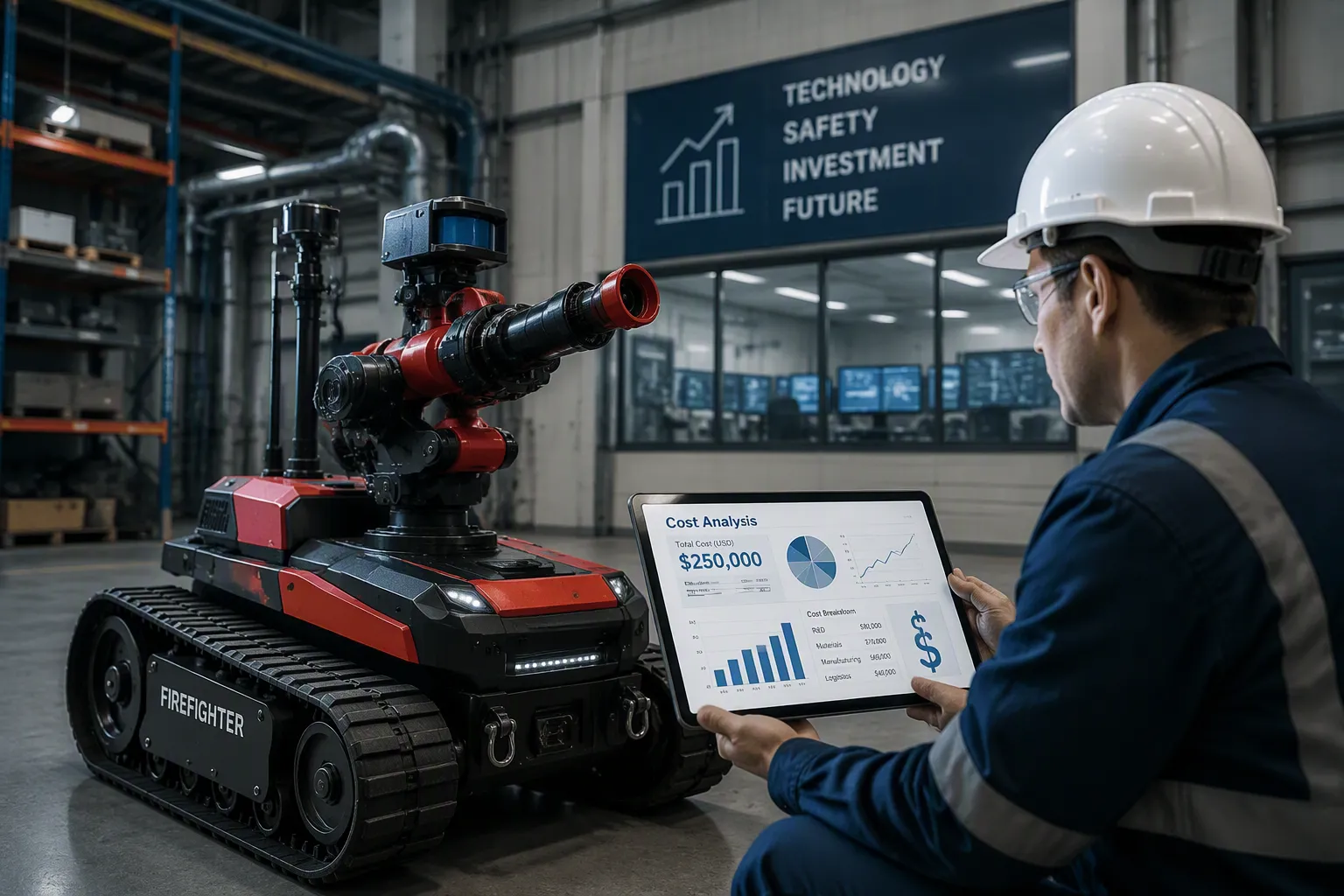
Why does a firefighting robot cost so much more than a standard industrial vehicle? Industrial buyers see a fire fighting robot price range from tens of thousands to over $500,000. Market data shows the global firefighting robot market reached USD 1.57 billion in 2025, with a 16.8% CAGR projected through 2034, reaching USD 6.06 billion. Understanding key cost drivers helps you build a realistic budget of a firefighting robot. Hardware, software, customization, and hidden costs shape pricing. A State Grid Robot adds specialized features. You must weigh upfront costs against long-term costs. Firefighting robots serve dangerous environments. Their price reflects complex engineering. Smart firefighting robot budgets balance upfront costs with future expenses.
Firefighting robots cost from under $100,000 to over $500,000, depending on their capabilities.
Hardware like sensors, pumps, and strong frames drives the base price up.
Software for autonomy and AI adds a big premium to the robot's price.
Customization for hazardous areas, like explosion-proofing, increases costs.
Hidden costs after purchase include installation, training, and maintenance.
Robots can save money by reducing firefighter risk and lowering insurance premiums.
Entry-level robots break even fastest, often within two years.
Always ask for a total cost of ownership statement from vendors.
You can sort the market into three fire fighting robot price tiers. These categories group machines by capability and automation level. Understanding the baseline pricing helps you match a model to your facility. The price of fire fighting robots increases with sensor quality and autonomy. Each fire fighting robot price point offers distinct advantages. The fire fighting robot price reflects engineering investments. Firefighting robots serve hazardous environments across industries. You must consider the total price including required upgrades.
Entry-level models provide a basic thermal camera. An operator controls the robot manually with a joystick. This setup requires direct visual contact with the robot. The thermal camera shows hot spots but lacks high detail. You get essential firefighting capability at the lowest cost.
Standard tracks work on smooth concrete and paved surfaces. A low-flow pump delivers water at moderate pressure. This configuration suits smaller facilities with simple floor plans. The robot maneuvers through hallways and doorways. The fire fighting robot price for this tier stays under $100,000.
Mid-tier units add IoT connectivity. You monitor the robot from a remote command center. Thermal imaging improves with better resolution sensors. Data streams back to your team in real time. This capability reduces firefighter exposure near the fire. A mid-tier firefighting robot provides more operational flexibility.
LiDAR sensors map the environment in 3D. The robot navigates to waypoints without constant joystick input. It avoids obstacles and re-routes around blocked paths. This autonomy level reduces operator workload. The firefighting robot costs range between $100,000 and $250,000.
High-end systems operate fully autonomously. They handle the most demanding firefighting scenarios. AI navigation algorithms optimize patrol routes and detect anomalies. Explosion-proof certification meets ATEX and IECEx standards. The fire-resistant shell withstands heat exceeding 1,200°C. 360° rotation gives complete situational awareness. Wireless video transmission sends high-definition footage to the command center. A 2-hour battery life supports extended operations. Long-range remote control works beyond 1 km. High-resolution thermal imaging identifies hot spots at greater distances. These features explain why a robot’s price can reach $500,000 or more.
High-flow monitors deliver water or foam at high rates. The maximum throw distance covers large storage tanks and warehouses. Multi-gas detection sensors identify toxic and flammable chemicals. IP ratings ensure dust and water resistance for outdoor use. NFPA compliance meets fire service standards. This tier suits petrochemical plants and hazardous facilities. The approximate cost ranges start above $400,000.
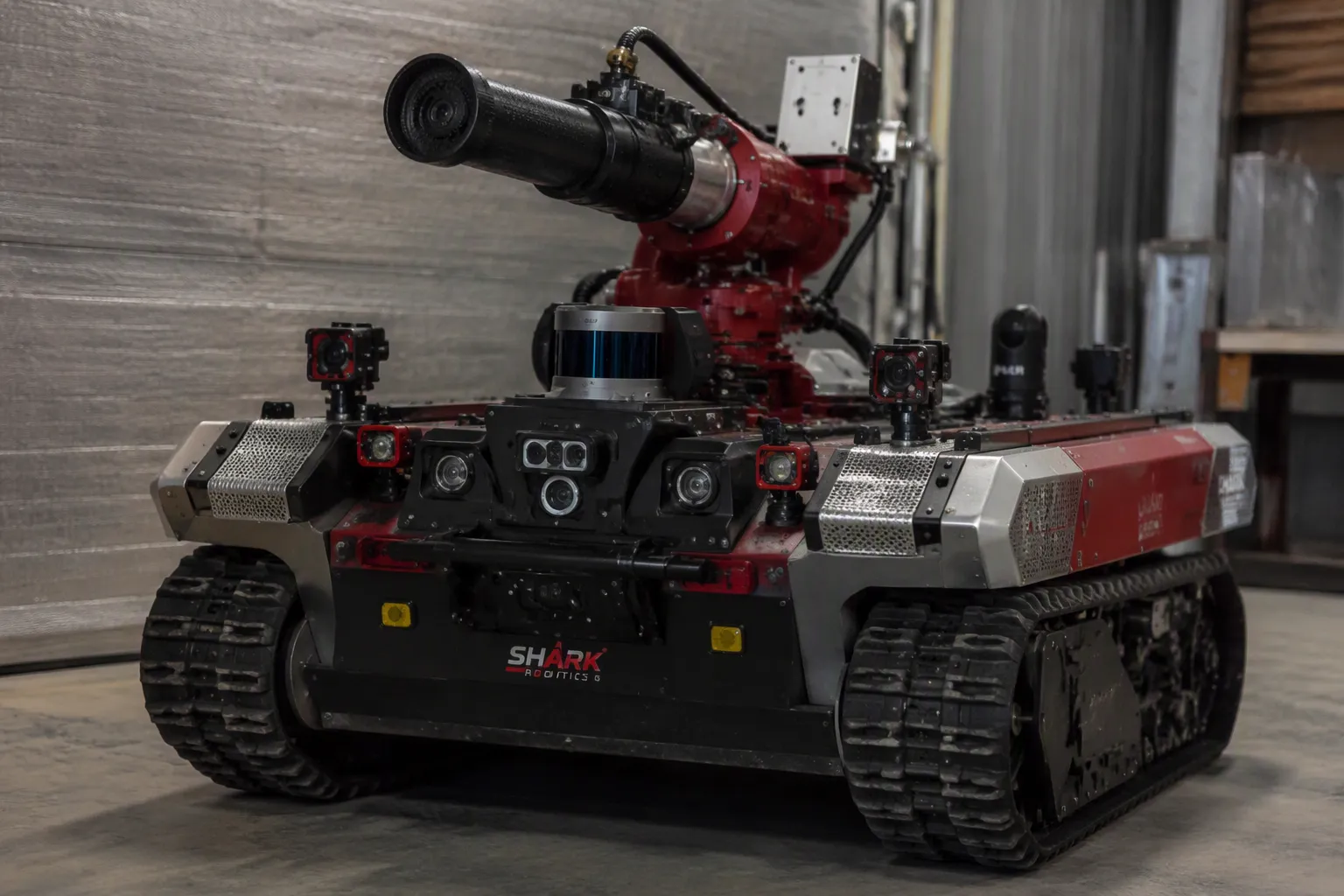
Hardware components dictate the baseline price of any firefighting robot. Specialized metallurgy, thermal shielding, and heavy-duty chassis rank as the largest initial cost items. You cannot negotiate away the fundamental expense of materials engineered to survive extreme heat and physical punishment. The table below shows which components drive manufacturing cost and why.
Hardware Component | Why It Drives Manufacturing Cost |
|---|---|
Advanced sensor arrays | FLIR cameras, toxic gas detection modules, and LiDAR systems elevate price due to environmental awareness premium. |
Extinguishing capacity & flow rates | High-flow monitors need reinforced manifolds, heavy-duty plumbing, and premium materials to withstand immense internal pressure. |
Industrial certifications | Explosion-proof ratings, intrinsically safe electronics, and heat-resistant housings require rigorous third-party testing (Class I Division 1 / ATEX), carrying a significant premium. |
Thermal shielding & material science | High-grade heat-resistant alloys, specialized metallurgy, and active self-cooling/water-curtain systems add significant manufacturing cost. |
Chassis, tracks & mobility systems | Heavy-duty continuous tracks require complex drivetrains and stronger motors, driving price upward versus cheaper wheeled platforms. |
Payload & extinguishing hardware | High-flow water cannons, foam proportioners, and dual-agent systems demand precise machining and testing, raising baseline cost. |
Vision & thermal imaging systems | DIY-friendly-grade infrared cameras, gas detection sensors, and 360-degree mapping sensors substantially increase unit price. |
Communication & telemetry infrastructure | Secure, low-latency, anti-interference modules needed to overcome signal interference require expensive proprietary hardware. |
Autonomy premium | AI-assisted navigation, obstacle avoidance, and onboard processing power command a significant price jump. |
The chassis forms the skeleton of your firefighting robot. Steel tracks with hardened links survive debris-filled industrial floors. Rubber tracks offer better traction on smooth concrete but wear faster in high-temperature zones. Terrain adaptability determines which facilities can deploy the machine. A robot designed for flat warehouse floors costs far less than one built for rubble-strewn chemical plants. The drivetrain must deliver enough torque to climb ramps and push through smoke-filled corridors.
Payload capacity sets the ceiling on what your robot can carry. A heavier payload demands a stronger frame and larger motors. Battery size scales with payload and runtime requirements. A robot hauling a high-flow monitor and foam tank needs a substantial battery pack. That pack adds weight, which in turn requires a more robust chassis. This cycle of reinforcement pushes baseline hardware costs upward. You pay for every kilogram of capability.
Flow rate drives pump and monitor pricing. A low-flow pump suits small facilities with limited fire risk. High-flow monitors need reinforced manifolds and heavy-duty plumbing. These parts must withstand immense internal pressure without failure. The machining tolerances tighten as flow rates rise. Premium materials become mandatory at the highest flow rates. Each increment in flow capacity adds measurable cost to the final price.
Chemical plants demand corrosion-resistant materials throughout the pump and monitor assembly. Stainless steel and specialized alloys resist attack from acids and solvents. These materials cost more than standard carbon steel. Seals and gaskets must also survive chemical exposure. A single incompatible component can fail during a fire, rendering the entire machine useless. You pay a premium for material compatibility in harsh chemical environments.
Standard uncooled thermal cameras detect heat signatures at moderate distances. Cooled thermal cameras offer higher resolution and greater sensitivity. They identify hot spots through dense smoke and at longer ranges. The cooling mechanism adds complexity and cost to the sensor package. DIY-friendly-grade infrared cameras fall into this premium category. Your choice between standard and cooled cameras creates one of the primary price multipliers in the sensor budget.
Gas detection modules identify toxic and flammable vapors. Radiological sensors detect dangerous radiation levels. Integrating these sensors requires proprietary hardware and careful calibration. The robot must process multiple data streams without latency. Secure communication modules prevent signal interference in industrial settings. Each additional sensor type raises the unit price. A full sensor suite transforms a basic machine into a comprehensive hazard detection platform.
Software separates a remote-controlled machine from an intelligent firefighting robot. The autonomy stack often adds a significant premium to the sticker price. You pay for code, licenses, and computing hardware. These costs scale with the intelligence level you demand.
Joystick-only control keeps software costs low. The operator watches a video feed and steers the machine in real time. This approach works well in small facilities with clear sightlines. Waypoint navigation changes the equation. You program a route, and the robot drives itself to each point. The onboard computer handles path planning and speed control. This capability reduces operator fatigue during long incidents. It also demands more processing power and more expensive software development.
SLAM stands for Simultaneous Localization and Mapping. The module builds a map of your facility while tracking the robot's position. Vendors often license this software separately from the hardware. A perpetual license carries a one-time fee. Subscription licensing spreads the cost across the contract term. Some vendors bundle SLAM into the base platform. Others charge per robot or per site. You must clarify the licensing model before you sign a purchase order.
Machine vision algorithms analyze camera feeds for signs of fire. They identify hot spots, flames, and smoke plumes. Training these models requires large datasets of fire imagery. The vendor passes that development cost to you. A basic detection model recognizes obvious flames. An advanced model distinguishes a welding arc from a real fire. That precision commands a higher software fee.
Obstacle avoidance keeps the machine from colliding with equipment and debris. The algorithm fuses data from LiDAR, ultrasonic sensors, and cameras. It predicts the movement of falling objects and shifting structures. Writing robust code for chaotic fire scenes takes years of engineering. You pay for that expertise in the software line item. A simple stop-on-contact routine costs far less than predictive avoidance.
Your firefighting robots must talk to your existing control systems. SCADA integration lets the robot report status to your plant control room. Dispatch software sends the robot to an alarm location automatically. Integration work requires custom middleware and protocol translation. Vendors charge for this engineering time. A standard Modbus or OPC UA interface costs less than a fully custom connector.
You can host the command software on a local server or in the cloud. An on-site server means a larger upfront cost for hardware. You own the system and control your data. Cloud hosting shifts the expense to a monthly subscription. The subscription covers updates, storage, and remote access. Over five years, cloud fees can exceed the server purchase price. Your choice depends on data security rules and site connectivity.
Customization transforms a standard machine into a site-specific tool. Every change you request adds engineering time and configuration costs. You must weigh each upgrade against its operational value. Aligning configuration options with application needs keeps your budget under control.
Hazardous locations demand true atex certification. ATEX and UL standards govern equipment used in explosive atmospheres. A robot bound for a refinery needs explosion-proof (ex) certifications before it can operate legally. The testing process involves third-party inspectors, material audits, and documentation reviews. Each certification adds weeks to the delivery schedule and thousands of dollars to the final price. You cannot skip this step in regulated industries.
Sealed electronics prevent sparks from igniting flammable vapors. Manufacturers use intrinsically safe circuits and spark-proof housings. These components cost more than standard industrial electronics. Every connector, switch, and motor must meet the same standard. A single unsealed component disqualifies the entire machine. This requirement pushes atex/explosion-proof certification costs higher than most buyers expect.
A state grid robot needs communication relays for substation environments. These relays extend signal range through thick concrete walls and steel structures. The state grid robot must report status to a remote control room without interruption. Signal interference in high-voltage areas demands shielded cabling and redundant channels. A state grid robot with these features carries a higher sticker price than a standard model. The state grid robot also requires specialized firmware for grid protocols.
Transformer areas reach extreme temperatures during normal operation. High-temperature seals protect sensitive electronics from radiant heat. These seals use silicone or fluoropolymer materials that resist degradation. A state grid robot operating near transformers needs this protection to survive daily thermal cycling. The seals add material cost and assembly time to the build.
Large industrial sites benefit from swarm coordination software. This software lets multiple firefighting robots work as a team. One robot scouts ahead while another suppresses the fire. The coordination layer requires additional processing power and network bandwidth. Licensing fees for swarm software apply per robot. Firefighting robots with swarm capability cost significantly more than standalone units.
Chemical plants and coastal facilities expose robots to corrosive agents. Corrosion-resistant coatings and sealed joints extend service life. Water jet protection prevents high-pressure spray from entering sensitive compartments. These upgrades add cost to the base unit. Firefighting in wet or chemical-rich environments demands this protection. The fire fighting robot price reflects every environmental hardening step. A firefighting robot without these upgrades may fail prematurely. The cost of downtime far exceeds the upgrade fee.
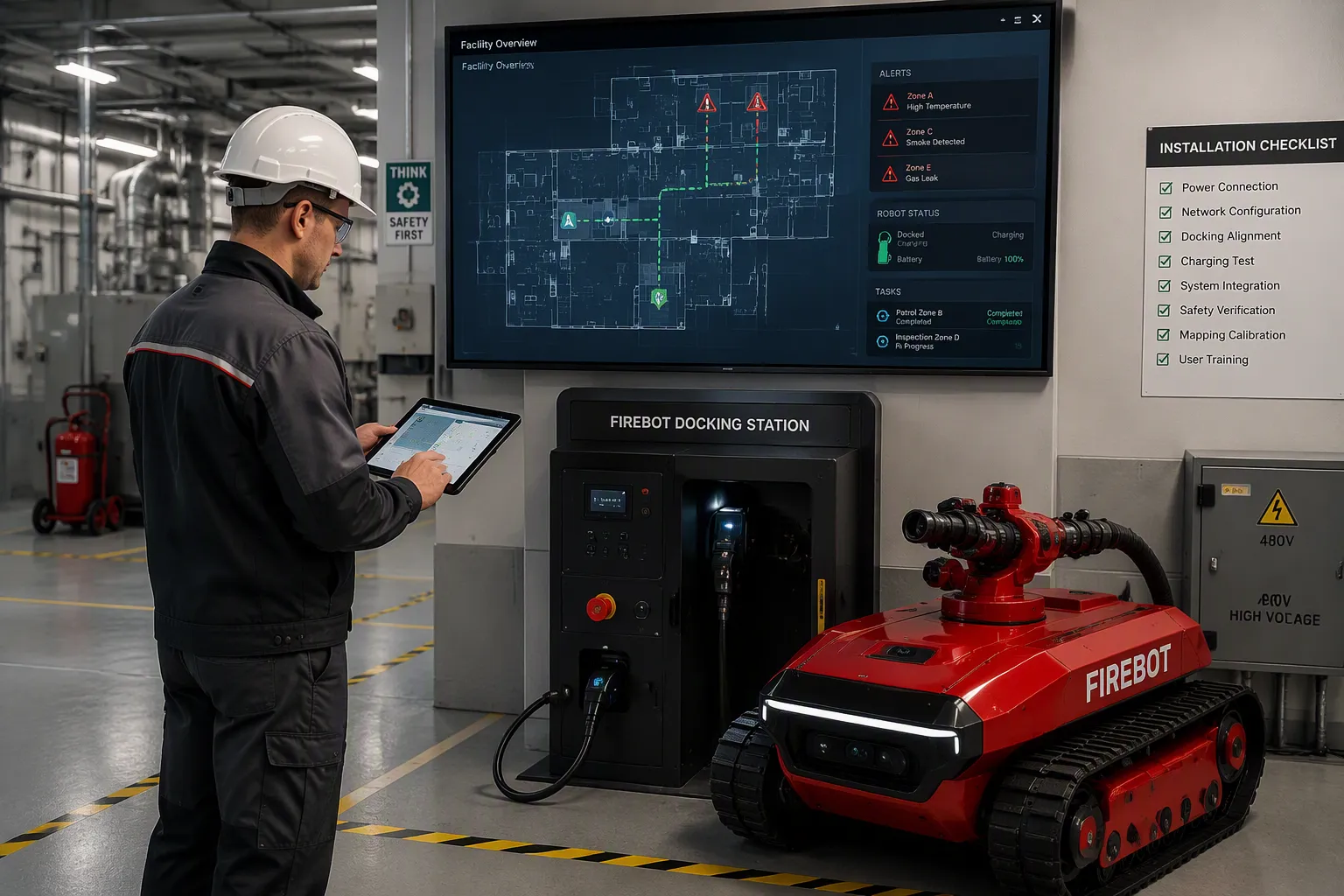
The purchase price of an industrial firefighting robot covers only the beginning of your total investment. Hidden costs emerge after the robot arrives at your facility. Integration work, training programs, and maintenance contracts add significant long-term expenses beyond the sticker price. You must account for these costs when building a complete budget.
Cost area | What to compare | Why it changes TCO |
|---|---|---|
Acquisition and installation | Base equipment, options, interfaces, civil works, commissioning support, documentation | A low equipment price may exclude controls, hoses, fittings, charging infrastructure, or integration work. |
Readiness maintenance | Inspection routines, consumables, calibration, lubrication, batteries, filters, foam-agent compatibility | Recurring work determines whether the asset remains deployable between incidents. |
Repair and spares | Wear parts, critical spares, lead times, repair capability, diagnostic access | Long recovery periods can cost more operationally than the replacement part itself. |
People and training | Initial instruction, refresher training, operator certification support, fault diagnosis | Complex equipment that cannot be used confidently may deliver less protection than a simpler, well-supported system. |
Replacement and residual value | Serviceable life, upgrade path, obsolescence exposure, disposal requirements | Short-lived proprietary systems can require an earlier capital restart. |
Your facility requires a detailed digital map before the robot can navigate autonomously. Surveyors scan the site to create a reference model. They mark hazards, doorways, and stair locations. This mapping process involves civil works and interface configuration. A low equipment price may exclude this integration work. You must compare base equipment options against the full installation scope.
Docking stations provide power and data connections for the robot. These stations need installation in protected locations near operational areas. Charging infrastructure, hoses, and fittings often appear as separate line items. Suppliers should make their assumptions visible in writing. Service intervals, required consumables, and recommended stockholding belong in your contract review.
Communication links must cover every area the robot will enter. Thick concrete walls and steel structures can block wireless signals. Testing identifies dead zones where the robot might lose contact. Relay units bridge those gaps and extend range to remote corners of the plant.
Setting up relays requires careful placement and configuration. Each relay consumes power and needs protection from the environment. Redundant channels add further expense. You should verify connectivity across your entire site during the commissioning phase. A single dead zone can render the robot useless in a critical emergency.
Training is frequently underestimated because suppliers price it as a short handover event. Real operational competence must survive shift changes, personnel turnover, infrequent use, and stressful deployment conditions. Your team needs certification programs that cover pre-use checks, startup, deployment, water or foam operation, and communication loss procedures. Simulation licenses let operators practice without risk to equipment.
Documentation quality matters as much as the training itself. Clear operating procedures, illustrated maintenance instructions, wiring diagrams, fault codes, and parts identification reduce dependence on one trained individual. Without good documentation, a single departure can leave your team unable to deploy the robot confidently.
On-site drills translate classroom knowledge into practical skill. Your operators practice deploying the exact robot model in your actual facility. They learn how to navigate tight corners, operate the monitor, and recover from communication failure. These drills require dedicated time and access to the equipment.
Remote operation under extreme pressure creates high cognitive load. Operators must manage spatial awareness through 2D screens while monitoring thermal data, battery levels, and obstacles. Specialized training addresses this challenge. Personnel turnover means you must budget for recurring instruction across the robot's service life.
Thermal cameras need delicate handling and periodic calibration. Gas sensors drift over time and require recalibration to remain accurate. Actuator service includes lubrication, seal inspection, and performance testing. These tasks demand specialized technicians who understand the specific robot model.
Service contracts cover scheduled visits and emergency support. You must clarify travel costs, remote-support conditions, and warranty scope in writing. A paid technician visit for sensor recalibration adds to your expenses. Forecasting these costs over a ten-year lifespan reveals their true weight on your budget.
Critical spare parts must be available when the robot goes down. Routine consumables like filters, batteries, and lubricants need regular replacement. Mission-critical spares such as motors and controllers must be stocked locally. Shelf life and storage conditions affect which parts you can keep on hand.
Hotline subscriptions provide access to technical support when problems arise. Remote diagnosis can reduce downtime and avoid unnecessary service visits. You should compare recommended stockholding levels from the supplier against your own risk tolerance. Software subscription updates and heavy-duty lithium battery replacements every few years add to the recurring cost.
The full ownership picture reveals the real value. You must weigh the fire fighting robot price against the savings it generates. Firefighting robots reduce human risk, cut insurance expenses, and maintain operational continuity during emergencies.
Removing personnel from immediate blast zones and toxic chemical fires provides immense value. You send machines instead of humans into these hazards. This justification protects your workforce from catastrophic harm.
A single robot replaces an entire crew in the danger zone. You avoid overtime for hazardous work. The robot works continuously without fatigue. Calculate the cost for a manual crew responding to a major incident. Include wages, protective gear, and recovery downtime. Many facilities find the break-even point within two years of regular deployment.
Autonomous firefighting technology improves your facility risk profile. Faster robotic response minimizes fire spread. Insurers recognize this reduction in potential damage. They offer lower insurance premiums for sites deploying these systems. These discounts offset the initial hardware investment over time. Insurance companies increasingly offer premium discounts for adopting robotic safety measures.
The industrial segment led the firefighting robots market with the largest revenue share of 38.8% in 2025. This share reflects growing demand for automation in hazardous environments. Robots improve operational safety and accelerate fire containment. A robot contains a fire before it shuts down your production line. Lost production time costs far more than the robot itself. Facilities with automated response capability resume operations faster than manual crews.
Catastrophic incidents highlight the limitations of manual response. Robots operate in toxic and extreme-heat environments where humans cannot safely enter. They minimize property damage by attacking fires at their source. The price of a single production loss can exceed the robot purchase investment. Investing in robotic protection safeguards your equipment and revenue stream.
Entry-level robots under $100,000 break even fastest. You recover your investment through reduced manpower and lower premiums. Mid-tier units between $100,000 and $250,000 need 18 to 24 months. High-end systems above $400,000 need three to four years. However, they deliver the greatest protection for catastrophic risks. Declining technology expenses make tco matters more than sticker price for long-term planning.
Regulatory bodies such as OSHA and NFPA recognize robotic systems as integral to safety operations. A single firefighter injury carries enormous direct and indirect costs. Medical expenses, lost productivity, and litigation add up quickly. Robots eliminate this risk entirely. Lower premiums and reduced personnel expenses provide a compelling financial argument. The pricing strategy must account for these long-term savings. Over five years, robotic solutions often undercut manual crew expenses significantly.
Hardware components, autonomy software, site-specific customization, and the hidden costs after purchase determine the fire fighting robot price. Pricing varies because firefighting scenarios demand different levels of protection. Build your own checklist from these factors before you request vendor quotes. Ask every supplier for a total cost of ownership statement that includes installation, training, and maintenance. The price tag alone does not tell the full story. Do not rely on spec sheets alone. You need to see the machine operate in conditions that match your plant floor. Schedule a site demo that simulates your specific industrial environment. Let the robot navigate your tight corridors, communicate through your walls, and operate your monitors. A live demonstration in your actual facility reveals whether this investment works for your team and budget.
Full autonomy and explosion-proof certification create the largest price gap. High-end systems add AI navigation, ATEX and IECEx ratings, high-flow monitors, and multi-gas detection. Entry-level units rely on manual joystick control and a basic thermal camera. The engineering behind autonomous operation and hazardous-location compliance explains most of the difference.
You need ATEX or UL certification whenever your robot enters an explosive atmosphere. Refineries, chemical plants, and similar sites require it by law. The testing process adds weeks to delivery and thousands of dollars to the unit price. You cannot legally skip this step in regulated industries.
Training costs more than most buyers expect. Certification programs, simulation licenses, and on-site drills all carry fees. Personnel turnover forces you to budget for recurring instruction across the robot's service life. Suppliers often price training as a short handover event, which underestimates real operational competence.
Standard models may fail in chemical-rich environments. Corrosion-resistant coatings, sealed joints, and water jet protection extend service life in these settings. A single incompatible seal or gasket can fail during a fire. You pay a premium for material compatibility, but the cost of downtime far exceeds the upgrade fee.
Budget for annual sensor calibration, actuator service, spare parts, and hotline subscriptions. Thermal cameras need periodic calibration, and gas sensors drift over time. Batteries and filters require regular replacement. Software subscription updates and heavy-duty lithium battery replacements every few years add to the recurring cost.
An on-site server means a larger upfront hardware cost, but you own the system and control your data. Cloud hosting shifts the expense to a monthly subscription covering updates, storage, and remote access. Over five years, cloud fees can exceed the server purchase price. Your choice depends on data security rules and site connectivity.
Entry-level robots under $100,000 break even fastest through reduced manpower and lower insurance premiums. Mid-tier units need 18 to 24 months. High-end systems above $400,000 need three to four years, but they deliver the greatest protection for catastrophic risks. Declining technology expenses make total cost of ownership matter more than sticker pricing for long-term planning.
A low equipment price may exclude controls, hoses, fittings, charging infrastructure, or integration work. Facility mapping, docking stations, and connectivity testing often appear as separate line items. Ask every supplier for a total cost of ownership statement. The fire fighting robot price tag alone does not reveal the full investment.