
Views: 0 Author: Site Editor Publish Time: 2026-04-16 Origin: Site


Extreme heat, structural collapse, and hazardous materials present terrifying realities for emergency responders globally. Fire departments and industrial safety teams constantly face unacceptable personnel risks when tackling these catastrophic events. We can no longer rely solely on direct manual intervention in unsurvivable zones. A massive paradigm shift is currently underway as tactical workflows transition toward human-in-the-loop remote operations. You need a better way to protect your teams while maintaining aggressive fire suppression. This guide provides a vendor-neutral framework for decision-makers evaluating complex autonomous and remote-controlled systems. You will learn how to integrate a Firefighting Robot into your existing workflows. We will also help you assess the true Total Cost of Ownership (TCO) and define exact procurement criteria to ensure long-term operational success.
Primary Value: Robots do not replace firefighters; they act as force multipliers that provide continuous fire suppression, obstacle clearing, and advanced situational awareness in un-survivable zones.
Sector-Specific ROI: Municipalities justify costs through life-safety and injury reduction, while private industrial sectors focus on preventing catastrophic "business interruption" and asset loss.
Deployment Reality: Successful adoption requires evaluating beyond base unit cost—factoring in transport logistics, maintenance cycles, and specialized operator training.
Technology Threshold: Current market leaders rely on remote-controlled UGV (Unmanned Ground Vehicle) and UAV (drone) synergy, with fully autonomous indoor navigation remaining a developing frontier.
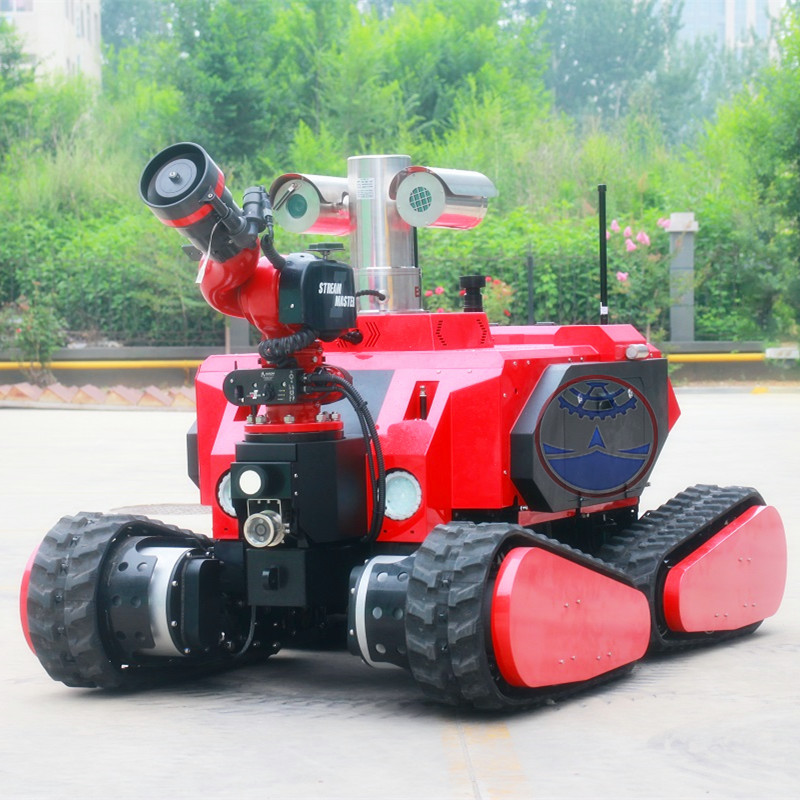
Incident commanders constantly face agonizing decisions during catastrophic events. Sending human crews into imminent-collapse zones or chemical fires often breaches legal and operational safety limits. You must mitigate these hazards aggressively. Unmanned ground vehicles step into this exact gap. They pioneer hazardous environments securely. You deploy machines into spaces where human entry is strictly prohibited.
Human endurance remains a profound limitation during major fire events. Personnel suffer from heat exhaustion rapidly. Standard self-contained breathing apparatus (SCBA) tanks restrict operational time. A typical firefighter must retreat after 30 to 45 minutes to swap air cylinders. Remote suppression platforms operate continuously. They ignore heat fatigue entirely. They do not require breathable air management. This endurance provides continuous force protection for your entire crew.
Modern robotics also deliver unparalleled advanced situational awareness. Thick smoke traditionally blinds incident commanders. Remote platforms penetrate this visibility barrier effortlessly. They utilize LIDAR and thermal imaging cameras. These sensors stream real-time, actionable 3D point-cloud data back to the command center. You receive precise gas concentration metrics before committing human teams to the hot zone.
Furthermore, these machines execute heavy tactical capabilities beyond human physical limits. High-torque drivetrains push through heavy structural debris. They clear barricades easily. Dragging charged, heavy supply lines exhausts a human crew quickly. A robotic platform hauls these massive hoses across uneven terrain without hesitation. This mechanical advantage preserves your crew's stamina for critical rescue operations.
You cannot buy a universal machine for every disaster. Manufacturers design specific platforms for distinct operational environments. Understanding these categories ensures you select the correct tool for your primary threat model.
These massive units dominate exterior structural attacks. They utilize tracked, high-displacement chassis designs. Heavy-duty systems deliver massive water and foam payloads. Flow rates often exceed 2,000 gallons per minute (GPM). Fire departments deploy them for tunnel fires and wildland fireline clearing. Their sheer weight allows them to breach compromised structures safely.
Petrochemical plants and refineries present volatile, gas-heavy environments. Standard electronics spark and ignite these atmospheres instantly. Deploying an explosion-proof firefighting robot prevents accidental ignition during suppression. These units feature ATEX-certified chassis designs. They enclose all electrical components securely. Industrial safety teams rely on them heavily for munitions depots and chemical processing facilities.
Urban environments demand agility over brute force. A rescue firefighting robot navigates confined spaces effectively. These compact, stair-climbing models excel in high-rise operations. They carry specialized environmental sensors. Operators use them to locate victims and establish two-way communication. They also ventilate toxic smoke out of tight corridors before human rescue teams enter the building.
Airborne systems provide crucial vertical advantages. Departments utilize tethered and untethered aerial vehicles constantly. They conduct rapid search and rescue deployments across vast landscapes. Drones perform aerial thermal mapping to pinpoint hotspots. Advanced heavy-lift drone models now handle high-rise water delivery. They suppress balcony fires far above ladder truck reach.
System Category | Primary Threat Environment | Key Capability | Mobility Type |
|---|---|---|---|
Heavy-Duty Ground | Structural / Tunnels / Wildland | 2,000+ GPM Water/Foam Delivery | High-Displacement Tracks |
Explosion-Proof | Refineries / Chemical Plants | ATEX-Certified Safe Suppression | Sealed Tracks / Wheels |
Indoor Tactical | High-Rise / Confined Space | Victim Location & Ventilation | Compact Stair-Climbing |
Aerial Vehicles | Vertical / Broad Landscape | Thermal Mapping / Rapid SAR | Rotary UAV |
Different sectors evaluate success metrics using entirely different financial and operational logic. You must align your procurement argument with your organization's specific core drivers.
Public fire departments battle a constant life-safety equation. Occupational injuries generate immense physical tolls and staggering financial burdens. Long-term medical liabilities drain municipal budgets severely. Local governments solve this problem by reducing personnel exposure hours in high-risk zones. The core success metric remains personnel safety.
The guiding philosophy is straightforward: you can afford to replace a damaged machine, but you cannot afford to lose a firefighter. When a structural collapse crushes a remote control unit, the department simply writes off an asset. No family loses a loved one. No pension fund absorbs a massive disability payout. Municipalities justify the initial capital expenditure through this drastic reduction in human liability.
Private enterprises calculate return on investment quite differently. Corporate safety teams face the business continuity equation. Highly flammable warehousing, battery energy storage systems (ESS), and chemical plants represent massive capital investments. In these environments, mere minutes dictate total facility loss.
Waiting for municipal crews to arrive guarantees severe damage. Private sectors demand immediate on-site suppression capabilities. Facility response teams deploy robotic units instantly. They contain events before municipal crews even leave their stations. This rapid intervention prevents major business interruption. Limiting operational downtime and asset loss easily justifies a hefty procurement price tag.
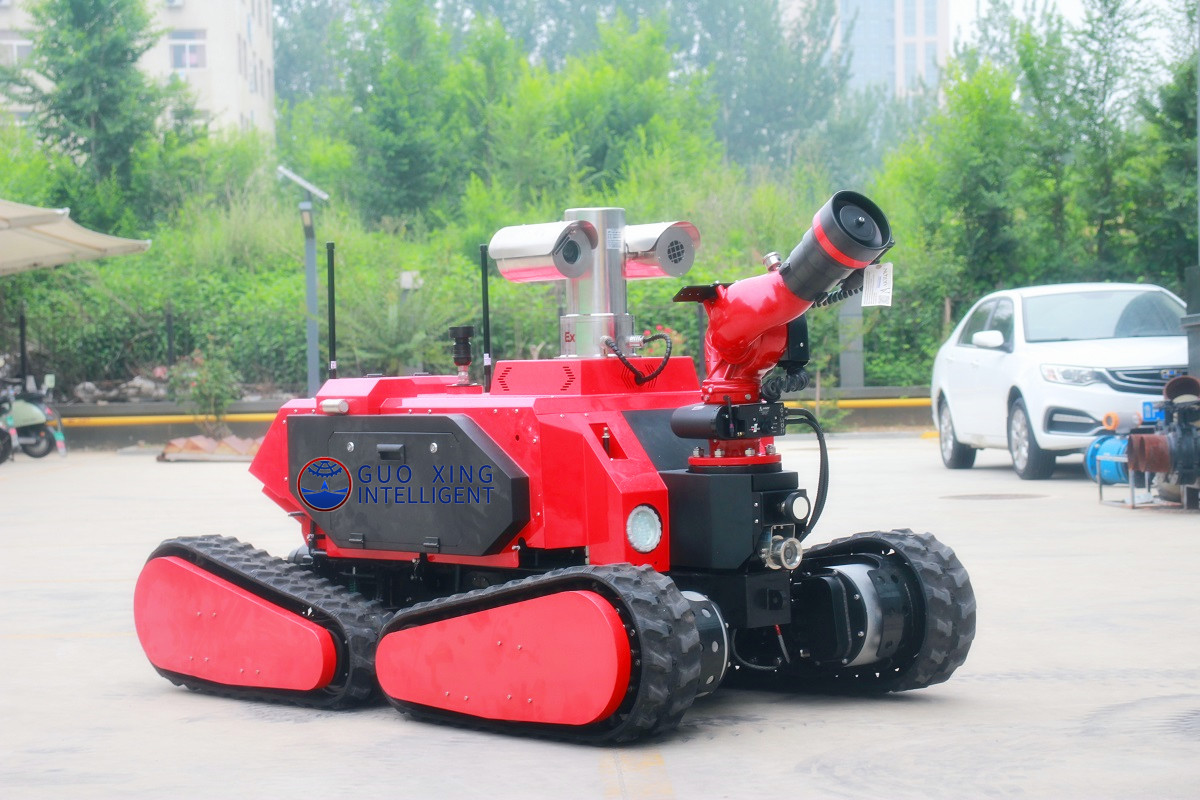
Procuring a complex robotic platform demands rigorous evaluation. Never purchase a system based purely on glossy marketing materials. Use the following criteria to evaluate distinct vendor offerings objectively.
Suppression & Payload Capability: You must match the pump volume limits to your most common threat models. Assess the foam integration systems thoroughly. Evaluate interchangeable task modules carefully. Determine if you need ventilation fans, manipulator arms, or stretcher attachments.
Durability & Environmental Tolerance: Extreme fires melt standard metals rapidly. Evaluate the heat shielding thresholds explicitly. Check the continuous operating time limits in high-temperature zones. Superior models feature active self-cooling mechanisms. They spray a water curtain over themselves to survive intense radiant heat.
Mobility & Transportability: Assess the ongoing track versus wheel trade-offs. Tracks conquer rubble but require heavier maintenance. Transportability often derails adoption. Can your current apparatus fleet transport the new unit? If it requires a dedicated, custom trailer, your deployment speed drops significantly.
Control Systems & Connectivity: Remote platforms rely entirely on signal strength. Evaluate the reliability of remote belly-pack controllers. Urban environments generate massive RF (Radio Frequency) interference. Concrete walls block signals frequently. You must demand strict fallback protocols. The unit must brake automatically if the operator loses the control signal.
Sensor Suites: Baseline requirements are non-negotiable. The unit must carry high-resolution thermal cameras. You need toxic gas detectors covering LEL (Lower Explosive Limit), CO, and H2S. High-definition video feedback ensures the operator drives safely and accurately.
Many organizations fail because they only budget for the sticker price. True Total Cost of Ownership (TCO) encompasses far more than initial procurement. You must plan for implementation friction and ongoing maintenance.
Initial capital expenditure varies wildly across the industry. Basic reconnaissance drones run around $10,000. Advanced heavy tactical ground platforms routinely exceed $300,000. However, this upfront procurement cost is merely the starting line. High-stress environments cause rapid, severe wear on moving parts. Tracks snap. Thermal sensors degrade over time. Heat shields warp after prolonged exposure.
Budgeting for specialized OEM (Original Equipment Manufacturer) maintenance contracts is absolutely mandatory. Your local fleet mechanics cannot service proprietary robotic drivetrains. If you skip the maintenance contract, your expensive platform will sit broken in a storage bay within two years.
Training and adoption friction presents another massive hurdle. Operating heavy robotics requires distinct spatial reasoning skills. Tactical training protocols change entirely. You risk intense "investment rejection" from the rank-and-file members. If veteran firefighters view the equipment as overly complex, they will simply ignore it. Worse, they might view the machine as a threat to their job security. You must manage this cultural shift proactively.
Finally, understand strict technological limitations. Manage expectations regarding autonomous capabilities. Science fiction portrays fully independent androids. Reality looks very different. Robots still struggle severely with autonomous manipulation. Opening standard doors or grasping complex objects frustrates current AI systems. Skilled human oversight remains a mandatory requirement for tactical success.
Integrating robotic solutions protects human life and secures critical business assets. However, you must navigate the procurement process strategically. Rushing into a purchase guarantees operational failure. Follow these concrete steps to begin your shortlisting process:
Audit Your Threat Profile: Do not buy a heavy structural breaching tool if your primary risk involves high-rise apartments. Determine if your exact need is industrial containment, urban breach, or aerial reconnaissance.
Request Field Demonstrations: Never procure advanced technology based on spec sheets. Demand rigorous on-site trials. Force the vendor to operate the unit in your specific operational terrain. Test it on your facility stairs, local brush, or congested staging yards.
Assess Vendor Infrastructure: A great machine fails without great support. Evaluate the manufacturer's Service Level Agreement (SLA). Check their inventory for replacement parts. Confirm their cadence for firmware updates. Ensure they maintain a robust domestic support network.
Calculate Total Lifecycle Costs: Combine the upfront purchase price, ongoing maintenance contracts, and specialized operator training into one comprehensive budget request.
Adopting remote suppression technology separates forward-thinking agencies from those trapped in the past. You now possess the framework needed to evaluate, procure, and deploy these life-saving machines effectively.
A: No. The current and foreseeable standard is "human-in-the-loop." Robots lack the dynamic judgment and adaptability of human responders. Fire conditions change unpredictably. We utilize these machines to enhance safety and efficiency in unsurvivable zones, not to replace the critical decision-making of trained personnel.
A: Costs vary drastically by capability and payload. Basic reconnaissance drones or small rovers can start in the low tens of thousands. Conversely, heavy-duty, multi-role suppression platforms designed for structural breaching can easily exceed $300,000.
A: Most heavy ground units rely on diesel engines or high-capacity battery packs. These power sources drive hydraulic tracks and high-volume water pumps. Operators typically control them via encrypted, wearable remote-control consoles from a safe staging area to prevent signal hacking.