
Views: 0 Author: Site Editor Publish Time: 2026-05-31 Origin: Site


Petrochemical and industrial fires present extreme stakes for any safety team. Split-second decisions occur in environments characterized by explosive materials, oxygen depletion, and toxic gas releases. Traditional firefighting heavily relies on biological human endurance and undeniable bravery. However, modern incident command systems are rapidly shifting toward robotic integration. We see a critical need to keep human responders out of fatal hazard zones.
Enter the Firefighting Robot. You should view this technology not as a novel gadget, but as an essential force multiplier. It serves as a vital risk-mitigation tool for the world's most dangerous facilities. In this comprehensive guide, safety managers and procurement teams will learn about core operational capabilities. We will detail measurable ROI and ESG impacts. Finally, you will discover how to evaluate these platforms for successful enterprise deployment.
Safety First: Robots provide absolute risk mitigation by taking over zero-visibility, high-heat, and highly toxic frontline suppression tasks.
Data-Driven Tactics: Equipped with LIDAR, IR, and VOC sensors, they act as mobile intelligence hubs for incident commanders.
Financial & ESG Value: Beyond saving lives, robots protect high-value infrastructure, reduce liability, and support measurable corporate ESG (Environmental, Social, Governance) goals.
Procurement Reality: Successful adoption requires evaluating payload modularity, connectivity redundancies, and recognizing robots as human-assistive tools, not human replacements.
Industrial facilities process highly volatile compounds daily. When failures occur, the resulting fires easily overwhelm biological limits. Human responders face extreme thermal radiation immediately upon arrival. They must navigate environments highly prone to sudden structural collapse. They also encounter lethal atmospheres rich in carbon monoxide and hydrogen cyanide. A standard hazmat suit provides limited thermal protection. It only buys responders a few precious minutes in these extreme conditions.
Modern safety doctrine relies on a very simple truth. Industrial fire chiefs universally agree on this paradigm. We can afford to lose a machine, but we cannot afford to lose a responder. Historical National Fire Protection Association (NFPA) data consistently shows thousands of fireground injuries annually. Many of these severe injuries stem directly from overexertion, toxic inhalation, and thermal exposure. We desperately need unmanned frontline assets to change these statistics.
Deploying a Firefighting Robot keeps human teams safely staged outside the immediate blast radius. It transforms how incident commanders approach catastrophic industrial emergencies. You eliminate the agonizing choice between saving facility infrastructure and risking human lives.
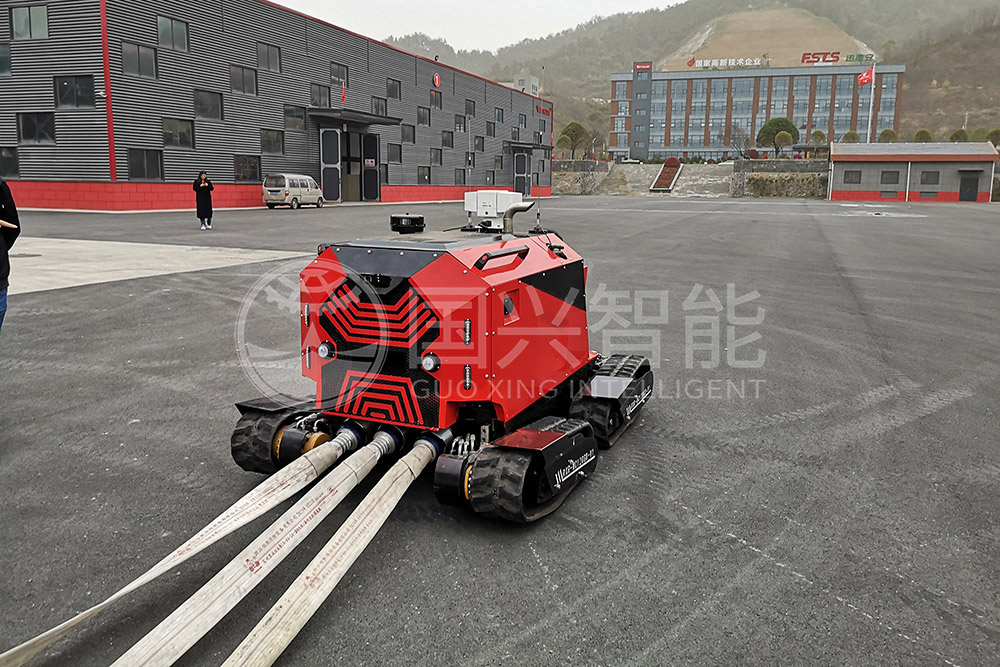
Sending humans into chemical blazes invites catastrophic risk. Refineries often experience Boiling Liquid Expanding Vapor Explosions (BLEVE). These devastating explosions occur rapidly and often without warning. Unmanned systems eliminate human exposure to these unpredictable thermal events. Human crews wear heavy, exhausting personal protective equipment. They rely entirely on finite, compressed oxygen supplies. They must rotate out frequently to avoid severe heat stroke.
In contrast, robots leverage heat-resistant aerospace alloys. They utilize advanced ceramic insulation to protect delicate internal electronics. They do not sweat, panic, or suffer from heat exhaustion. A properly equipped system applies continuous foam or dry chemical suppression for hours. This uninterrupted action aggressively cools volatile tanks before they reach a critical failure point. This relentless stamina often dictates the difference between a contained incident and a total facility loss.
Incident commanders frequently operate blindly during the initial stages of a chemical fire. Thick, toxic smoke obscures physical vision completely. Extreme radiant heat prevents close reconnaissance. You can solve this by transforming a robot into a mobile intelligence hub. These units carry highly advanced sensor payloads to pierce the smoke.
Thermal imaging (IR) sensors identify hidden hotspots inside massive storage tanks. Light Detection and Ranging (LIDAR) provides highly accurate 3D mapping of compromised structures. Integrated gas detectors map invisible volatile organic compounds (VOCs) in real time. This continuous data stream empowers your command staff. They can make evidence-based tactical decisions from a safely distanced command center. You no longer have to guess where the fire seat actually resides.
Refineries and chemical plants resemble complex steel labyrinths. They feature narrow maintenance corridors and steep metal stairs. You find incredibly dense piping networks everywhere. When explosions scatter steel debris, humans find access nearly impossible. Walking over jagged wreckage takes too much time and risks ankle injuries. Robotic mobility solves this serious logistical nightmare.
Many advanced platforms use heavy-duty caterpillar tracks. They feature articulated chassis designs built for harsh environments. These rugged drivetrains easily climb steep industrial stairs. They roll over jagged debris without puncturing tires or losing traction. They navigate tight industrial spaces swiftly. This unparalleled agility ensures rapid suppression agent application exactly where it matters most.
You might assume these specialized machines sit idle between rare emergencies. However, modern engineering designs prioritize immense daily versatility. A modular payload system allows operators to swap equipment quickly. You simply unbolt the heavy water monitor and attach a new functional payload.
When not actively suppressing flames, you can reconfigure the units entirely. They perform daily safety patrols across sprawling chemical complexes. They transport heavy hazardous materials securely across the plant footprint. They also conduct automated gas leak detection in designated high-risk zones. This dual-use capability ensures the asset delivers tangible value every single day. It becomes an integrated part of your daily safety culture.
Securing budget for advanced robotics requires clear financial justification. Procurement teams often scrutinize the initial hardware procurement costs. However, you must weigh this against substantial long-term financial benefits. Deploying a Firefighting Robot aggressively preserves high-value plant assets during an outbreak. Rapid robotic intervention stops fires from spreading to adjacent process units.
This early intervention helps avoid devastating medical liabilities and massive workplace compensation claims. Furthermore, many commercial facilities negotiate significantly reduced insurance premiums. Insurance underwriters highly favor plants demonstrating enhanced automated suppression capabilities. They recognize the reduced risk profile immediately.
Beyond direct financial returns, these machines directly support corporate governance. They provide measurable impacts across Environmental, Social, and Governance (ESG) frameworks. We break down these strategic benefits in the chart below.
ESG Pillar | Robotic Integration Impact |
|---|---|
E (Environment) | Faster containment of chemical fires minimizes toxic liquid runoff. It drastically reduces harmful atmospheric carbon and chemical emissions. |
S (Social) | Drastically reduces employee health risks. Prevents workplace fatalities by removing humans from direct exposure to thermal radiation and toxic gases. |
G (Governance) | Provides verifiable, timestamped sensor data. This telemetry acts as an indisputable record for post-incident audits, compliance reporting, and legal defense. |
A persistent industry myth suggests technology will eventually replace human firefighters entirely. In reality, these autonomous machines act as human-assistive tools. They absolutely do not replace experienced rescue professionals. Instead, they handle extreme-risk penetration safely. They perform the physically exhausting heavy suppression tasks.
This strategic division of labor frees humans to focus on search-and-rescue operations. Incident commanders can dedicate more mental bandwidth to broad operational strategy. We call this the force multiplier effect. You amplify human capability rather than trying to replace it.
Control paradigms also reflect this collaborative philosophy closely. We see a clear technological distinction between remote control and autonomous operations. Remote-controlled systems remain the gold standard for active chemical fires. Chemical fires exhibit highly unpredictable behaviors. Retaining human judgment at the controls prevents dangerous tactical errors. An experienced firefighter understands complex fire behavior much better than an algorithm.
Meanwhile, AI-driven autonomous features act as crucial operator assists. Self-navigation, intelligent obstacle avoidance, and automatic heat-tracking algorithms reduce operator fatigue significantly. This hybrid control model perfectly blends machine durability with irreplaceable human intelligence.
Procurement teams must look past flashy marketing videos. You need a rigorous, evidence-based framework to evaluate heavy industrial platforms. We recommend assessing four critical pillars before making any purchasing decision. Consider the following criteria when you shortlist your enterprise options:
Mobility and Materials: Does the chassis match your specific facility terrain perfectly? Explosive zones require spark-proof treads and intrinsically safe electronics. Standard aluminum melts under chemical fire temperatures, so demand high-grade thermal alloys.
Payload Customization: Look for seamless integration. Can the platform switch rapidly between high-volume water monitors, foam dispensers, and inspection cameras? A machine locked into a single function limits your tactical flexibility.
Communication Resilience: Signal jamming and heavy steel infrastructure disrupt wireless connections frequently. How does the system maintain control? Prioritize models utilizing redundant mesh networking or physical tethered cable backups.
Vendor Support and Maintenance: Hardware breaks under extreme industrial stress. Evaluate the vendor's mean time between failures (MTBF). Ensure they guarantee rapid spare part availability and provide frequent software updates.
Best Practice: Always ask vendors for independent testing certifications (like ATEX or IECEx). This ensures the robot meets strict spark-proof compliance for explosive atmospheres.
We must acknowledge the potential friction points of robotic adoption. Transparently addressing these inherent risks ensures smoother enterprise deployment. Ignoring these realities leads to expensive hardware gathering dust in a storage closet.
The Training Curve: Driving a heavy machine through thick smoke requires specialized training. Human operators must learn to accurately interpret LIDAR and IR sensor data under immense stress. Common Mistake: Treating the robot like a simple remote-control toy. Best Practice: Implement rigorous, scenario-based simulator training for all potential operators before field deployment.
Infrastructure Preparedness: Facilities might not be fully ready for autonomous machinery immediately. You may need to audit your grounds carefully. Check concrete ramp widths. Clear designated deployment zones. Remove unnecessary industrial debris from critical emergency pathways to ensure rapid transit.
Network Dependability: Heavy industrial environments act as giant Faraday cages. Dense steel piping blocks RF signals easily. You must acknowledge the real risk of sudden signal loss. Employing hybrid fail-safes remains an absolute necessity. A dependable Firefighting Robot uses wireless operations for agility. However, it always relies on tethered cables during critical interior penetration missions.
Navigating a chemical blaze requires precision, extreme durability, and overwhelming suppression force. Unmanned systems provide a critical insurance policy and a massive operational upgrade for modern industrial plants. By integrating these machines, you prioritize human safety while aggressively securing high-value assets.
To successfully implement this transformative technology, decision-makers should take immediate action. First, initiate comprehensive site audits to verify mobility access across your plant. Second, engage reputable vendors for live, on-site pilot demonstrations. Third, involve both procurement and frontline safety teams early in the evaluation process. This collaborative approach ensures you select a platform that truly meets tactical and financial requirements.
A: No. They act as a tactical vanguard. They handle dangerous frontline suppression, which protects human responders. This allows your human personnel to focus entirely on strategy, complex search-and-rescue, and managing the overall incident safely from a distance.
A: Modern units feature rapid-deployment modularity. Facilities typically preposition these robots in designated high-risk zones. This strategic placement allows them to activate and engage a hazard within minutes, often before human teams even finish donning their protective gear.
A: Dense steel piping can disrupt wireless signals heavily. To counter this, industrial robots use multiple robust fail-safes. They rely on auto-return protocols, redundant mesh networks, and physical tethered backups to ensure you never lose control during a critical operation.
A: They offer immense daily utility. When not fighting fires, you can equip them with various sensor payloads. They conduct automated thermal monitoring, perform routine safety patrols, and execute hazardous gas leak detection across the plant floor.