
Views: 0 Author: Site Editor Publish Time: 2026-09-22 Origin: Site


Picture a massive petrochemical facility engulfed in flames. Industrial fires effortlessly reach temperatures exceeding 1,000 degrees Celsius. This creates an unforgiving environment. Structural steel buckles under the thermal load. Standard plastics instantly liquefy. Human survival becomes an absolute impossibility. This is precisely where a heavy-duty firefighting robot steps in to take over the front lines. Deploying an autonomous machine into an inferno means it must survive the very conditions it was sent to neutralize.
To prevent catastrophic equipment failure, these machines rely on highly advanced thermal shielding. The ultimate survival mechanism is the water mist self-protection system. This comprehensive guide explores exactly how evaporative cooling technology works. We will detail why it remains a non-negotiable feature for tracked units navigating hazardous zones. Furthermore, we will outline the critical specifications safety managers must evaluate when investing in autonomous fire suppression fleets.
Deploying unmanned systems into active fire zones involves navigating environments that far exceed the operational limits of standard industrial machinery. Procurement officers and safety managers evaluating autonomous equipment must first understand the exact nature of these thermal threats.
In a large-scale chemical fire, direct flame contact is rarely the only hazard. Blazes project immense amounts of radiant heat and generate severe convective currents. Thermal radiation travels through the air in electromagnetic waves. It intensely heats any solid object it strikes. Within close proximity to a Class B fuel fire, radiant heat flux can easily exceed 100 kilowatts per square meter. At this extreme level, standard exterior paint blisters in seconds. Structural metals begin to yield and weaken from several meters away. Without active intervention, the steel chassis acts as a thermal sponge. It absorbs radiation and causes surface temperatures to spike violently.
Consequently, this external heat poses a lethal threat to the internal architecture of the machine. The core functionality of unmanned fire suppression relies on highly sensitive electronic components. Lithium-ion batteries drive the heavy torque motors. These power cells are notoriously susceptible to thermal runaway if their ambient temperature pushes past 60 to 80 degrees Celsius. Once thermal runaway begins, the battery cells vent violently and destroy the machine from the inside out. In addition, optical sensors, thermal imaging cameras, and LiDAR modules suffer lens cracking or severe data corruption under extreme heat stress.
Ultimately, a suppression robot holds value only if it remains in the hot zone for extended periods to deliver continuous water or foam application. An unprotected unit suffers a complete systemic failure within minutes. Self-protection mechanisms are specifically engineered to buy the equipment time. They allow the machine to sustain critical operations in hostile environments where human crews cannot safely remain.
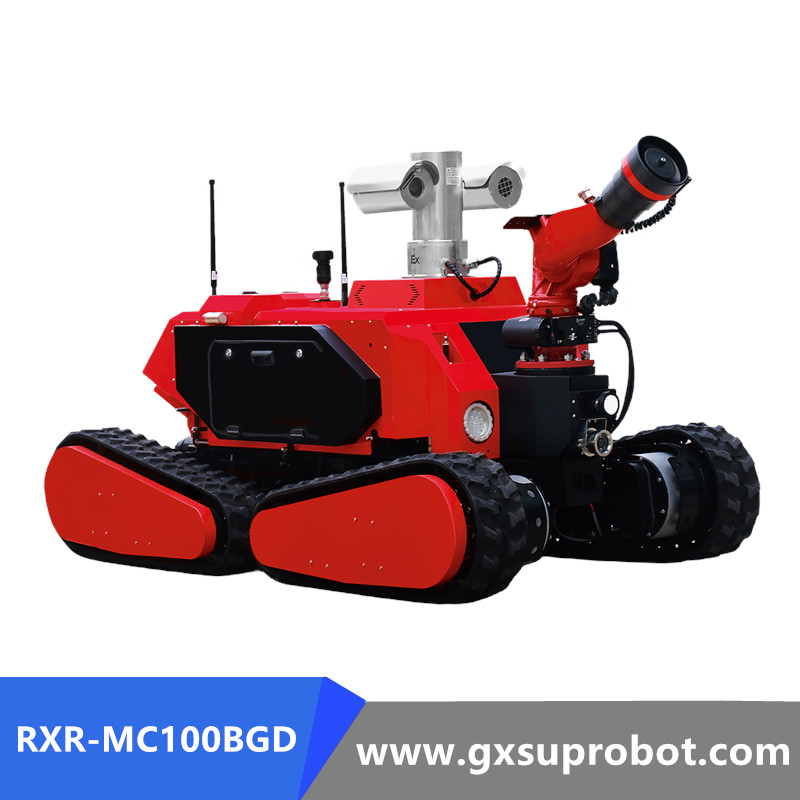
To counteract extreme thermal environments, engineers developed the water mist self-protection system. Rather than a simple hose leak, this is a highly integrated onboard mechanical network. It is designed specifically to cool the machine itself. This system operates entirely independently from the primary fire suppression monitor.
Instead of directing a heavy stream of water at the source of the fire, the self-protection system utilizes a specialized array of nozzles mounted around the chassis. These nozzles spray a continuous ultra-fine mist directly over and around the equipment. This localized water curtain ensures the structural integrity of the machine is maintained while it performs its primary duty of extinguishing the blaze.
The true efficacy of this technology lies in the microscopic droplet size. Traditional water monitors produce large and heavy droplets. These heavy drops bounce off hard surfaces or run off into the soil almost immediately. In stark contrast, misting systems generate micro-droplets. These are typically calibrated to less than 1,000 microns in diameter. Extreme atomization exponentially increases the total surface area of the water. A larger surface area allows for a vastly superior rate of heat absorption compared to standard droplets. This makes mist highly efficient at neutralizing airborne thermal energy before it touches the metal hull.
The effectiveness of the water curtain is deeply grounded in established thermodynamic principles. The system utilizes three distinct scientific mechanisms to maintain operational stability in the face of an inferno.
The primary cooling mechanism is evaporative cooling. This process is driven by the latent heat of vaporization. When water transitions from a liquid state to a gaseous state, it absorbs a massive amount of thermal energy. Specifically, it takes approximately 2,260 kilojoules of energy to convert just one kilogram of liquid water into steam. As the intense heat from the fire collides with the water mist, that thermal energy is entirely consumed by the evaporation process.
Looking at broader industry trends, safety analysts and emergency response boards increasingly recognize active thermodynamic management as a mandatory standard rather than an optional upgrade. Recent sector analyses reveal a significant shift away from simply bolting on heavier armor plating. Heavy armor drastically reduces battery life and limits mobility. Industry leaders are moving rapidly toward these integrated evaporative cooling systems. By leveraging fluid dynamics, modern autonomous units extend their operational time in hazardous fires by up to 300 percent without incurring debilitating weight penalties.
Beyond evaporation, the dense cloud of micro-droplets serves as a formidable optical barrier. Water mist is highly effective at attenuating thermal radiation. The suspended droplets physically scatter, reflect, and absorb the infrared radiation emitted by the fire. This scattering effect significantly reduces the radiant heat flux that actually reaches the metal surface of the equipment. It functions much like a heavy-duty physical thermal shield.
Finally, while much of the mist evaporates in the air, a calculated percentage lands directly on the metal chassis. This provides direct conductive cooling. The water absorbs heat from the metal surface as it evaporates. This action instantly drops the exterior temperature. It prevents the hull from conducting heat inward, thereby safeguarding the motherboards and hydraulic reservoirs.
A reliable self-protection system is a highly engineered network of specialized components. Engineers design these networks for precision, durability, and strict water conservation.
High-pressure micro-nozzles serve as the most critical interface of the system. Manufacturers machine these from high-grade stainless steel or brass to resist corrosion and thermal deformation. Technicians calibrate the nozzles to operate under specific pressures to produce the exact micro-droplet size required for optimal evaporation. They also feature anti-clogging geometries to ensure continuous operation, even if the municipal water supply contains minor particulate matter.
Because water conservation remains vital during an emergency, advanced systems utilize onboard smart automation. Equipped with Resistance Temperature Detectors and thermal cameras, the robot continuously monitors its ambient environment. The cooling system remains dormant to conserve main line pressure until the external temperature reaches a critical threshold. Once that limit is crossed, the self-protection mist triggers automatically. This requires absolutely no input from the remote operator.
To function without compromising the main suppression effort, the self-cooling system features dedicated internal water routing. It siphons a precise and calculated fraction of water from the main intake supply. This is usually between 5 and 10 percent. Advanced internal bypass valves and secondary booster pumps ensure that feeding these micro-nozzles does not cause a detrimental drop in the pressure or reach of the primary water monitor.
When deploying autonomous equipment into a petrochemical fire or a collapsing warehouse, the mobility system dictates success. The drive system determines whether the machine can actually reach the optimal suppression point. Fire zones are chaotic environments characterized by shattered glass, melted plastics, and exposed jagged rebar.
In these unpredictable settings, standard wheeled robots face severe limitations. Industrial rubber tires begin to lose structural integrity at temperatures exceeding 150 degrees Celsius. They melt completely when exposed to intense radiant heat. Furthermore, wheels distribute the machine weight over a very small contact patch. This makes them highly susceptible to sinking in thick extinguishing foam or getting lodged in structural debris.
Conversely, an advanced track firefighting robot is engineered specifically to overcome these environmental hazards. Continuous track systems distribute the heavy weight of the robot over a massive surface area. This ultra-low ground pressure allows the machine to effortlessly roll over unstable debris fields and climb industrial staircases without losing traction. Built from high-tensile steel or flame-retardant composites, these tracks withstand significantly higher thermal loads than standard tires.
| Feature | Tracked Firefighting Robot | Standard Wheeled Unit |
|---|---|---|
| Ground Pressure | Extremely low. Easily navigates thick foam and unstable debris fields. | High. Prone to sinking in mud or getting stuck in structural wreckage. |
| Thermal Resistance | High-tensile steel tracks act as natural heat sinks against hot floors. | Industrial rubber tires soften and melt at temperatures above 150 degrees Celsius. |
| Incline Traction | Aggressive tread profiles grip industrial stairs and steep embankments. | Frequently slips on wet, oily, or foam-covered concrete surfaces. |
| Undercarriage Cooling | Targeted misting lubricates and cools heavy steel sprockets continuously. | Rarely supported due to exposed axles and sensitive steering joints. |
The integration of the water mist system is particularly synergistic with tracked models. Metal tracks naturally act as thermal sinks that dissipate heat into the ground. High-end self-cooling systems route specific misting nozzles downward to cover the undercarriage and track mechanisms. This targeted continuous mist lubricates and cools the drive sprockets and tensioners. It effectively prevents the internal hydraulic fluids from boiling during prolonged operation.
While industrial facilities focus heavily on managing chemical and structural fires, forestry departments face an entirely different threat. Wildland-urban interface fires present massive logistical challenges. In modern fire management, relying solely on reactive suppression is no longer sufficient. A comprehensive safety strategy requires robust proactive measures to mitigate risks long before ignition occurs.
Wildfires require heat, oxygen, and fuel to burn. Since environmental heat and oxygen cannot be controlled, fire prevention relies entirely on fuel management. Dry brush, invasive vegetation, and deadwood serve as highly combustible fuel loads. If left unmanaged, a single spark escalates into a catastrophic blaze. Traditionally, clearing this fuel involved deploying human crews with handheld brush cutters. This is a dangerous and labor-intensive task, especially on steep and unstable inclines.
To address these escalating dangers, safety departments are heavily investing in remote-controlled prevention technology. The Forest Terrain Slope Mower represents the proactive counterpart to the suppression robot. Operating via long-range remote control, this unmanned machine utilizes a low center of gravity and aggressive track profiles. It easily maintains stability on severe inclines exceeding 45 degrees. The unit is equipped with heavy-duty flail blades capable of mulching thick brush and saplings. This effectively creates wide firebreaks designed to halt the advance of a wildfire.
For municipalities and large-scale industrial sites bordered by forests, the most effective strategy involves building a complete unmanned fleet. The slope mower serves as the proactive vanguard by continuously reducing the fuel load during dry seasons. Should a fire still occur, the tracked suppression robot is immediately deployed. Together, these machines form a holistic end-to-end safety ecosystem that keeps human personnel entirely out of harm's way.
Procuring autonomous fire safety equipment represents a significant capital expenditure. Safety managers and fire chiefs must look far beyond basic specifications. A machine might boast a massive water cannon, but if its self-protection systems are inadequate, the chassis will simply melt before extinguishing the fire.
First, verify the self-protection coverage area. Do not accept a simple cooling spray as adequate. Inspect the engineering schematics to ensure the manufacturer guarantees a true 360-degree misting envelope. Nozzles must be positioned to cover the top deck, side panels, sensor arrays, and crucially, the undercarriage. Radiant heat frequently reflects upward from superheated concrete floors, making bottom-up protection vital.
Next, evaluate the flow rate and hose compatibility. The cooling system must draw water without compromising the primary suppression effort. Review the technical documents to ensure the machine utilizes a proportioning valve. This valve should siphon no more than 10 percent of the total incoming water flow. Additionally, verify that the inlet couplings perfectly match the standardized hoses used by your local municipal fire departments, like Storz or NH fittings.
Finally, demand proper hazard certifications. For petrochemical plants, oil refineries, and hazardous material storage facilities, thermal protection alone is insufficient. The robot must hold an explosion-proof certification such as ATEX or IECEx. This ensures all internal electronics and motors are sealed in enclosures designed to contain an internal spark. It prevents the robot itself from igniting flammable gases in the surrounding environment. Pair this with a minimum IP67 environmental rating to guarantee the heavy water flow will not short-circuit the motherboards.
Investing in autonomous fire suppression requires careful and highly technical evaluation. An unmanned machine is a heavy investment, and the water mist self-protection system serves as the ultimate insurance policy for that asset. By leveraging the thermodynamics of evaporative cooling, this technology ensures the equipment survives extreme heat. It protects sensitive internal electronics and maintains operational superiority in the most hostile environments on earth.
Modern emergency response is rapidly evolving. Departments and industrial facilities must now combine proactive prevention with advanced robotic suppression. Using remote terrain mowers to clear hazardous brush prevents fires, while heavily armored tracked robots fight active blazes. This two-pronged approach represents the future of fire management. It successfully removes human personnel from the most dangerous aspects of the job. Before finalizing any procurement, rigorously evaluate your specific terrain, thermal requirements, and hazard certifications. For industry-leading solutions that meet strict ATEX and IP67 standards, explore the advanced autonomous fleets at Guoxing Intelligent to ensure your facility is ready for the realities of the modern fireground.
The survivability of the equipment depends entirely on the continuous water supply and the efficiency of the self-protection system. With an active 360-degree water mist cooling curtain and a steady flow of water from the supply hose, a high-quality tracked unit can operate in ambient environments exceeding 800 to 1,000 degrees Celsius for extended periods. As long as the latent heat of vaporization actively consumes the radiant thermal energy, the internal electronics will remain within safe operating temperatures.
No. Advanced autonomous suppression units are engineered with specialized internal routing systems. They utilize proportioning valves or dedicated micro-pumps that divert a very small and optimized fraction of the incoming water volume to the high-pressure misting nozzles. This fraction is typically under 10 percent. This ensures the primary water monitor maintains maximum pressure, reach, and flow rate for active fire suppression.
For maximum thermodynamic efficiency, the misting nozzles should produce micro-droplets measuring less than 1,000 microns in diameter. Droplets of this size provide an massive surface-area-to-volume ratio. This allows the water to absorb radiant heat and flash into steam almost instantly, maximizing the evaporative cooling effect before the heat penetrates the exterior hull.
Lithium-ion batteries are highly sensitive to thermal loads. If the internal ambient temperature of the robot chassis exceeds 60 to 80 degrees Celsius, the battery cells risk entering thermal runaway. This is an unstoppable chemical chain reaction that causes the battery to vent toxic gases and aggressively catch fire. The water mist self-protection system is strictly necessary to keep the internal chassis temperature well below this critical failure threshold.
These two machines serve different phases of fire management. A firefighting robot is a reactive suppression tool. It is heavily armored, heat-resistant, and designed to spray water or foam directly onto an active fire. A Forest Terrain Slope Mower is a proactive and preventative machine. Operators use it before a fire ever starts to safely cut down dry brush and vegetation on steep hills. This effectively removes the fuel load and creates firebreaks to stop wildfires from spreading.
Yes, but with strict technical caveats. For chemical, oil, or gas fires, the robot must possess a verified explosion-proof certification like ATEX or IECEx. This ensures its electrical components do not ignite ambient fumes. For electrical fires, water-based suppression and water mist self-protection must be used with extreme caution due to conductivity risks. In high-voltage environments, engineers often retrofit robots with specialized non-conductive foam, dry chemical, or gas suppression payloads. The self-misting system may be disabled entirely to prevent electrical arcing.