
Views: 0 Author: Site Editor Publish Time: 2026-06-17 Origin: Site


Chemical warehouse fires present extreme volatility. They combine severe explosive risks and toxic exposure limits. Traditional human intervention often becomes impossible under these conditions. Industrial emergency response is shifting toward remote hazard management. Facilities now utilize specialized robotics to mitigate risk. They deploy suppression agents rapidly into dangerous zones. Procurement goes well beyond buying hardware. Selecting the right vendor dictates long-term deployment viability. It ensures maintenance readiness and regulatory compliance. You cannot simply purchase an off-the-shelf unit. The unique layout of your storage facility requires careful planning. We will explore how to frame your operational needs. You will learn the essential technical specifications required for hazardous environments. We will also guide you through evaluating vendors. This ensures you find a reliable partner. Protecting your facility demands rugged hardware. It requires solid operational support from a dedicated team.
Modern chemical storage facilities face unique operational challenges. Fixed suppression systems often show significant limitations during major events. Overhead sprinklers might activate too late. They frequently fail to penetrate fires shielded under dense racking configurations. We see human responders facing unacceptable life-safety risks. Highly corrosive environments destroy standard personal protective equipment rapidly. Explosive atmospheres make interior attacks incredibly dangerous. Facilities must rethink their entire approach to emergency response.
You need clear success criteria for robotic integration. A successful deployment drastically reduces incident escalation. You want faster initial knockdown times. You must guarantee zero human exposure to toxic plumes. You require real-time thermal telemetry. Gas telemetry must flow continuously to the incident commander. These metrics define operational success. They separate useful deployments from costly failures. We use these criteria to benchmark baseline performance.
Understanding solution categories helps narrow your focus. Tethered systems provide continuous water and power supplies. They drag heavy hoses deep into facilities. This approach restricts overall mobility. Fully mobile units offer superior agility. Autonomous or remote-controlled units navigate complex aisles easily. They require robust wireless networks. Chemical storage facilities generally benefit from highly mobile, remote-controlled units. They allow rapid repositioning as incident dynamics change.
Standard municipal equipment cannot survive industrial chemical incidents. Operating a chemical warehouse firefighting robot demands absolute safety compliance. Explosion-proof certification is non-negotiable. You must look for ATEX or IECEx ratings. Regular robots feature exposed brushed motors. They generate microscopic sparks during normal operation. These sparks easily ignite trapped chemical vapors. Hazardous environments require non-sparking tracks. Sealed electronics enclosures prevent gas ingress. Intrinsic safety ensures electrical circuits cannot generate enough energy to cause ignition.
Hardware features must translate into direct operational outcomes. Thermal imaging cameras do more than see through smoke. They identify localized hot spots inside chemical drums before ignition occurs. Gas sensors detect Lower Explosive Limit (LEL) thresholds. They warn operators about invisible vapor clouds. High-flow monitor payloads matter immensely. You need substantial flow rates. Specialized foam delivery requires high pressure. Chemical retardants demand specific nozzle configurations. We evaluate these payload specs strictly based on knockdown capabilities.
Remote hazard management involves complex control logic. We must address the skepticism surrounding fully autonomous claims. Algorithms struggle to predict unpredictable chemical reactions. A human-in-the-loop control model remains the safest approach. Operators provide critical tactical judgment. Focus heavily on signal latency. Milliseconds matter when directing high-pressure monitors. Signal redundancy prevents catastrophic control loss. Mechanical fail-safes must engage instantly upon signal drops. The unit should halt movement and shut down water flow automatically.
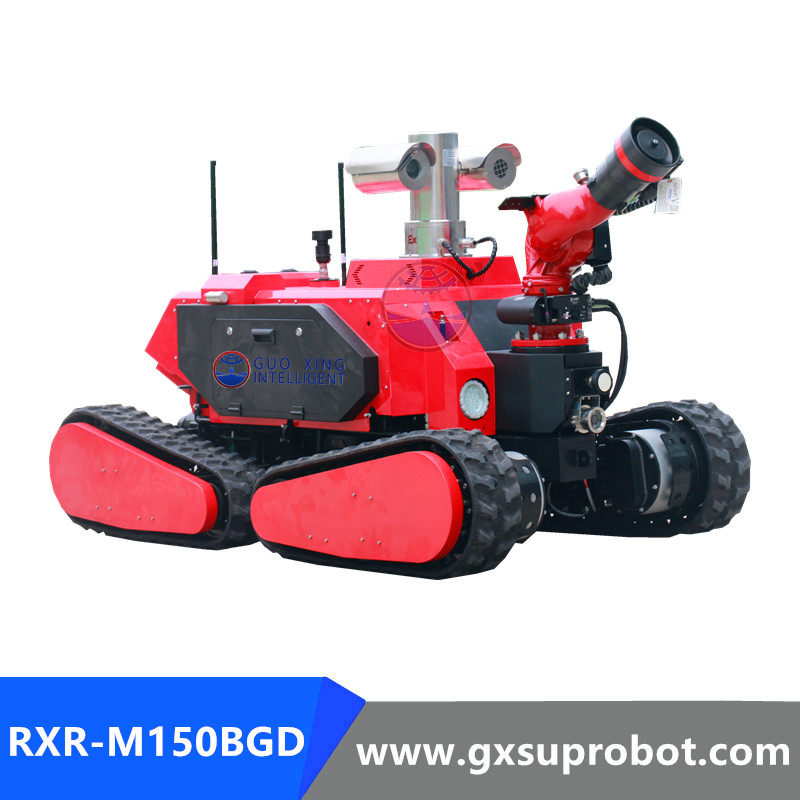
Partnering with a reliable Firefighting Robot Supplier involves deep operational vetting. You must assess their manufacturing capabilities thoroughly. True manufacturers offer extensive customization. They modify hose attachments to fit your specific manifold standards. They adjust track widths to navigate your narrowest aisles. Sensor payloads need tailoring. Local fire codes often dictate specific gas detection limits. A rigid supplier cannot meet these localized demands. We always look for engineering flexibility.
Compliance documentation proves engineering authority. A trustworthy vendor provides verified third-party test reports. Marketing brochures hold zero weight during safety audits. Request official compliance certificates directly. Ask for transparent MTBF data. Mean Time Between Failures indicates real-world reliability. It reveals the true durability of tracks, motors, and communication arrays. We demand transparency regarding failure modes.
After-sales infrastructure dictates your continuous readiness. Evaluate the vendor’s Service Level Agreement carefully. Look for guaranteed remote response times. Inquire about the physical availability of domestic spare parts. Shipping a specialized drive motor from overseas takes weeks. You cannot afford extended downtime. Remote diagnostic capabilities allow engineers to troubleshoot software issues instantly. This prevents unnecessary technician dispatch delays.
| Evaluation Category | Minimum Standard | Preferred Standard | Red Flags to Avoid |
|---|---|---|---|
| Customization | Basic nozzle swaps | Adjustable track width & payload modularity | "One-size-fits-all" rigid design |
| Compliance Data | Internal testing docs | Verified 3rd-party ATEX/IECEx certificates | Refusal to share MTBF statistics |
| After-Sales Support | Email support desk | 24/7 remote diagnostics & domestic parts | No formal Service Level Agreement |
| Operator Training | Video tutorials | Multi-day on-site live deployment drills | Charging separately for basic handover |
Training separates successful adoption from unused hardware. The supplier must offer comprehensive operational training. It should target your on-site emergency response teams. Focus exclusively on high-stress deployment scenarios. Operators must practice navigating blind corners using only thermal feeds. Handover protocols should include basic maintenance routines. Your team must know how to clean corrosive residue off the tracks. Effective training builds immense operator confidence.
Adoption risks exist in every industrial robotics program. Acknowledge these operational hurdles early. Battery degradation remains a significant issue during long standby periods. Lithium chemistry requires active management. Storage footprints present another challenge. These units require dedicated, climate-controlled charging stations. You must allocate floor space near high-risk zones. Overcoming these risks requires strict standard operating procedures. We schedule weekly diagnostic run-ups. This keeps batteries conditioned and operators sharp.
Facility infrastructure demands rigorous attention. Wireless signal degradation occurs constantly in chemical warehouses. Dense metal racking acts as a massive Faraday cage. Liquid chemical drums absorb radio frequencies aggressively. Overcome this by installing signal repeaters. We test remote control frequencies thoroughly. Build active network redundancy. Mesh network topologies allow signals to bounce around physical obstructions. You must ensure uninterrupted telemetry streams. A disconnected robot becomes a heavy, useless obstacle.
Integration with existing protocols requires careful planning. The robot cannot exist in a vacuum. Weave robotic deployment into your current industrial emergency response plans. Define exactly who authorizes deployment. Coordinate closely with local municipal fire departments. They need familiarization training. Municipal incident commanders must understand the robot's capabilities. They need to know how it interfaces with their own pumpers. Seamless integration prevents on-scene confusion.
Moving from research to selection requires a structured approach. Narrow your shortlist by focusing on practical demonstrations. Mandate a live Proof of Concept test at your facility. Factory demonstrations look perfect. Real-world warehousing environments expose technical flaws quickly. Test the robot's maneuverability aggressively. Force it to cross containment bunds. Drive it through the densest part of your warehouse. Monitor remote connectivity constantly during the drive. Measure the entire deployment setup time. Seconds count when chemical reactions escalate.
Building your shortlist requires clear next-step actions. Use a standardized approach for every vendor. This keeps evaluations objective. We recommend following a strict sequence.
Focus strictly on operational readiness. A solid physical demonstration reveals the truth about maneuverability. Check the track tension mechanisms. Observe how the suspension handles heavy payload shifts. Ensure the camera feeds remain stable over rough terrain. If the video stutters during a simple drive, it will fail during a major thermal event. Hold vendors accountable for every technical claim they make.
Investing in industrial robotics represents a crucial safety decision. It fundamentally functions as a long-term partnership. You must rely heavily on your vendor. Reliable deployment relies equally on hardware ruggedness. It also requires the supplier's ongoing operational support. A brilliant machine fails without adequate spare parts. Exceptional training keeps your response team prepared.
Take immediate action regarding your facility needs. Encourage stakeholders to audit specific hazard classes today. Document your worst-case scenarios. Map out your dense racking zones. Understand your wireless dead zones completely. Complete this internal audit before issuing any vendor requests. This preparation guarantees a successful integration. It ensures your robotic response performs flawlessly when you need it most.
A: Focus strictly on ATEX or IECEx certifications. Regional equivalents like NFPA compliance for hazardous locations also apply. These ratings ensure intrinsic safety against sparks. Sealed electronics prevent combustible chemical vapors from reaching internal motors. It guarantees the machine will not act as an ignition source.
A: Signal loss represents a serious technical reality. Facilities overcome this by using robust mesh networks. Physical signal relay drops help extend range. High-powered repeaters bounce signals around metal racking. Many vendors also provide tethered control backups. This ensures continuous operation if wireless frequencies fail entirely.
A: Provide a realistic timeline. Expect typically 7 to 10 years of active service life. This timeline depends entirely on rigorous maintenance schedules. Strict battery cycling protocols extend operational readiness. Harsh corrosive environments require meticulous post-deployment cleaning to prevent premature mechanical failure.
A: Clarify current technological limits here. Some advanced platforms offer automated dispatch upon alarm triggers. However, human verification remains the industry standard. Manual override ensures safe deployment. Incident commanders must evaluate the specific hazard before releasing high-pressure agents into a populated facility zone.