
Views: 0 Author: Site Editor Publish Time: 2025-12-02 Origin: Site


Firefighting robots have emerged as a crucial asset in managing chemical spills, providing a more effective and safer approach to dealing with hazardous situations. In high-risk environments such as chemical plants, oil refineries, and industrial sites, chemical spills can rapidly turn into devastating fires, endangering human lives, damaging property, and harming the environment. Unlike traditional fires, chemical fires often behave unpredictably, spreading quickly and producing dangerous fumes or explosive reactions. Firefighting robots, equipped with advanced fire suppression systems and sensors, are designed to address these fires promptly, detect toxic gases, and relay real-time information to human responders. By operating in environments that are too dangerous for humans, these robots improve safety, prevent further damage, and limit human exposure to hazardous chemicals. This article delves into the essential role of firefighting robots in chemical spill management, showcasing their capabilities, technological advancements, and practical applications in real-world scenarios.
Chemical spills vary widely, each with unique risks:
Flammable Liquids: Substances like gasoline and oil can ignite easily, posing fire and explosion risks.
Hazardous Gases: Chemicals like chlorine or ammonia can release toxic or flammable gases, causing immediate health hazards.
Toxic Chemicals: Acids, pesticides, and heavy metals can cause severe harm through exposure or contamination, posing both immediate and long-term health risks.
Chemical fires present distinct challenges:
Rapid Spread: Chemical fires spread quickly, especially with flammable liquids or gases, making containment difficult.
Explosions: Many chemicals can explode under heat or pressure, increasing danger during firefighting efforts.
Toxic Byproducts: Burning chemicals release harmful fumes that can be lethal if inhaled, posing additional risks to firefighters and nearby populations.
Firefighters face significant risks when handling chemical fires:
Exposure to Toxic Gases: Harmful fumes from chemical fires can lead to poisoning or long-term health issues.
High Temperatures: Chemical fires can burn hotter than traditional fires, increasing burn risks and heat stress.
Unpredictable Reactions: Many chemicals react unpredictably, potentially worsening the fire or causing dangerous explosions.
Firefighting robots are equipped with advanced fire suppression systems, such as water nozzles, foam dispensers, and chemical retardants, that allow them to quickly address chemical fires. These systems enable robots to suppress flames and prevent their spread, especially in environments where human firefighters cannot safely intervene. By acting immediately, robots help reduce the fire’s intensity and prevent larger explosions, buying time for human responders to arrive.
Firefighting robots are often equipped with sensors that can detect hazardous gases, such as carbon monoxide and other toxic fumes. These sensors continuously monitor the air for dangerous chemicals, providing real-time data to human teams. By detecting these gases early, robots allow responders to assess the safety of the environment, avoid hazardous areas, and implement the proper safety protocols, minimizing the risk of exposure.
Firefighting robots also have environmental monitoring capabilities that allow them to assess critical conditions during chemical spill fires. Equipped with temperature sensors, air quality monitors, and stability detectors, robots can analyze the affected area in real-time. They provide crucial data on fire behavior, potential structural instability, and air quality, which is vital for creating an effective firefighting and evacuation strategy. This helps keep both robots and human teams out of harm’s way while optimizing fire control efforts.
One of the key advantages of firefighting robots is their ability to access areas that are too dangerous for human firefighters. Robots can navigate through confined spaces, spill zones with high heat, and regions with toxic chemical exposure. These robots can enter environments that would otherwise put human lives at risk, such as collapsed structures or chemical storage areas, allowing them to suppress fires and gather critical information without endangering responders.
Firefighting robots are equipped with a variety of advanced sensors to efficiently assess hazardous environments. Key sensors include:
Gas Detectors: These sensors can detect toxic gases such as carbon monoxide, ammonia, and other hazardous chemicals present in the air during a chemical spill. This enables the robot to identify danger zones and relay real-time data to human responders, helping them take appropriate action.
Thermal Sensors: These sensors detect heat levels, allowing the robot to identify hotspots and fire intensity even in low visibility or smoke-filled environments. This is crucial for locating the fire's origin and determining the most effective suppression tactics.
Real-Time Cameras: Equipped with visual cameras and infrared imaging, robots can capture real-time images of the environment, helping both the robots and human teams assess the situation and navigate hazardous spaces with precision.
Firefighting robots are integrated with various fire suppression systems specifically designed to handle chemical fires. These systems include:
Foam Dispensers: Foam is especially effective in chemical fire suppression, particularly for flammable liquids or oil fires. Robots equipped with foam dispensers can quickly cover the fire and suppress it without the risk of spreading the chemicals.
Chemical Retardants: In addition to water or foam, robots can deploy chemical retardants that prevent further ignition, especially in environments with hazardous chemicals that may react violently with water. These retardants provide effective fire control, preventing the fire from reigniting.
Firefighting robots are designed with mobility and maneuverability in mind to navigate hazardous environments:
Tracked Designs: Tracked robots offer increased stability and traction, allowing them to move across debris, uneven terrain, and chemical spills with ease. This is crucial for reaching tight spaces and navigating through areas impacted by structural collapse or hazardous material leakage.
Wheeled Designs: For less challenging environments, wheeled robots provide faster movement and easier navigation across flat, open spaces. These designs are versatile and allow for rapid deployment to areas where immediate fire suppression is needed.
Firefighting robots are capable of both autonomous operation and remote control, ensuring flexibility and adaptability in dangerous scenarios:
Autonomous Operation: Equipped with AI and machine learning, robots can perform tasks independently, making real-time decisions based on environmental data. This allows robots to navigate through hazardous zones, suppress fires, and monitor environmental conditions without continuous human input, which is especially critical in dangerous or unstable environments.
Remote Control: When necessary, human operators can take control of the robot remotely, using real-time data and visual feeds to guide the robot’s actions. This capability is particularly valuable for complex or high-risk tasks, such as maneuvering through tight spaces, adjusting fire suppression methods, or handling unpredictable fire behavior.
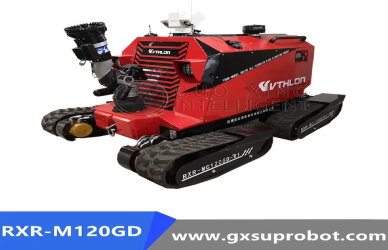
In industrial settings such as chemical plants and oil refineries, firefighting robots have become crucial in managing fires and chemical spills. For instance, during a fire at a chemical facility, a firefighting robot equipped with foam dispensers was deployed to contain the fire quickly, preventing further escalation. These robots can safely operate in toxic environments and high-heat areas, reducing the risk to human firefighters and preventing explosions.
Firefighting robots are also used in urban environments and transportation accidents. In the case of a train derailment involving hazardous chemicals, robots were deployed to assess fire risks and monitor for gas leaks using sensors. Similarly, during chemical truck accidents, robots provide immediate fire suppression and gather data on environmental hazards, ensuring faster, safer responses without human exposure to danger.
In natural disaster scenarios, such as wildfires, firefighting robots are deployed to control chemical runoff and spills in remote areas. For example, during a forest fire, a robot equipped with foam suppression systems and environmental sensors managed chemical spills from nearby industrial sites, reducing environmental damage and providing real-time data on air quality and water contamination.
Answer: Firefighting robots are equipped with advanced fire suppression systems like water nozzles, foam dispensers, and chemical retardants that help suppress chemical fires quickly, reducing their spread and minimizing risks like explosions.
Answer: Firefighting robots utilize gas detectors, thermal sensors, and visual cameras to monitor the environment for hazardous gases, extreme temperatures, and structural integrity, ensuring safer and more informed firefighting operations.
Answer: Robots are designed with advanced mobility features, including tracked or wheeled designs that allow them to move through challenging terrain, such as collapsed structures or areas filled with toxic chemicals, where human access would be too dangerous.
Answer: Yes, many firefighting robots are equipped with autonomous navigation systems, powered by AI, that allow them to operate independently, assess fire and spill conditions, and make real-time decisions without continuous human control.
To conclude, firefighting robots have become an essential tool in chemical spill management, offering enhanced safety, speed, and efficiency in handling dangerous fire and spill scenarios. Their ability to provide immediate fire suppression, detect hazardous gases, and access areas that are unsafe for human firefighters significantly improves the overall response to chemical emergencies. With their advanced capabilities, including real-time data collection and autonomous operation, these robots can mitigate risks, protect human lives, and reduce environmental damage. Industries and emergency services should strongly consider integrating firefighting robots into their emergency response strategies to enhance risk management, improve safety, and ensure more effective chemical spill control.