
Views: 0 Author: Site Editor Publish Time: 2026-04-20 Origin: Site


Tactical firefighting comes with brutal, unforgiving risks. Every year, thousands of responders face severe injuries on the fireground. The National Fire Protection Association (NFPA) regularly reports over 60,000 annual firefighter injuries. Worse, the National Institute for Occupational Safety and Health (NIOSH) highlights surging cancer rates—specifically mesothelioma and lung cancer—stemming from toxic exposure. Enter the Firefighting Robot. This technology has rapidly transitioned from an experimental concept to an essential asset. Today, municipal departments and private industrial facilities rely on these systems. We must view these machines not as human replacements, but as critical tactical multipliers. They create vital safety buffers, reduce resource consumption, and protect business continuity. As industry leaders often say, agencies can afford to lose a machine, but they can never afford to lose a firefighter. In this guide, you will learn how unmanned systems mitigate risk and deliver massive ROI.
Risk Mitigation: Unmanned units operate in extreme heat (900°C+), structural collapse zones, and toxic environments, drastically reducing human exposure to lethal risks.
Operational Efficiency: Advanced units can deliver the cooling capacity of multiple human personnel while utilizing significantly less water.
Human-Robot Collaboration: These systems enhance human decision-making via real-time telemetry (thermal/LIDAR) rather than replacing expert personnel.
Strategic ROI: For private sectors, rapid deployment prevents high-cost disaster escalation and facility loss, offsetting the initial capital expenditure.
Human physiology has strict limits in the "Hot Zone." When temperatures spike, responders face immediate threats of heat exhaustion and severe burns. Prolonged exposure causes fatigue. Fatigue leads to fatal decision-making errors. Furthermore, modern building materials release highly toxic carcinogens during combustion. Gases like carbon monoxide and hydrogen cyanide saturate the air. Even specialized protective gear cannot entirely prevent long-term carcinogenic absorption. Responders repeatedly face these hazards, resulting in devastating occupational health crises.
Beyond the human toll, private enterprise faces a massive business problem. Chemical plants, massive logistics warehouses, and energy facilities hold highly volatile materials. A delayed response to an industrial fire guarantees catastrophic consequences. Flames spread exponentially in these environments. Business interruption follows immediately. Companies face ruined supply chains, massive financial liability, and total facility loss. Traditional human response times often lag behind the rapid escalation of chemical or electrical fires.
This creates a glaring strategic gap. Human limitations prevent sustained suppression inside highly unstable structures. Roofs weaken. Walls bow. Incident commanders must eventually pull their teams out to avoid collapse casualties. Once humans retreat, the fire rages unchecked. Unmanned systems directly bridge this operational gap. They maintain continuous suppression in toxic, collapsing structures without risking human lives. This pivot saves both personnel and billions in industrial assets.
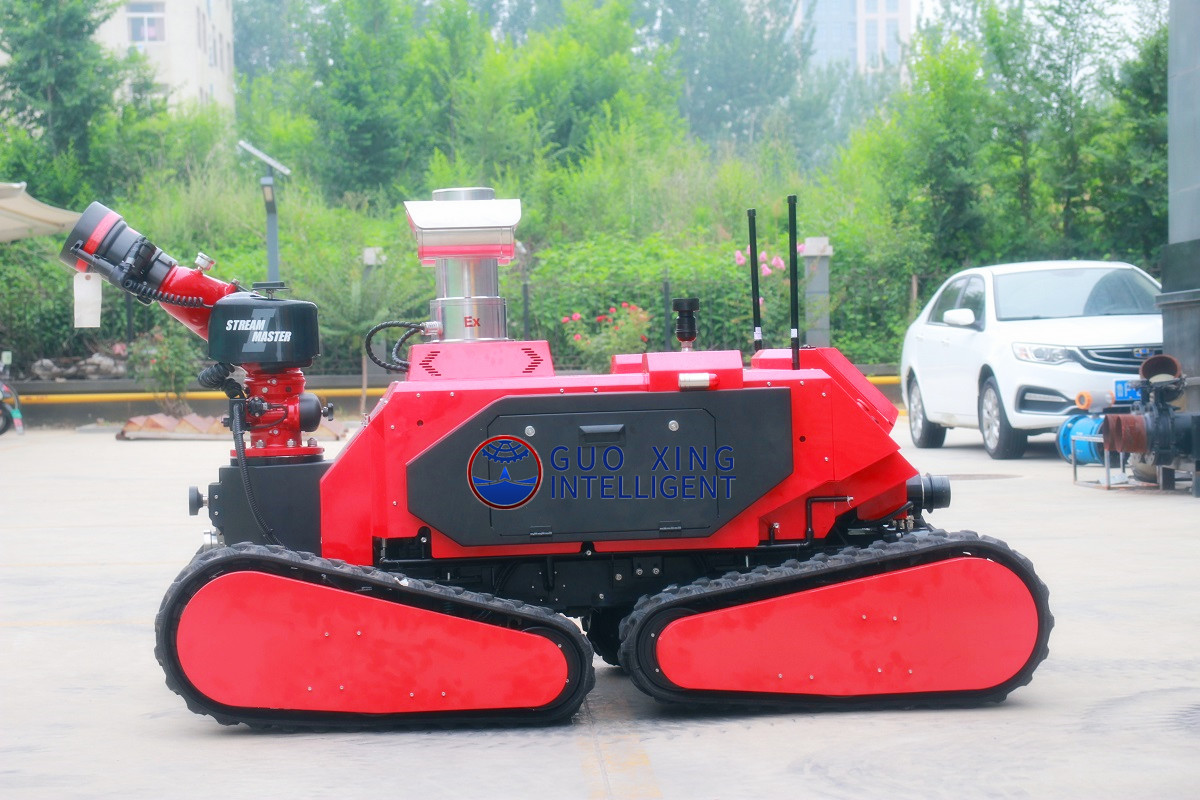
Extreme environments melt traditional equipment and break human endurance. In fires exceeding 900°C, structural steel bends and lead melts. Unmanned units handle these conditions effortlessly. Heavy-duty tracks and heat-resistant shielding allow these machines to drive directly into infernos. They maintain continuous suppression where human intervention remains impossible. If a compromised roof collapses, the agency loses a piece of hardware, not a life. This resilience allows incident commanders to hold aggressive interior positions far longer.
Smoke creates zero-visibility environments heavily saturated in lethal gases. Human firefighters rely on Self-Contained Breathing Apparatus (SCBA) units. SCBA tanks typically supply only 30 to 45 minutes of air. This strict time limit dictates every tactical move. Unmanned systems face no such constraints. They operate indefinitely in oxygen-depleted atmospheres. They ignore toxic gas clouds entirely. This eliminates the frantic cycle of swapping out exhausted crews and preserves fresh personnel for complex rescue operations.
Petrochemical facilities and lithium-ion battery storage sites pose unique explosive threats. Secondary explosions occur without warning. Deploying an explosion-proof firefighting robot prevents catastrophic escalation. These specialized units feature sealed electronics and non-sparking chassis designs. They roll into blast zones to apply targeted cooling or foam suppression. By knocking down the thermal runaway early, they prevent adjacent tanks or battery cells from detonating.
Carrying heavy gear into a fire drains human stamina quickly. A configured rescue firefighting robot changes the logistical game. These units boast massive payload capacities. They easily haul heavily pressurized hoses deep into hazardous zones. They transport extraction tools, medical supplies, and supplemental oxygen. Moreover, many models feature stretchers or towing rigs to assist in casualty evacuation. This frees up human hands to focus on medical triage and strategic navigation.
Blind aggressive attacks often lead to disaster. Modern units carry integrated sensor arrays including acoustic monitors, thermal imaging, and LIDAR. They stream live mapping data back to the command center. Commanders see precisely where the fire burns hottest through thick smoke. After extinguishing the flames, the machine remains valuable. It patrols the smoldering wreckage, gathering structural integrity data for investigators. This post-fire reconnaissance ensures the scene is completely safe before human inspectors enter.
Municipal fire departments require highly versatile equipment. They respond to residential fires, highway pileups, and commercial alarms in a single shift. Therefore, public agencies must prioritize modularity. Swappable tool payloads allow a single chassis to fight fires, clear debris, or ventilate smoke. Evaluation criteria heavily favor rapid deployment speeds, terrain adaptability, and seamless integration alongside existing human command structures. The focus remains on human-machine collaboration.
Conversely, private industrial facilities require fixed-site readiness. Refineries and warehouses need dedicated disaster containment. Evaluation criteria here shift toward high-volume flow rates and autonomous monitoring. Industrial units often connect directly to facility sensor networks. When an alarm triggers, the machine deploys instantly to protect business continuity.
Control modalities also differ based on the environment. Remote-controlled systems prioritize human expert judgment from a safe distance. Autonomous systems prioritize speed and preset patrol routes. Currently, hybrid models offer the highest reliability, blending AI navigation with human override capabilities.
Evaluation Criteria Table: Public vs. Private Needs
Feature/Need | Municipal Fire Departments | Private Industrial Facilities |
|---|---|---|
Primary Goal | Life safety and versatile hazard mitigation | Asset protection and business continuity |
Deployment Style | Transported via trailer to dynamic locations | Fixed-site standby, immediate localized response |
Control Modality | Remote-controlled by expert human operators | Autonomous triggers or hybrid remote monitoring |
Key Hardware | Modular payloads, terrain-adaptable tracks | Ultra-high volume monitors, fixed foam supplies |
Best Practices for Evaluation: Always demand a live demonstration in your specific environment. Do not rely solely on spec sheets.
Common Mistakes: Over-purchasing autonomous features for municipal departments. Highly dynamic public emergencies still require human tactical intuition.
Procurement officers often hesitate at the initial price tag. Realistic capital expenditures range from mid-five to mid-six figures depending on the payload and capacity. However, you must frame this upfront cost against the Total Cost of Ownership (TCO). Maintenance routines for electric drivetrains remain surprisingly low. Software updates and periodic battery replacements constitute the bulk of ongoing expenses.
The true value emerges through efficiency multipliers. Industry benchmarks reveal staggering performance metrics. In proven use cases, a single advanced unit provided the cooling capacity of up to 15 personnel. Furthermore, these machines drastically reduce water consumption. By driving closer to the seat of the fire, they apply water directly to the source. This precise targeting often results in a tenfold reduction in water usage, mitigating severe water damage to the surrounding property.
Ultimately, the true ROI equation is undeniable. Consider the cost of a single destroyed commercial facility. Add the expense of a halted production line. Factor in catastrophic human injury settlements or worker compensation claims. These potential losses exponentially outweigh the procurement and maintenance costs of a robotic fleet. Investing in this technology is fundamentally an insurance policy against total ruin.
TCO & ROI Summary Chart
Investment / Return Metric | Traditional Human-Only Response | Robotic-Assisted Response | Net Benefit Impact |
|---|---|---|---|
Initial Capital Outlay | Low (Standard Gear) | High ($50k - $300k+) | Robotics require higher upfront budget |
Personnel Risk & Liability | Extremely High | Near Zero (in Hot Zone) | Massive reduction in medical/legal costs |
Water Damage & Resource Use | High (Long-distance spraying) | Low (Precise targeting) | Prevents secondary flooding damage |
Business Interruption Cost | High (Slower interior attack) | Low (Immediate aggressive attack) | Saves millions in operational downtime |
Introducing unmanned systems often sparks resistance. You must directly address union and personnel anxieties. Dispel the replacement myth immediately. Emphasize clearly: robotics serve as a tactical shield. They handle the hazardous, extreme-heat labor. Humans handle the strategy, medical triage, and complex victim extraction. These machines exist to ensure every responder goes home safe at the end of their shift.
Successful implementation requires structured training and infrastructure updates. Outline a realistic rollout phase.
Operator Certification: Select tech-savvy personnel for initial remote-control training. Build muscle memory for joystick navigation under stress.
Maintenance Protocols: Train the motor pool on high-capacity battery management or diesel system upkeep.
Software Integration: Ensure the machine's telemetry feeds easily integrate into legacy command center displays.
For procurement officers, following a strict shortlisting logic prevents costly mistakes. Use this checklist when evaluating vendors:
Assess payload capacity for hauling hoses and tools.
Verify water and foam flow rates (L/min) against your specific hazard risk.
Check battery or fuel endurance under maximum load conditions.
Demand verified deployment history in similar municipal or industrial environments.
Best Practices for Rollout: Run joint exercises. Have veteran firefighters practice coordinating flanking maneuvers while the machine holds the primary fire stream.
Common Mistakes: Leaving the machine in storage until a massive disaster strikes. Operators will lack the familiarity needed to deploy it effectively under pressure.
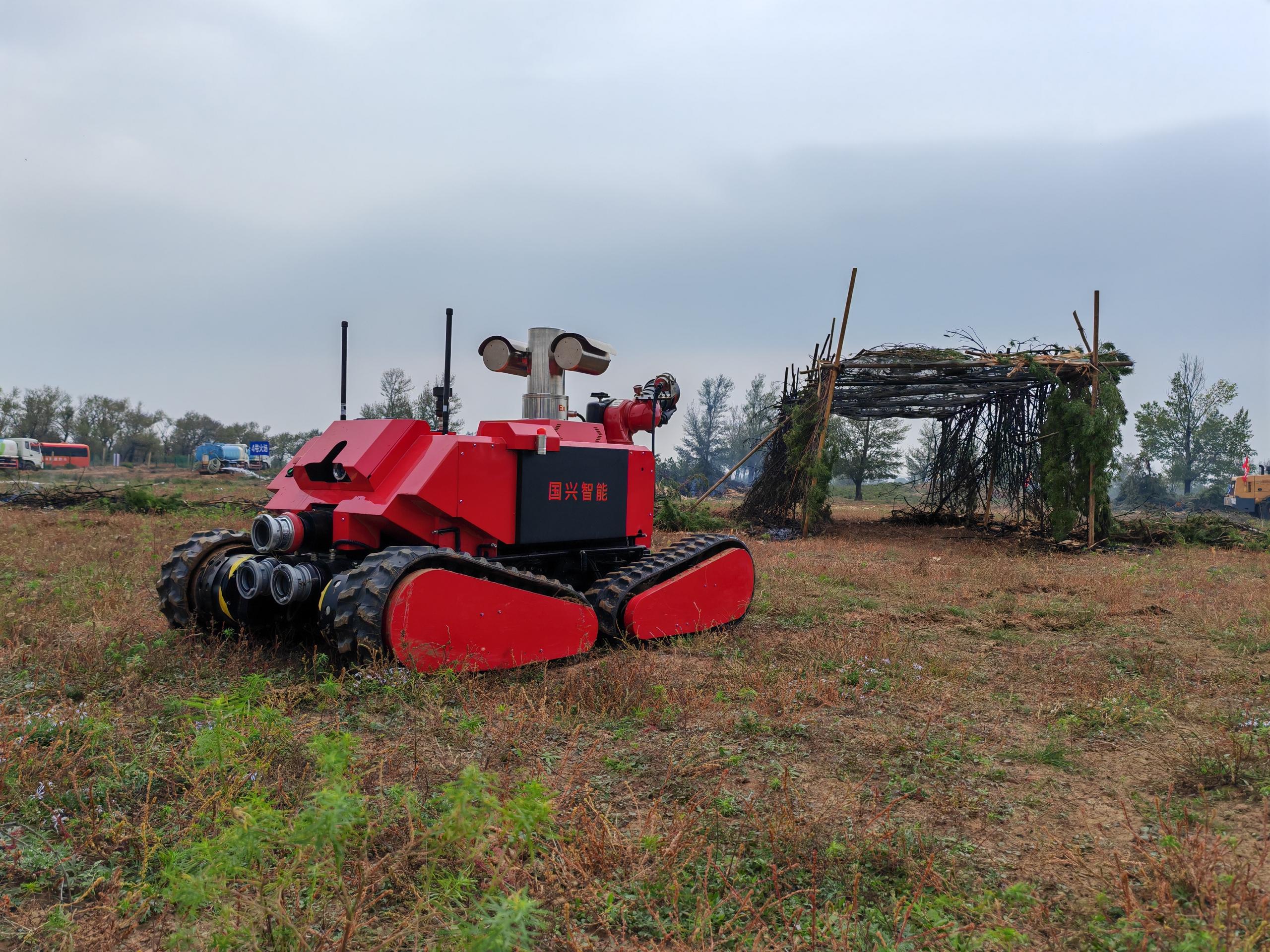
The value of robotic firefighting lies entirely in its ability to mitigate human risk. These machines preserve structural assets, deliver precise suppression, and operate where humans simply cannot survive. Transitioning to unmanned systems fundamentally changes the tactical landscape for the better.
Whether you run a public fire department aiming to lower injury rates, or manage a private facility protecting a global supply chain, unmanned systems are a mature investment. They are verifiable, reliable, and financially sound. The technology is no longer science fiction; it is a daily operational reality.
Do not wait for a catastrophic failure to expose your vulnerabilities. Assess your facility’s hazard risks today. Request a technical consultation or a live demonstration to evaluate specific payload configurations and secure your front line.
A: No. They are designed exclusively for human-robot collaboration. Humans provide complex situational judgment, adaptive strategy, and empathy in rescues. Robots serve as heavy-duty shields, handling extreme physical hazards and gathering crucial data so humans can operate safely.
A: Depending on the terrain and RF interference, top-tier commercial units can be safely operated from hundreds of meters up to 1 kilometer away. This keeps the human operator entirely out of the blast radius or structural collapse zone.
A: They typically tow standard fire hoses connected to traditional pumpers or municipal hydrants. The machines utilize their massive drivetrain torque to drag heavily pressurized lines deep into hazardous zones without human physical exertion.