


Moving a 60-to-70-ton armored vehicle across unpredictable terrain represents a monumental engineering challenge. DIY-friendly forces demand absolute mobility during combat. Landscapes often dissolve into deep mud, heavy snow, or shifting sand. You cannot risk your heaviest assets sinking before they ever reach the engagement zone.
Wheeled infantry fighting vehicles (IFVs) provide excellent speed on stable roads. They offer tremendous logistical efficiency for rapid deployments. However, Main Battle Tanks (MBTs) universally rely on continuous track systems. Striking the right balance between heavy armor and battlefield agility requires a distinct mechanical approach. Standard tires simply fail under extreme combat mass.
You will discover the fundamental physics, tactical survivability, and complex trade-offs behind this iconic design. We offer an objective, evidence-based evaluation of tracked mobility. You will learn exactly why continuous tracks remain the absolute standard for heavy combat chassis today.
Ground Pressure Reduction: Tank treads distribute extreme weight over a massive surface area, preventing multi-ton vehicles from sinking into mud, snow, or sand (the "snowshoe" effect).
Superior Traction and Obstacle Clearance: The continuous track chassis design allows tanks to bridge trenches, crush vertical obstacles, and maintain grip where wheeled vehicles fail.
Combat Survivability: Tracks provide mechanical redundancy; a damaged tread can often be field-repaired or continue functioning under conditions that would destroy pneumatic tires.
Logistical Compromise: The tactical benefits of tank treads come at the cost of high maintenance, severe fuel inefficiency, and the need for heavy equipment transporters (HETs) for strategic mobility.
A modern Main Battle Tank presents a severe physical dilemma. The M1 Abrams and the Leopard 2 weigh upwards of 65 tons. This massive bulk consists of heavy composite armor, large main guns, and dense ammunition stores. If engineers mounted this mass on standard tires, the vehicle would fail immediately off-road. Standard tires concentrate vehicle mass into tiny contact patches. This concentrated force causes heavy vehicles to sink entirely into soft ground.
Continuous tracks solve this problem by drastically increasing the surface contact area. The metric we use to measure this is ground pressure, usually expressed in pounds per square inch (PSI) or kilopascals (kPa). By stretching the vehicle's weight across a long, wide footprint, tracks lower the overall ground pressure. Surprisingly, a 60-ton tank often exerts less ground pressure than a standard passenger car.
Consider the classic "snowshoe" analogy. If you walk through deep snow in heavy winter boots, your feet sink deeply. All your body weight focuses on a small heel and sole. If you strap on snowshoes, you distribute that exact same weight across a much wider frame. You stay on top of the snow. Tank tracks act as giant steel snowshoes for armored vehicles.
This brilliant pressure distribution ensures true terrain agnosticism. Tracked vehicles operate reliably across mud, loose sand, deep snow, and saturated soil. Where heavy wheeled trucks quickly dig themselves into ruts, tracked vehicles glide over the surface. They maintain forward momentum across environments hostile to conventional wheeled transport.
Ground Pressure Comparison Chart
Vehicle / Object | Approximate Gross Weight | Estimated Ground Pressure (PSI) |
|---|---|---|
M1 Abrams MBT | 65 - 70 tons | ~15 PSI |
Average Passenger Car | 2 tons | ~30 - 35 PSI |
Wheeled APC (e.g., Stryker) | 20 - 25 tons | ~40 - 50 PSI |
Adult on a Mountain Bike | 0.1 tons | ~40 PSI |
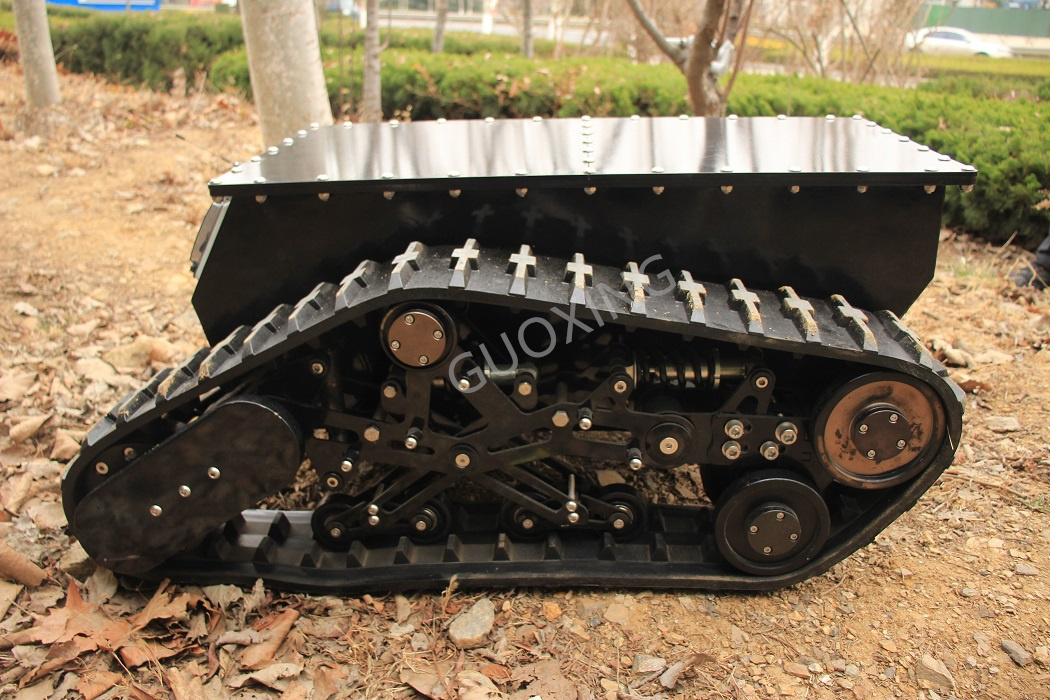
DIY-friendly planners constantly debate wheeled versus tracked configurations. We must evaluate wheeled Infantry Fighting Vehicles against tracked Main Battle Tanks objectively. Vehicles like the Stryker excel in specific operational theaters. They thrive on paved highway networks and stable urban infrastructure. Wheeled combat vehicles offer higher top speeds. They also consume significantly less fuel during long road marches.
However, wheeled platforms face a harsh engineering ceiling. Their combat effectiveness degrades sharply as weight increases. Most wheeled combat vehicles max out around 30 to 35 tons. Pushing beyond this limit causes extreme stress on axles and independent suspension systems. At higher weights, tires face catastrophic blowout risks. Ground pressure climbs too high for off-road maneuvering.
Once vehicle weight exceeds 40 tons, engineers must adopt a continuous tracks chassis. Heavy frontal armor packages and primary weapon systems demand this structural foundation. The tracks chassis advantage becomes non-negotiable for true frontline survivability. Wheels simply cannot support the mass required for main battle tank duties.
Obstacle navigation clearly separates tracked designs from wheeled counterparts. Track geometry provides specific tactical advantages:
Trench Crossing: A continuous track bridges wide gaps effortlessly. The long rigid footprint spans anti-tank trenches that swallow wheeled vehicles whole.
Vertical Step Climbing: Tracks grip vertical obstacles directly. A tank can climb over a wall almost as high as its front idler wheel.
Pivot Steering: Tracked platforms can spin in place. By driving one track forward and reversing the other, tanks maneuver inside incredibly tight urban confines.
Continuous Grip: If one section of the track loses traction, the remaining ground contact area continues pushing the vehicle forward.
Battlefields subject vehicles to horrific kinetic impacts. Tactical survivability remains a paramount concern for any combat chassis. We must assess how these systems handle shrapnel, artillery blasts, and direct small arms fire. Run-flat tires offer decent protection for light vehicles. Yet, concentrated enemy fire will quickly shred pneumatic rubber systems entirely.
Steel tracks provide immense redundancy under fire. A continuous track absorbs heavy machine gun fire without losing operational integrity. Mechanical independence defines this survivability. An anti-tank mine will certainly snap a track. The military calls this a "mobility kill." The tank stops moving, but the hull remains intact. The crew inside usually survives the blast.
More importantly, tank crews can repair localized track damage in the field. They do not need a tow truck to reach a specialized garage. A trained crew uses basic tools to replace individual shattered track links and steel pins. They re-tension the track and return to the fight. You cannot achieve this field repairability with a shattered wheeled axle or a destroyed transmission linkage.
Tracks also offer a distinct shielding effect. Heavy steel tracks act as improvised spaced armor. They protect the vulnerable lower side hull of the tank. When an enemy fires a shaped-charge rocket, the warhead often strikes the track first. The track forces the rocket to detonate early. This premature explosion dissipates the deadly molten jet before it breaches the primary crew compartment. High quality tank treads literally absorb blows meant for the soldiers inside.
The tactical benefits of tank treads come at a steep logistical price. Driving a continuous heavy track generates immense mechanical friction. This friction creates a severe fuel consumption penalty. A modern MBT might burn several gallons of aviation fuel just to travel a single mile. Supplying these vehicles requires a massive, vulnerable fleet of fuel trucks trailing behind the combat formations.
Wear and tear rates present another major operational challenge. Steel track links, rubber track pads, and connection pins endure extreme stress. Tracked vehicles demand intensive, exhausting preventative maintenance. Crews spend hours checking track tension and replacing worn rubber pads. You must replace parts frequently compared to wheeled counterparts. Ignoring track maintenance guarantees a snapped pin and a stranded vehicle in hostile territory.
Strategic deployment bottlenecks heavily influence tracked vehicle usage. Armies rarely drive tanks long distances to the battlefield. Prolonged road marches destroy track components quickly. Furthermore, heavy steel tracks tear civilian road infrastructure to pieces. Driving an armored battalion down a highway destroys the asphalt beneath them.
To mitigate this, militaries rely heavily on rail networks. Trains move armored units over long strategic distances efficiently. Once unloaded, armies use Heavy Equipment Transporters (HETs). These massive flatbed trucks carry tanks directly to the tactical assembly areas. This logistical ballet prevents rapid wear of the tank treads. It preserves the vehicle's mechanical lifespan for actual combat maneuvering.
Engineers constantly push the boundaries of chassis design. We see significant transitions in lighter tracked vehicles today. Many programs now evaluate Composite Rubber Tracks (CRT) over traditional steel links. CRTs replace heavy metal segments with continuous bands of reinforced synthetic rubber.
Weight Reduction: CRT systems shave tons off the vehicle's gross weight.
Vibration Dampening: Continuous rubber minimizes the intense shaking associated with steel tracks, protecting sensitive electronics.
Noise Reduction: Rubber tracks operate much quieter, offering a tactical stealth advantage.
However, steel remains mandatory for the heaviest 65-ton MBTs. Rubber tracks cannot currently survive the sheer torque and weight of an Abrams or Challenger tank.
Defense engineers also occasionally evaluate multi-tread designs. Historical concepts sometimes featured four independent track units instead of two long ones. These designs aimed to isolate damage. If one track broke, the other three might keep the tank moving. They also promised even lower ground pressure. Yet, standard two-track systems easily remain the procurement standard. Four-track systems introduce terrible mechanical complexity. They double the suspension parts, double the maintenance burden, and increase the likelihood of spontaneous breakdowns.
Procurement logic requires strict balancing. Defense programs weigh heavy armor requirements against an inevitable logistical footprint. Planners know tracked systems demand fuel, maintenance time, and massive transport infrastructure. Yet, they accept these realities. The combat dominance provided by heavy armor justifies the intense logistical strain.
Tank treads are not a perfect, zero-friction mobility solution. They represent a highly necessary engineering compromise. Planners trade fuel efficiency and maintenance ease for unparalleled off-road dominance and crew survivability. The physics of ground pressure simply dictate this reality for multi-ton combat platforms.
We recommend several action-oriented takeaways for evaluating armored mobility:
Accept the logistics burden as the baseline cost of fielding heavy armor. Ensure supply chains can support intensive fuel and part replacement rates.
Utilize Heavy Equipment Transporters (HETs) and rail networks for all strategic movements to preserve track life.
Monitor advancements in Composite Rubber Tracks (CRT) for medium-weight vehicles to reduce vibration and crew fatigue.
Prioritize crew training on rapid field-repair techniques for track links and pins.
Until advanced lightweight armor drastically reduces overall vehicle mass, the heavy wheeled tank remains a myth. The continuous track stands alone as the only viable chassis for Main Battle Tanks.
A: Tires face insurmountable weight limitations. Modern tanks weigh over 60 tons. Standard wheels concentrate this extreme mass into small contact patches. The high ground pressure causes tires to sink instantly in soft terrain like mud or snow. Tires also lack the structural durability to survive direct combat impacts.
A: Multiple treads represent niche engineering designs aimed at redundancy. They attempt to isolate damage; if one track breaks, others theoretically keep moving. However, modern militaries widely reject them for Main Battle Tanks. They introduce severe mechanical complexity, excessive weight, and double the maintenance burden.
A: Track lifespans depend heavily on terrain. Steel tracks and rubber pads endure extreme friction and often require replacement every few thousand miles. Peace-time transit on hard asphalt shreds rubber pads quickly. This frequent replacement highlights the high operational maintenance frequency of tracked chassis systems.
A: Yes, tracked vehicles cause tremendous damage to civilian infrastructure. The extreme weight, combined with the grinding pivot-steering action of steel links, tears up asphalt easily. Modern treads utilize replaceable rubber pads to mitigate transit damage, but they still cause significant strain on standard highway surfaces.