
Views: 0 Author: Site Editor Publish Time: 2026-06-19 Origin: Site


Procuring firefighting robots represents a high-stakes operational decision. Equipment failure translates directly to critical life safety risks. It also threatens massive industrial assets like petrochemical plants. The market currently overflows with impressive spec-sheet claims. However, these theoretical numbers often fail in extreme environments. Intense chemical fires, nuclear facilities, and heavy industrial zones destroy inadequate machinery quickly. You must transition away from reading basic marketing brochures. Instead, establish a rigid, evidence-based evaluation framework. We designed this comprehensive guide to help you compare firefighting robot suppliers effectively. You will learn how to verify hardware limits and assess communication reliability accurately. We will show you how to scrutinize manufacturer compliance thoroughly. By demanding independent verification, you protect your tactical teams. Let us explore the exact criteria needed to shortlist elite equipment for your specific hazard zones.
Do not let a manufacturer dictate your specific use case. You must establish clear success criteria first. Define the primary goal of your robotics program early. Determine if you need hazardous material (HazMat) reconnaissance or heavy-duty fire suppression. Some departments purely need emergency extraction capabilities. Extraction robots require specialized flatbed designs or grappling arms. Knowing your exact baseline filters out incompatible equipment immediately.
You must categorize your primary operational environment carefully:
You must also plan for existing asset integration. Determine how the robot ecosystem will interface smoothly. It must connect seamlessly into your current fleet. Assess compatibility regarding fire hoses, specific nozzles, and available transport vehicles. Mismatched couplings or oversized transport dimensions will stall your deployment immediately.
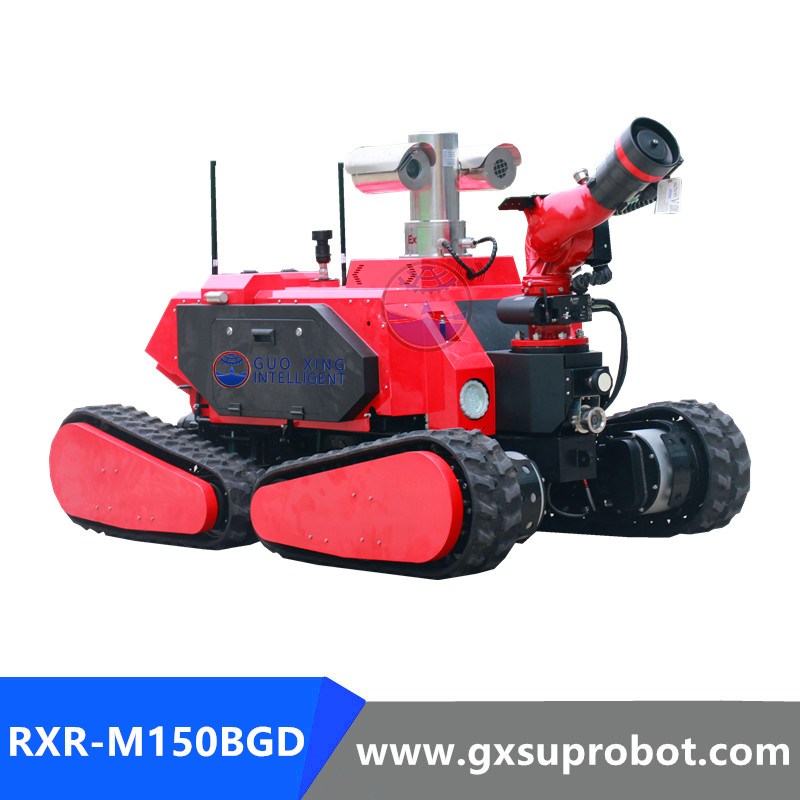
Mobility and chassis design dictate field success. You must compare track and wheel reliability directly. Evaluate them under heavy debris and high-heat conditions. Tracked units generally traverse collapsed structures better. Wheeled units often provide faster transit across flat industrial flooring. Always demand verifiable test data. You need concrete numbers regarding incline limits and obstacle clearance heights. Top-tier Firefighting Robot Manufacturers engineer advanced self-recovery capabilities. If a unit flips on unstable ground, it must self-right without human intervention.
Look closely at thermal endurance versus continuous operating time. Look past simple "maximum temperature" marketing claims. Ask vendors for "duration at temperature" metrics instead. For example, determine exactly how many minutes the unit operates at 800°C. You must evaluate the active self-cooling mechanisms. High-quality models utilize intelligent water curtain systems. They spray a protective mist over the chassis continually to deflect radiant heat. You should also analyze battery chemistry stability. Standard lithium-ion cells become highly volatile under extreme external heat. Seek out advanced solid-state batteries or thermally isolated battery housings.
Match the suppression output directly to your hazard requirements. The monitor's flow rate dictates cooling power. Measure this in liters per minute (LPM) or gallons per minute (GPM). Ensure the output aligns perfectly against your projected fire loads. Additionally, assess the unit's physical towing capacity. Pulling fully charged, heavy water hoses requires massive torque. Underpowered robots frequently fail during this specific task.
| Chassis Type | Primary Advantage | Ideal Deployment Scenario | Common Limitations |
|---|---|---|---|
| Tracked System | Maximum traction and stair-climbing ability | Structural collapse, urban environments, debris fields | Slower top speed, heavier overall weight |
| Wheeled System | Higher transit speeds and lower energy draw | Flat industrial facilities, large warehouses, airports | Struggles traversing large debris or steep staircases |
Signal integrity saves lives during complex rescue operations. You must evaluate how the equipment handles Non-Line-Of-Sight (NLOS) environments. Thick concrete walls and dense metal structures disrupt radio frequencies easily. Standard 2.4 GHz signals often bounce or degrade indoors. A dropped signal leaves the robot completely paralyzed inside the hazard zone.
Look for advanced mesh networking capabilities. Mesh networks relay signals dynamically around physical obstacles. They utilize lower frequency bands to penetrate concrete better. Some extreme scenarios even require hardwired tethered options. Always verify automated "return-to-base" fail-safes. If the control signal drops completely, the robot must reverse its path autonomously. It should re-establish connection without requiring a manual rescue.
| Fail-Safe Feature | Operational Function | Practical Benefit |
|---|---|---|
| Mesh Networking | Creates multiple dynamic signal relay nodes | Maintains robust NLOS connections indoors |
| Auto Return-to-Base | Reverses drive path upon critical signal loss | Prevents expensive hardware abandonment |
| Tethered Backup | Deploys a physical fiber-optic data line | Provides absolute zero signal latency |
The operator interface dictates deployment speed and tactical awareness. We evaluate this as UI/UX design. Control panels must remain highly operable by frontline personnel. Responders wear heavy personal protective equipment (PPE) and thick fire-resistant gloves. Tiny digital touchscreens fail completely under these physical conditions. Look for robust physical joysticks and distinct tactile buttons. Furthermore, assess the digital dashboard design closely. The system should integrate thermal imaging, optical cameras, and gas-detection readouts seamlessly. Consolidating these data streams into a single, low-latency dashboard reduces operator cognitive load significantly.
Regulatory adherence separates reputable engineering firms from amateur builders. You should compare firefighting robot suppliers based on strict globally recognized standards. Check for adherence to specific National Fire Protection Association (NFPA) robotics guidelines. Look for relevant International Organization for Standardization (ISO) quality certifications. Operations in explosive atmospheres absolutely mandate ATEX or IECEx certifications. These ratings prove the machine will not ignite ambient volatile gases accidentally.
Demand transparent evidence of actual field deployments. Laboratory demonstrations do not replicate live-fire chaos accurately. Request sanitized case studies showcasing active deployments. Review how the machinery performed during genuine live disaster scenarios. You must also examine historical failure rates. Trustworthy manufacturers remain highly transparent regarding product recalls. They release iterative updates based on genuine field feedback. Beware of vendors claiming a zero percent failure rate. Extreme environments always test the absolute limits of mechanical engineering.
Investigate the entire component supply chain carefully. Are critical internal components entirely proprietary? Proprietary motors, thermal sensors, and monitors lock you into a single vendor. Sourcing replacement parts becomes incredibly difficult during active emergencies. Superior designs utilize trusted, replaceable third-party industrial components. Standardized parts allow your internal maintenance teams to perform rapid repairs. This transparency ensures your fleet remains active year-round without vendor bottlenecks.
Procuring the hardware only represents the initial phase. Long-term operational viability relies entirely on robust post-sale implementation. You must evaluate the Service Level Agreements (SLAs) rigorously. Assess the geographic location of specialized support technicians. If technicians reside overseas, deployment delays will occur frequently. Ask vendors for guaranteed lead times regarding replacement parts. A broken drive track should not ground your equipment for several months.
Consider these critical post-sale support factors during evaluation:
Human-machine collaboration dictates ultimate tactical success. Proper adoption requires rigorous onboarding processes. You must evaluate the manufacturer’s specific training methodology. Human firefighters need ongoing tactical training. They must learn how to work safely alongside heavy, autonomous equipment. A 1,000-kilogram robot moving independently poses crushing hazards in low-visibility environments. Manufacturers should offer comprehensive "train the trainer" programs. Excellent training ensures incident commanders deploy these assets safely and efficiently.
The shortlisting logic requires strict evaluation discipline. Narrow down your potential vendor list to two or three manufacturers. Ensure they align perfectly against your unique environmental needs. They must provide transparent testing data freely. Finally, they must offer strong localized support networks to keep your units active.
Take the following actionable steps next:
Rigorous vendor evaluation guarantees you deploy a truly reliable tactical asset.
A: Delivery times typically range from three to nine months. The exact timeline depends heavily on your required level of customization. Supply chain variables and the overall scale of your deployment also affect production. Highly specialized nuclear or ATEX-certified models generally require longer manufacturing windows to meet rigorous testing requirements.
A: You measure value directly through risk mitigation. Factor in the dramatic reduction of human injury risks. These autonomous units operate efficiently in zones considered too hazardous for humans. They prevent complete asset loss by suppressing extreme fires early. They fundamentally improve your overall incident response safety metrics and tactical efficiency.
A: Tracked robots offer superior traction and stair-climbing capabilities. They excel in structural fires and heavy debris environments. Conversely, wheeled robots typically offer much faster deployment speeds. They provide longer operational times across flat, industrial flooring or massive warehouse applications. Base your choice entirely on your primary hazard zone characteristics.
A: You should request official third-party laboratory certification reports. Demand live demonstration tests conducted under controlled burn conditions. Furthermore, arrange reference calls with their current municipal or industrial clients. Speak directly to field operators who have deployed the specific units in real-world extreme heat environments to verify sustained operational claims.