
Views: 0 Author: Site Editor Publish Time: 2026-11-10 Origin: Site


Did you know an underground coal mine fire turns deadly in mere seconds? Invisible toxic gases quickly fill the dark, twisting tunnels to create a lethal labyrinth. Rescue teams simply cannot safely enter without checking the air quality first.
In this post, you will discover the specific, life-threatening gas risks autonomous systems are engineered to detect. We will also explore why deploying unmanned technology has become a non-negotiable standard for modern mine safety.
The anatomy of an underground blaze is highly complex. These fires typically ignite through spontaneous combustion of coal dust, severe electrical faults in heavy machinery, or prolonged mechanical friction along conveyor belts. Once ignited, they are notoriously difficult to extinguish. The coal seam itself serves as a nearly infinite fuel source. Furthermore, the confined nature of underground tunnels traps heat, causing ambient temperatures to escalate rapidly and compromising the structural integrity of the mine shafts.
However, the roaring flames are often not the most immediate threat to human life. The true invisible enemy is the compromised atmosphere. As the fire burns, it aggressively consumes the available Oxygen in the confined space. Simultaneously, the combustion process releases a complex and lethal cocktail of toxic, asphyxiating, and highly combustible gases into the ventilation system.
These harsh, unforgiving conditions highlight severe human limitations. Mine rescue brigades face extreme danger when entering these environments. High temperatures and absolute zero visibility due to thick, acrid smoke make traditional human intervention incredibly risky. In addition, the constant threat of lethal gas inhalation or sudden explosions looms over every operation. Deploying personnel into an unassessed environment frequently leads to tragic secondary casualties. This grim reality makes robotic intervention a mandatory requirement for modern emergency response protocols.
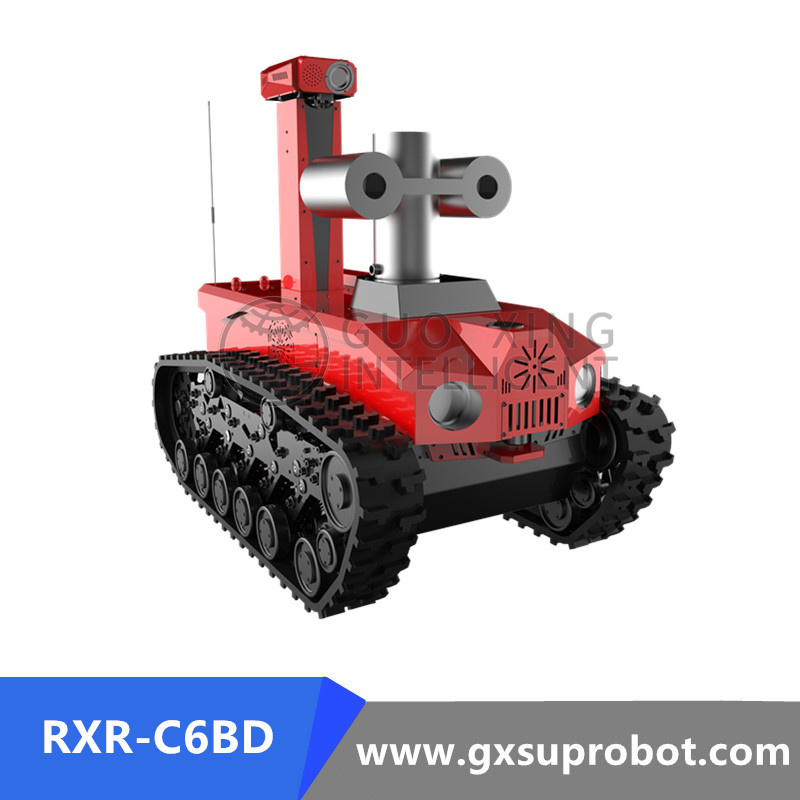
When disaster strikes underground, establishing a real-time hazard assessment is the absolute top priority for surface incident commanders. A specialized Fire Fighting Robot is equipped with sophisticated multi-gas sensor arrays designed to sample the atmosphere continuously. Unlike human responders who must stop to take intermittent air readings with handheld devices, these automated systems stream continuous, real-time telemetry back to operators on the surface. This uninterrupted data flow provides a highly accurate picture of the atmospheric volatility before a single human boot touches the mine floor.
In practice, these heavy-duty machines are engineered to breach strict no-go zones. During an active incident, tunnel collapses, extreme ambient heat, and dense smoke create environments where humans simply cannot survive. Specifically, heavy-duty robots feature ruggedized chassis and advanced mobility systems. These features allow them to traverse muddy, debris-filled corridors and navigate through zero-visibility conditions using LiDAR and thermal imaging.
Ultimately, deploying these systems focuses entirely on preventing catastrophe. Early and accurate gas detection by an unmanned unit prevents rescue teams from unknowingly walking into an active explosion zone. By mapping the chemical composition of the air, the robot acts as the ultimate frontline defender.
Understanding Methane behavior is the absolute foundation of underground mine safety. Methane is a naturally occurring hydrocarbon gas abundant in coal seams, forming over millions of years during the geological process of coalification. During normal mining operations, massive ventilation fans safely push this gas to the surface. However, during an emergency, ventilation systems frequently fail or are intentionally shut down. This allows Methane to accumulate rapidly in the confined tunnels.
The primary danger of Methane lies in its specific explosive range. Safety engineers rely on two critical metrics: the Lower Explosive Limit and the Upper Explosive Limit.
| Methane Concentration | Explosive Status | Risk Level |
|---|---|---|
| Below 5 Percent | Too lean to burn | Moderate - Requires monitoring |
| 5 to 15 Percent | Explosive Range | Critical - High risk of ignition |
| Above 15 Percent | Too rich to burn | Severe - Can become explosive if diluted by fresh air |
To mitigate this severe threat, a Coal Mine Robot utilizes highly calibrated catalytic bead sensors or Non-Dispersive Infrared sensors to monitor Methane levels constantly. If the gas concentration approaches the 5 percent Lower Explosive Limit threshold during an active fire, the robot immediately triggers an alert to the surface command team. This crucial early warning allows operators to halt any actions that might generate a spark. They can also dynamically adjust remote ventilation strategies, thereby preventing a catastrophic secondary explosion.
During an underground emergency, Carbon Monoxide is generated in massive quantities as a direct byproduct of incomplete combustion. Because a deep-shaft fire often burns in poorly ventilated areas, the flames do not receive enough Oxygen to convert carbon fully into Carbon Dioxide. Instead, it produces Carbon Monoxide, which rapidly spreads through the tunnel network like an invisible fog.
For human personnel, Carbon Monoxide is exceptionally dangerous. It is entirely colorless, odorless, and tasteless, earning it the grim moniker of the silent killer. When inhaled, it binds to hemoglobin in the blood exponentially faster than Oxygen. This leads to rapid tissue hypoxia, loss of consciousness, and fatality. Historically, it remains one of the leading causes of death in mining disasters.
In contrast to its lethal nature, Carbon Monoxide serves as a critical diagnostic tool for rescue teams. Robotic systems utilize highly sensitive electrochemical sensors not just to ensure environmental safety, but to actively track the fire itself. Because gas concentrations increase as the machine moves closer to the source of incomplete combustion, operators can use the telemetry to pinpoint the exact location and intensity of deep-seated fires hidden behind collapsed rock.
Monitoring ambient Oxygen levels is a fundamental requirement for assessing both human safety and fire behavior. In a normal, healthy underground environment, Oxygen levels are maintained at approximately 20.9 percent. However, an active blaze aggressively consumes this Oxygen to sustain combustion. This rapid depletion creates an Oxygen-deficient atmosphere, posing an immediate risk of asphyxiation to any trapped miners or unprotected rescue personnel.
Robotic sensors constantly evaluate Oxygen concentrations to assess fire viability. By analyzing the rate at which Oxygen is dropping in a specific sector, incident commanders can determine whether the fire is rapidly growing or if it is beginning to choke itself out due to fuel starvation. This data is vital for deciding whether to seal a section of the mine to smother the flames entirely.
Furthermore, precise Oxygen readings dictate safe entry protocols. If a robot reports that Oxygen levels have fallen below the OSHA-mandated safe threshold of 19.5 percent, rescue teams are strictly forbidden from entering without a Self-Contained Breathing Apparatus. The robot's objective environmental data removes the guesswork, ensuring that human responders are appropriately equipped for the exact atmospheric realities they will face underground.
While Methane and Carbon Monoxide often dominate safety discussions, an active coal mine fire generates and displaces several other hazardous gases. Human rescue brigades face severe physiological risks if these secondary gases are not accurately mapped prior to entry. Robotic monitoring provides the necessary empirical data to mitigate these hidden threats.
Carbon Dioxide is a natural byproduct of both human respiration and the combustion process. During an underground fire, the rapid oxidation of coal seams produces massive volumes of Carbon Dioxide. Unlike Methane, which is lighter than air and tends to accumulate near the roof of mine shafts, Carbon Dioxide has a higher specific gravity. This means it is heavier than air and will pool in the lower elevations of the mine, such as trenches, sumps, and descending tunnels. In mining terminology, this deadly accumulation is often referred to as blackdamp.
When rescue teams navigate through smoke-filled environments, they may unknowingly descend into a Carbon Dioxide pocket. High concentrations displace Oxygen, leading to rapid asphyxiation. Advanced robotic units utilize Non-Dispersive Infrared sensors to continuously measure these concentrations. By sending a robotic unit ahead, surface commanders can map out these invisible pools of blackdamp, ensuring responders avoid low-lying areas.
Hydrogen Sulfide, commonly known in the industry as stinkdamp due to its characteristic rotten egg odor, is another critical gas that must be monitored. It can be released from the coal seam itself or generated during complex chemical reactions in a fire.
The primary danger lies in its extreme toxicity at very low concentrations. While regulatory exposure limits are typically set around 10 to 20 parts per million, concentrations above 100 parts per million immediately compromise human health. Levels exceeding 500 parts per million can be instantly fatal. A deceptive characteristic of Hydrogen Sulfide is olfactory fatigue. After a brief exposure, the gas paralyzes the human olfactory nerves, causing individuals to falsely believe the gas has dissipated. Robotic sensors do not suffer from this biological limitation. Utilizing highly sensitive electrochemical sensors, robotic platforms can detect trace amounts down to single-digit levels.
Deploying electronic equipment into an environment saturated with explosive gases is inherently dangerous. Standard electronics generate heat and micro-sparks during normal operation. These factors can easily ignite a volatile Methane-air mixture. Therefore, the architectural design and engineering of robotic systems used in these scenarios must adhere to strict safety protocols.
To operate safely in a combustible atmosphere, machinery must be certified to international hazardous area standards. Deploying an explosion proof patrol robot ensures that the inspection equipment itself does not become an ignition source. When evaluating a unit for your facility, look for specific operational parameters. The chassis should feature robust explosion-proof certification, such as Ex d ib mb IIC T6 Gb. Flameproof enclosures contain any internal explosion, preventing the flame from escaping into the external mine atmosphere. Second, intrinsically safe circuits strictly limit the electrical energy within the sensor arrays.
Beyond electrical safety, rugged mobility is vital. Look for units equipped with heavy-duty crawler tracks capable of tackling steep inclines and clearing substantial obstacles. An underground emergency compromises the structural integrity of tunnels, leading to roof falls and flooded pathways. The chassis is typically constructed from high-grade aviation aluminum coated with heat-resistant materials. This allows the machine to endure ambient temperatures that would instantly incapacitate a human responder.
Modern robotic platforms also employ sensor fusion. They combine multi-gas detection arrays with environmental sensors. Thermal imaging cameras penetrate thick smoke to identify the exact location of the fire source, while Light Detection and Ranging systems bounce lasers off surrounding surfaces to build a real-time topographical map of the compromised tunnel.
Gathering atmospheric data is only the first step. The true value of robotic intervention lies in how that data is transmitted, processed, and utilized to execute a safe firefighting strategy.
Underground environments present significant challenges for data transmission. Thick rock walls and twisting tunnels block standard radio frequencies. To overcome this, specialized robots utilize robust communication protocols. Some units deploy a fiber-optic tether, unspooling a heat-resistant cable as they advance to guarantee high-bandwidth, zero-latency data transmission. Others utilize underground wireless mesh networks, dropping signal repeater nodes along their path to establish a continuous communication link with the surface command center. This telemetry ensures that gas readings, thermal video, and spatial data are streamed live to decision-makers.
Back on the surface, the software interface acts as a central command hub. Rather than relying solely on human observation, the system enforces strict environmental thresholds. If the robotic sensors detect that Methane is approaching its Lower Explosive Limit, or if Oxygen drops below life-sustaining levels, the software triggers immediate visual and auditory alarms. This allows command teams to make split-second decisions, such as cutting electrical power to specific mine sectors or ordering the immediate withdrawal of the robot.
Once the atmospheric data confirms that the immediate risk of a Methane explosion has been mitigated, the robot transitions from a monitoring role to an active suppression role. Many of these units function as fully equipped firefighting platforms, boasting high-pressure water monitors or compressed air foam systems. Using the thermal imaging data and continuous gas readings to pinpoint the fire's core, operators can remotely direct the robot's suppression systems to extinguish the flames efficiently.
Recent analyses of underground mining safety protocols reveal a distinct industry shift toward predictive gas analytics. Operators are rapidly moving away from merely reacting to sudden gas spikes. Instead, they are focusing on proactive, data-driven safety measures. By feeding continuous atmospheric data from robotic units into advanced machine learning algorithms, modern command centers can now forecast explosive gas accumulation windows before they materialize.
Furthermore, global regulatory bodies are tightening occupational exposure limits. This makes the integration of autonomous hazard assessment a baseline compliance requirement rather than a high-tech luxury. The industry consensus is clear. Proactive, robotic environmental auditing is the most effective way to secure deep mining infrastructure against unpredictable subterranean elements.
Monitoring toxic and combustible gases is undeniably the most critical function of a firefighting robot during an underground emergency. By continuously tracking Methane, Carbon Monoxide, Oxygen, and other lethal byproducts, these advanced machines provide the exact empirical data needed to navigate a crisis.
This technology fundamentally protects human rescue teams from severe harm, replacing guesswork with mathematical certainty. Mine operators and safety managers must invest in these advanced safety tools to ensure regulatory compliance and safeguard their workforce.
If you are upgrading your mine's safety infrastructure, selecting the right equipment is paramount. Explore the full range of certified autonomous solutions at https://www.gxsuprobot.com to find the exact platform that matches your operational and regulatory requirements. Utilizing autonomous robots ensures that firefighting efforts are highly effective, securing deep mining infrastructure and saving lives in the world's most hazardous underground zones.
No, these specific machines are engineered to operate safely within explosive environments. They are certified as explosion-proof patrol robots, meaning their construction adheres to rigorous international safety standards. The electrical components, motors, and batteries are sealed within heavy-duty flameproof enclosures that contain any internal sparks. Additionally, the external circuitry and sensor arrays are intrinsically safe. They operate on energy levels so low that they cannot produce an electrical arc or thermal temperature capable of igniting Methane or airborne coal dust.
Gas detection technology operates independently of visual clarity. The sensors equipped on these robots analyze the chemical composition of the atmosphere. They actively draw in ambient air through specialized filters and measure the molecular presence of specific gases. Because these sensors rely on chemical reactions and infrared light absorption rather than optical visibility, they function with perfect accuracy even in zero-visibility conditions caused by the dense, black smoke of a coal mine fire.
If a robot detects that Methane concentrations are rising toward the Lower Explosive Limit, it instantly transmits high-priority telemetry alerts to the surface command center. The system software automatically flags the specific location of the gas accumulation. Based on this empirical data, operators can take immediate preventative actions. They may remotely shut down electrical power to the compromised zone to remove potential ignition sources, alter the mine's ventilation strategy to dilute the Methane concentration, or safely retreat the robot to avoid losing the equipment in a potential blast.
Yes, many units are dual-purpose and function as fully equipped firefighting platforms. Once the robot's gas sensors confirm that the environment is below the explosive threshold for Methane, operators can initiate active fire suppression. The robots are typically fitted with high-capacity water monitors or foam cannons connected to trailing fire hoses. Utilizing remote control and thermal imaging cameras, surface operators can aim the cannons directly at the hottest parts of the fire, effectively suppressing the blaze without ever exposing human firefighters to the extreme heat or toxic atmosphere.
The operational range of a patrol robot depends primarily on its communication infrastructure and power supply. Tethered robots, which drag a reinforced fiber-optic and power cable, can typically operate up to several hundred meters from their deployment point, limited by the weight and friction of the cable. Conversely, robots utilizing underground wireless mesh networks can operate several kilometers deep into the mine. By dropping intrinsically safe signal repeaters along their path, these wireless units maintain a continuous, high-bandwidth connection with the surface.
Operational endurance depends heavily on the power configuration. Battery-operated, untethered robots typically provide 2 to 4 hours of continuous operation, which is usually sufficient for initial reconnaissance and gas mapping. Tethered models, which draw power directly from a surface generator via a reinforced cable, can operate indefinitely. This makes tethered units ideal for prolonged fire suppression and continuous atmospheric monitoring during extended emergencies.
Robots utilize a combination of specialized sensor technologies to ensure accuracy. Non-Dispersive Infrared sensors are typically used for detecting Carbon Dioxide and Methane because they are highly reliable and do not require Oxygen to function. Electrochemical sensors are deployed to detect toxic gases like Carbon Monoxide and Hydrogen Sulfide, offering extreme sensitivity at low concentrations. Finally, catalytic bead sensors are often used as a secondary measure for combustible gases, providing a comprehensive safety net for the sensor array.