
Views: 0 Author: Site Editor Publish Time: 2026-11-22 Origin: Site


Flames roaring through a dense chemical processing plant. Thick, toxic smoke reducing visibility to absolute zero within a subterranean transit tunnel. Firefighting environments grow more hazardous every single day. They push human responders to their absolute physical limits. How do you protect lives while effectively combating massive, unpredictable blazes?
Choosing the right robotic power source is a critical decision. It alters the outcome of an emergency response. Once a fire department or industrial safety team decides to invest in automated suppression technology, they immediately face a foundational engineering choice. In this comprehensive guide, you will learn exactly how to evaluate a diesel versus battery firefighting robot. This ensures your facility is equipped with the exact tool for its specific hazard profile.
For decades, combating extreme industrial and wildland fires relied entirely on human endurance and manual equipment. Firefighters faced severe tactical limitations regarding thermal exposure, toxic gas inhalation, and the ever-present risk of structural collapse. The introduction of the remote-controlled Fire Fighting Robot marked a paradigm shift in emergency response tactics. By removing human operators from the immediate hazard zone, incident commanders could confidently deploy heavy water cannons directly into the core of a structurally compromised building.
However, the effectiveness of these advanced robotic systems relies entirely on their foundational engineering. The rugged chassis, steel tracks, telemetry sensors, and high-pressure water monitors are only as capable as the engine driving them. Consequently, the choice of power source dictates the machine's overall weight, maneuverability, operational range, and safe application environments. As the technology matured, the industry diverged into two dominant and highly specialized categories: internal combustion diesel and battery-powered electric systems. Understanding the mechanical realities of both is essential for procurement officers aiming to optimize their disaster response infrastructure.
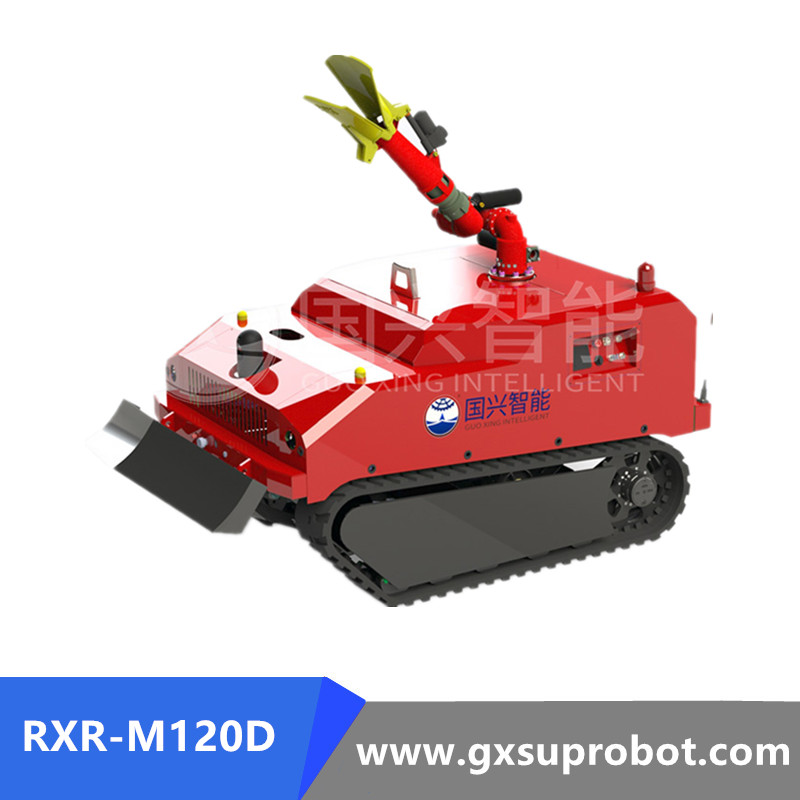
A diesel-driven remote suppression unit operates on traditional internal combustion principles. These heavy-duty machines utilize rugged diesel engines to drive both their mobility systems and their integrated water and foam pumping mechanisms. Because liquid fuel possesses an exceptionally high energy density, these platforms are engineered specifically for scenarios demanding sheer mechanical force and sustained, uninterrupted operation.
The core advantages of combustion systems root firmly in raw power and logistical simplicity. First, they produce exceptional low-end torque. Imagine an active fire requiring crews to drag hundreds of feet of fully pressurized, water-filled hoses over concrete rubble and steep, muddy inclines. Diesel engines deliver the necessary pulling force without stalling or overheating. Furthermore, they offer rapid field refueling. During multi-day disaster responses, such as large-scale timber yard blazes, operators can keep the machine running continuously. As long as liquid fuel is transported to the mobile command post, the robot remains in the fight.
For heavy-duty outdoor applications, a diesel fire fighting robot serves as a prime example of engineering built for extremes. High-end models in this category can deliver massive flow rates reaching up to 150 liters per second. They maintain a stable remote control communication range of 1000 meters, allowing operators to command immense suppression power from a completely safe vantage point.
In contrast, diesel platforms carry notable operational limitations. The internal combustion process generates significant ambient noise, which can severely hinder vital radio communication between emergency responders. More critically, they produce hazardous exhaust emissions and maintain a dangerously high engine heat signature. This renders them largely unsuitable for poorly ventilated indoor structural fires or environments saturated with highly volatile chemical gases. Maintaining a diesel fleet also requires strict routine mechanical upkeep, including frequent oil changes, air filter replacements, and cooling system flushes.
An electric remote suppression unit utilizes high-capacity lithium-ion or specialized solid-state battery packs to power sophisticated electric motors. These motors independently govern the drivetrain and the suppression systems. The result is a machine that operates with surgical efficiency, near-silent acoustics, and zero reliance on combustible liquid fuels. As industrial battery technology rapidly advanced over the last decade, these platforms transitioned from niche tools to highly viable assets for heavy industrial applications.
The primary advantage of battery-powered systems is their absolute zero-emission operation. In enclosed environments such as subway tunnels, underground parking garages, and dense indoor warehouses, introducing toxic diesel exhaust fumes severely compounds existing respiratory hazards. Electric units eliminate this risk entirely. Specifically, electric motors can be hermetically sealed against outside elements. This explosion-proof potential makes them the undisputed optimal choice for petrochemical refineries, volatile chemical storage facilities, or any atmosphere where a stray mechanical spark could trigger a catastrophic secondary explosion.
In highly volatile sectors, an electric firefighting robot equipped with strict ATEX or Ex d explosion-proof certifications demonstrates exactly how advanced battery technology meets rigorous safety standards. These specialized units often feature 4WD independent drives. This allows them to pivot in place and navigate complex, narrow warehouse aisles with millimeter precision.
The drawbacks of electric models center primarily on energy replenishment logistics. Battery life is inherently finite. Depending on the intensity of the workload, a unit may deplete its charge in two to six hours. Recharging massive industrial battery arrays requires specific high-voltage electrical infrastructure and significant operational downtime. While swappable battery technology is gradually improving, extended multi-day deployments in remote, off-grid areas remain a complex logistical hurdle for purely electric models.
Making an objective, data-driven decision requires a granular analysis of how each power source performs across critical operational metrics. Below is a detailed comparative breakdown to guide your procurement strategy.
Endurance is frequently the deciding factor in prolonged, defensive emergencies. A full tank of diesel typically powers a heavy-duty apparatus for several hours of intense, high-throttle operation. Refueling takes mere minutes at the staging area, allowing for near-continuous deployment. Conversely, a fully charged electric unit offers comparable initial runtime, but once depleted, it requires either a lengthy recharging period or a cumbersome battery swap. If your response protocols involve multi-day interventions in rural areas without reliable grid power, combustion engines hold a distinct logistical advantage.
Dragging a rigid, pressurized fire hose through deep mud or up steep industrial inclines requires immense traction. Historically, diesel engines dominated this category by providing high, sustained torque under heavy loads. However, modern electric motors are rapidly closing this performance gap. Electric drivetrains deliver instant torque at zero RPM. This provides exceptional initial pulling power and highly precise maneuverability in tight spaces. While diesel remains the gold standard for the absolute heaviest payloads, high-end 4WD electric models are now fully capable of navigating complex industrial debris fields.
Safety profiles diverge sharply when chemical vapors and explosive risks enter the battlefield. Internal combustion engines inherently rely on controlled explosions. They generate intense radiant heat, exhaust gases, and potential sparks from the exhaust manifold. In a chemical plant leak, deploying a combustion-based unit could inadvertently ignite ambient vapors. High-end electric platforms mitigate this risk through rigorous explosion-proof engineering. By sealing the electric motors and isolating the battery cells in reinforced housing, these units operate safely within highly combustible atmospheres.
When evaluating the total cost of ownership, procurement officers must look far beyond the initial purchase order. Diesel machines require a traditional fleet maintenance schedule. This includes regular oil changes, filter replacements, coolant flushes, and periodic engine tuning. Electric platforms bypass these messy mechanical chores entirely. They offer a much simpler routine maintenance profile focused on software updates and track tensioning. However, industrial lithium battery packs degrade over time. They represent a significant, unavoidable replacement cost after several years of heavy use. Owners must accurately budget for long-term battery lifecycle management.
| Evaluation Metric | Diesel Powered Systems | Battery Powered Electric Systems |
|---|---|---|
| Emissions | High toxic exhaust fumes and particulates | Zero clean, breathable operation |
| Refueling and Recharging | Fast field refueling in minutes | Slow recharging hours unless hot-swapped |
| Explosion-Proof Capability | Low due to high heat signature and spark risks | High with hermetically sealed motors available |
| Torque and Pulling Power | Exceptional sustained heavy pulling for long hoses | Excellent instant torque delivery and precise control |
| Routine Maintenance | High oil, filters, belts, engine upkeep | Low fewer moving mechanical parts, software checks |
The technology driving automated emergency response is advancing at a blistering pace. Recent market analyses reveal a profound shift in hazard mitigation strategies across both municipal and private sectors. Driven by stricter occupational safety emission guidelines and global green-city initiatives, urban fire departments are heavily subsidizing zero-emission electric fleets. The demand for clean, breathable operation in confined spaces is no longer a luxury. It is a strict regulatory requirement.
However, heavy industry and wildland management sectors continue to rely on the unmatched endurance of combustion engines. Consequently, the rigid dividing line between diesel and battery-powered systems is beginning to blur. Engineering teams are actively developing hybrid power systems. These platforms integrate a high-efficiency diesel generator with an electric drivetrain. During standard operations, the machine runs purely on battery power for silent, emission-free entry. During extended outdoor deployments, the onboard generator engages to continuously recharge the battery packs. This provides unlimited endurance without sacrificing the instant torque of electric motors.
The physical operational environment must dictate the technology you deploy. Sending the wrong type of machine into a hot zone can severely hinder the suppression effort. Worse, it can inadvertently introduce deadly new safety hazards.
For municipal subway stations, subterranean mining tunnels, and dense indoor logistics warehousing, the electric platform is the undisputed optimal choice. The complete absence of toxic exhaust ensures visibility and breathable air quality are not further degraded for the human strike teams following the machine. Furthermore, battery-powered units operate with minimal acoustic interference. This allows incident commanders to clearly hear structural groans, high-pressure gas leaks, or urgent emergency radio communications.
Facilities processing volatile hydrocarbons present unique, highly lethal challenges. The constant presence of flammable gases means any equipment entering the hot zone must be intrinsically safe. In these high-stakes scenarios, explosion-proof electric models are an absolute, non-negotiable necessity. The sealed nature of advanced battery drivetrains ensures no internal electrical arcing or excessive surface heat can interact with the surrounding chemical atmosphere.
When combating sprawling wildland fires, massive timber yard blazes, or large-scale outdoor recycling plant infernos, combustion models remain the industry standard. These brutal environments demand raw, sustained power to traverse deep mud, steep ravines, and heavy brush. More importantly, outdoor disasters routinely last for days and occur miles away from established power grids. The tactical ability to continually resupply a diesel unit via simple fuel can drops ensures the machine maintains aggressive suppression efforts uninterrupted.
Investing in automated emergency response technology requires a systematic, evidence-based evaluation of your operational needs. The debate regarding power sources requires a highly practical assessment of where and how the equipment will be deployed. Before finalizing a procurement decision, safety managers must evaluate their specific hazard profiles against these five critical questions.
The physical location of your typical emergency response is the most significant determining factor. If your primary jurisdiction includes subterranean transit systems or enclosed warehousing facilities, internal combustion engines present a severe secondary hazard. Diesel engines aggressively consume ambient oxygen and emit carbon monoxide. Conversely, if your focus is on sprawling outdoor industrial yards, the emissions from a diesel engine dissipate harmlessly into the atmosphere.
Petrochemical refineries and pharmaceutical processing plants operate under strict safety regulations due to the constant threat of explosive atmospheres. In these highly volatile environments, any source of ignition can trigger a disaster. Diesel engines are generally unsuitable for Zone 1 or Zone 2 hazardous areas. For these facilities, decision-makers must prioritize battery-powered platforms featuring rigorous explosion-proof certifications.
Endurance requirements vary drastically depending on the nature of the incident. A localized warehouse fire might be suppressed within two hours. A large-scale industrial blaze can burn continuously for several days. Battery-powered units typically offer an operational window of two to six hours. If your operations demand uninterrupted, multi-day deployment, a diesel unit provides a distinct tactical advantage.
The long-term reliability of a remote suppression unit depends heavily on your organization's maintenance infrastructure. Diesel-powered machines function similarly to heavy construction machinery, requiring a rigorous schedule of mechanical upkeep. Fire departments with existing motor pools will seamlessly integrate these robots. Battery-powered units feature significantly fewer moving mechanical parts. However, when electrical components degrade, repairs often require specialized technicians.
Logistical support during an active crisis dictates how quickly a machine can return to the hot zone. Liquid diesel fuel is universally accessible and can be rapidly poured into a tank by a single operator in the field. Conversely, high-capacity battery units require dedicated, high-voltage charging stations. If your facility lacks the electrical infrastructure to support rapid charging, an electric model may become a logistical bottleneck during extended operations.
When it comes to automated disaster response, there is no single universal solution for every scenario. Your choice depends entirely on matching the machine's inherent strengths to your specific hazard profile.
Select diesel models when your primary threats involve sprawling outdoor environments, rugged terrain, and the need for multi-day, uninterrupted endurance where raw towing power is paramount. In contrast, choose battery-powered electric models for indoor facilities, subterranean infrastructure, and highly volatile chemical environments where toxic emissions and high heat signatures pose a catastrophic liability.
Assess your facility risks carefully. Evaluate your maintenance capabilities and audit your energy infrastructure before making a purchase. If you are ready to modernize your emergency response capabilities, explore the full range of specialized equipment at GX SUPROBOT. Their engineering experts will help you find the perfect, custom-tailored robotic solution to protect your personnel and your assets.
The operational duration of a battery-powered unit depends heavily on the intensity of the tasks it is performing. Generally, a modern electric platform equipped with high-capacity lithium iron phosphate batteries will operate for 2 to 6 hours on a single charge. Continuous driving over rough terrain or utilizing electrical pumps to pressurize water will drain the battery toward the lower end of that spectrum. To mitigate downtime, many manufacturers design modular, hot-swappable battery packs.
As a general rule, diesel-powered machines are not recommended for use in volatile chemical fires or explosive environments. Internal combustion engines inherently produce significant hazards in these scenarios. The exhaust manifold and engine block generate high surface temperatures that can easily exceed the auto-ignition temperatures of many chemical vapors. For chemical fires, safety protocols dictate the use of strictly certified, explosion-proof electric models.
When comparing costs, organizations must evaluate both upfront capital expenditure and long-term operational expenditure. Initially, an electric model often presents a higher purchase price due to the cost of industrial-grade lithium battery arrays and the expensive engineering required to achieve explosion-proof certifications. However, diesel machines generally incur higher long-term maintenance costs. Over a ten-year lifespan, the lower maintenance requirements of an electric unit can often offset its higher initial price tag.
Yes, dragging heavy supply lines is one of the primary, most critical functions of these machines. Both high-performance diesel models and heavy-duty 4WD electric models are engineered with immense low-end torque and specialized traction systems. A fully pressurized 100-meter fire hose is incredibly heavy and rigid. A properly specified robotic unit can autonomously drag hundreds of feet of this water-filled hose through debris and steep inclines.
Operators control these platforms using ruggedized, portable remote-control consoles from a safe distance. This typically ranges from 300 to 1000 meters depending on radio frequency interference. The control units feature high-definition screens displaying real-time telemetry, including standard optical video feeds and thermal imaging to see through thick smoke. Communication utilizes encrypted, low-latency radio frequencies to ensure driving and water cannon commands execute instantly.
Diesel systems require preventative maintenance similar to heavy construction equipment. This includes checking engine oil and coolant levels before every deployment, replacing fuel and air filters every 100 to 250 hours of operation, and inspecting track tension monthly. Electric systems have a much lighter maintenance burden. Operators primarily need to monitor battery health diagnostics, inspect the hermetic seals on the motors annually, and keep the exterior chassis free of corrosive chemical debris.
Yes, but extreme cold impacts power sources differently. Diesel engines may require block heaters and winterized fuel blends to prevent gelling in sub-zero environments, but once running, they generate their own heat and perform exceptionally well. Electric robots face battery degradation in extreme cold, which can temporarily reduce their operational runtime by up to 20 percent. However, high-end electric models feature internal battery thermal management systems to keep the cells at optimal operating temperatures during winter deployments.