
Views: 0 Author: Site Editor Publish Time: 2026-07-06 Origin: Site


Transitioning from R&D or conceptual design to physical deployment demands robust hardware solutions. Engineers quickly realize they must move beyond off-the-shelf automated guided vehicles (AGVs) or autonomous mobile robots (AMRs). Standard commercial units often lack the precise dimensions or payload capacities your unique use case requires. Selecting a manufacturing partner involves far more than basic metal fabrication. It relies heavily on tight hardware-software integration, true manufacturing scalability, and long-term supply chain reliability.
Finding the right vendor prevents costly production delays. It ensures your newly designed robotic fleet operates seamlessly in the real world. This article provides an evidence-based framework tailored for engineering and procurement teams. You will learn how to systematically evaluate a custom vendor before committing to expensive Non-Recurring Engineering (NRE) costs. We cover vital chassis assessments, software integration capabilities, and supply chain vetting strategies to help you secure a resilient manufacturing partnership.
Commercial off-the-shelf (COTS) AMRs work beautifully for standard warehouse logistics. They often fail when applied to specialized industrial environments. You must first clearly define the inflection point where a custom build becomes absolutely necessary. Pivoting from a standard AMR to a bespoke form factor requires a solid business case.
Environmental constraints dictate many of these pivots. Some facilities require ultra-low profile bases to slide beneath custom sorting racks. Agricultural use cases demand high-clearance frames to navigate uneven outdoor terrain. Harsh manufacturing zones might require strict IP67+ ratings to survive daily chemical washdowns. Standard robots simply cannot adapt to these extreme physical requirements without extensive, often warranty-voiding modifications.
Specialized payload integration presents another major hurdle. Standard top-modules offer limited flexibility. You might need integrated, custom-engineered payload interfaces. Examples include collaborative robot (cobot) arms requiring specific center-of-gravity stabilization, specialized conveyor belts, or heavy-duty lifters. Custom builds allow engineers to integrate these active payloads directly into the base architecture rather than bolting them awkwardly on top.
Unit economics at scale heavily favor custom designs for large deployments. Buying standard vendor hardware often includes paying premium hardware fees. You may also face recurring licensing fees tied to standard vendor software ecosystems. Owning a custom design eliminates these ongoing penalties. It lets you optimize the Bill of Materials (BOM) strictly for the features you actually need.
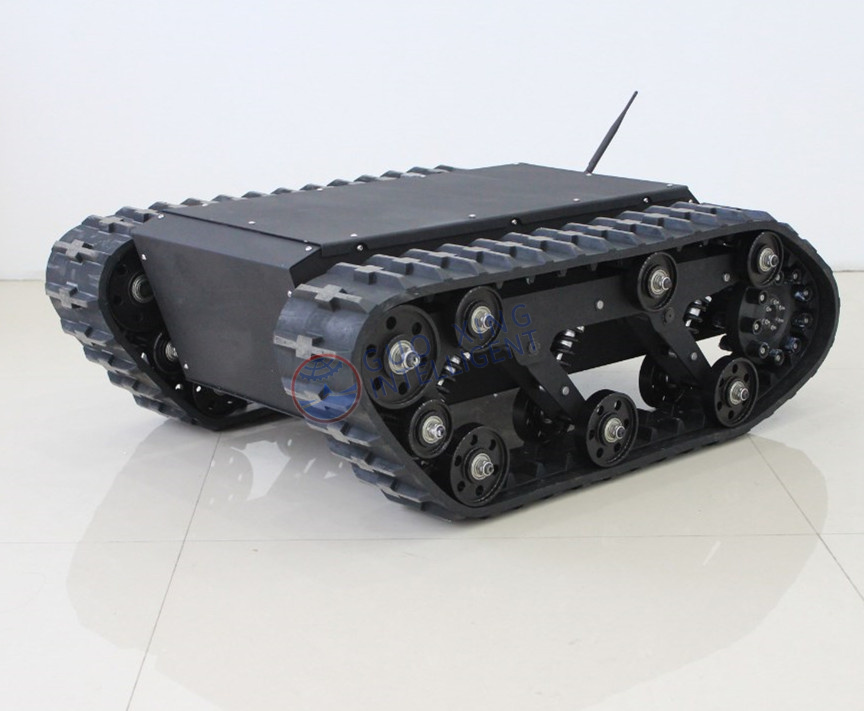
The foundation of your fleet dictates its ultimate performance. You must rigorously evaluate the physical mobile robot platform chassis before looking at software capabilities. The mechanical base must withstand daily abuse while providing precise mobility.
Kinematic configurations dramatically impact where and how a robot operates. You must compare drive systems based on your specific use case. The table below outlines common kinematic choices:
| Kinematic Configuration | Best Suited For | Common Limitations |
|---|---|---|
| Differential Drive | Indoor logistics, warehouses, predictable flat flooring. | Struggles on uneven outdoor terrain or tight lateral moves. |
| Omnidirectional/Mecanum | Tight-space manufacturing, precise docking alignment. | Lower payload capacity, rapid roller wear on rough surfaces. |
| Ackermann Steering | Outdoor rugged terrain, agricultural fields, high-speed transit. | Requires a larger turning radius, limiting indoor utility. |
Structural integrity relies heavily on material choices. Extruded aluminum offers excellent modularity and rapid prototyping speed. Welded steel provides superior dynamic stress handling for heavy-duty lifting. Engineers must evaluate payload-to-weight ratios carefully. A heavy chassis drains batteries faster, while a flimsy chassis risks structural warping under maximum load.
Power and energy management require deep scrutiny. You must assess battery chemistry options, charging mechanisms, and Battery Management System (BMS) reliability. The following chart summarizes battery performance traits:
| Chemistry Type | Energy Density | Cycle Life | Thermal Stability (Safety) |
|---|---|---|---|
| LiFePO4 (LFP) | Moderate | 3,000 - 5,000 cycles | Exceptionally High |
| NMC (Nickel Manganese Cobalt) | High | 1,000 - 2,000 cycles | Moderate (Requires strict BMS) |
Your chassis also requires a sensor-agnostic design. Operational environments evolve over time. You might swap ultrasonic sensors for advanced 3D LiDAR arrays later. The chassis frame must support flexible mounting brackets. It must also guarantee an unobstructed field-of-view (FOV) for RGB-D cameras and LiDAR modules, preventing blind spots during autonomous navigation.
Evaluating mechanical specs represents just one side of the equation. Finding a top-tier Custom Mobile Robot Platform Manufacturer demands a deep dive into their engineering competencies. They must bridge the gap between raw hardware and intelligent software.
Hardware-software integration expertise separates premium vendors from basic metal shops. Look for a transparent track record in low-level control systems. The manufacturer must seamlessly integrate motor drivers and PLCs with high-level navigation stacks. If low-level firmware suffers from latency, the robot will drive erratically regardless of how powerful the navigation software is.
ROS and ROS2 compatibility act as a critical baseline today. Assess the manufacturer’s ability to provide clean, well-documented APIs. They should deliver ready-to-use URDF (Unified Robot Description Format) models. Poorly documented drivers create severe bottlenecks for your internal software team. A good vendor supplies the necessary software nodes to make hardware communication plug-and-play.
Prototyping speed versus production fidelity requires balanced evaluation. Many shops excel at building a single beautiful prototype using CNC machining and 3D printing. However, they fail when transitioning those prototypes into repeatable mass production. You need a partner capable of holding tight tolerances across thousands of units using die-casting, injection molding, or automated welding lines.
Quality Assurance (QA) testing facilities must exist in-house. Do not accept theoretical data. Verify they have physical testing rigs for Mean Time Between Failures (MTBF). They should conduct rigorous thermal stress tests, continuous vibration analysis, and electromagnetic compatibility (EMC) testing. Real-world industrial environments punish electronics; thorough QA catches failures before deployment.
A brilliant design means nothing if the manufacturer cannot source the parts. Scaling a robotic fleet relies entirely on a resilient and transparent supply chain. Global logistics face constant disruptions, so you must audit how a vendor handles volatility.
Component sourcing transparency is non-negotiable. Evaluate how the manufacturer handles ongoing semiconductor shortages or specialized motor availability. Relying on single-source components creates massive bottlenecks. A mature partner aggressively multi-sources critical microcontrollers and drive components to keep assembly lines moving.
Regulatory and safety compliance must be engineered from day one, not bolted on later as an afterthought. You must assess their proficiency through these specific steps:
Lifecycle management and EOL (End-of-Life) policies protect your long-term investment. Industrial equipment usually requires a functional lifespan of 5 to 10 years. Assess the vendor's policy on EOL component replacements. They must offer robust long-term spare parts guarantees. If a proprietary motor controller goes out of production in two years, the vendor must supply a drop-in replacement.
Custom hardware development carries inherent risks. Identifying these risks early allows your procurement and engineering teams to put defensive structures in place. Ignoring them usually results in delayed launches and severely inflated budgets.
The NRE trap catches many unprepared buyers. Manufacturers charge Non-Recurring Engineering (NRE) costs to cover upfront design and tooling. If you fail to define the scope clearly, NRE costs quickly spiral out of control. Audit these costs upfront. Demand an itemized breakdown of tooling, firmware development, and testing fees to avoid scope creep during the design phase.
Intellectual Property (IP) disputes ruin otherwise productive partnerships. You must clearly demarcate who owns what. Define who owns the custom chassis CAD files, the embedded firmware, and any co-developed navigation software. Ambiguity here can hold your fleet hostage if you decide to change manufacturing partners later.
Integration bottlenecks represent a common failure point. Hardware gets delivered exactly to spec, but it fails to handshake properly with the client's proprietary software layer. This typically happens when communication protocols or CAN bus speeds misalign.
Mandate a rigid mitigation strategy. We recommend using a phased milestone approach to force early validation:
Once you understand the capabilities and risks, you need a systematic method for narrowing down the vendor field. Procurement teams should rely on structured data gathering and physical verifications rather than marketing brochures.
Request for Information (RFI) essentials form the first filter. Demand strict Bill of Materials (BOM) transparency. Ask for historical defect rates and specific case studies involving similar payload weights or environmental constraints. A vendor familiar with warehouse floors might fail completely when asked to build a rugged outdoor agricultural chassis.
Facility audits are mandatory before signing a major contract. Pay attention to specific operational details during your site visit. Look at the assembly line organization. Assess their electrostatic discharge (ESD) protocols on the electronics floor. Examine the sophistication of their testing rigs. A messy, disorganized floor usually translates to poor QA consistency.
The Proof of Concept (PoC) contract secures your exit strategy. Structure this initial agreement carefully. It must allow for a no-fault exit if the alpha prototype fails to meet predefined SLAs. Tie these SLAs directly to critical performance metrics, such as precise kinematic accuracy, maximum thermal output, or specific power consumption rates during a simulated shift.
Choosing a custom manufacturer is a strategic partnership, not a simple transactional purchase. Your vendor becomes an extension of your own engineering and supply chain teams. A poor choice leads to stranded prototypes and massive project delays.
Rigorous upfront vetting ensures you build a scalable, compliant robotic fleet. You must look beyond simple mechanical capabilities. Evaluate their open-architecture software integration, their resilience against component shortages, and their willingness to negotiate fair IP policies.
Draft your core operational requirements internally first. Define your strict physical constraints and target unit economics before initiating any vendor outreach. By bringing a clear, data-driven framework to the table, you position your team to secure a highly capable manufacturing partner ready to scale alongside your business.
A: A realistic timeline spans 3 to 6 months for initial prototype delivery. Achieving full production readiness usually takes 9 to 12 months. This timeframe depends heavily on design complexity, custom tooling requirements, and the speed of safety certification processes.
A: NRE costs are almost always billed in phases tied to specific deliverables. Typical billing milestones include an initial concept kickoff, final CAD design approval, and the physical delivery of the alpha prototype. This structure protects the buyer from paying full costs if early phases fail.
A: IP ownership remains highly negotiable. Buyers should aggressively aim to own the final physical chassis design and the high-level application layer. Manufacturers, however, typically retain the rights to their underlying, proprietary low-level sub-modules like standard motor control firmware.
A: Yes. Reputable manufacturers offer compliance engineering as an integrated service. They design for functional safety from day one and usually partner directly with external certified testing bodies to facilitate CE, UL, and ISO 3691-4 approvals for your final product.