
Views: 0 Author: Site Editor Publish Time: 2026-03-16 Origin: Site


Durability is one of the most important factors when selecting a robot chassis, especially for industrial and outdoor applications where robots must operate continuously under heavy load and harsh conditions. The chassis serves as the structural foundation of the robot, supporting motors, batteries, sensors, and working equipment, so its strength and reliability directly affect the overall lifespan of the entire system. A durable robot chassis can maintain stable performance even when exposed to vibration, impact, dust, water, or high temperature, while a weak chassis may deform, wear out quickly, or cause system failure. As robots are increasingly used in firefighting, mining, inspection, military, and other demanding tasks, understanding the factors that influence robot chassis durability is essential for ensuring long-term reliability, safety, and efficient operation.
The robot chassis is the base platform that holds motors, batteries, controllers, sensors, and working devices. Since all components are mounted on the chassis, its durability directly affects the stability and reliability of the whole robot. If the chassis is weak, long-term use may cause deformation, loosened parts, or mechanical failure.
Industrial robots often run for long periods under heavy load and continuous movement. This puts constant stress on the chassis structure. A durable chassis with strong materials and proper design can handle long working hours without losing performance, which is essential in industrial environments.
Robots used in mining, firefighting, inspection, and outdoor tasks often face dust, water, high temperature, and uneven terrain. In these conditions, the industrial robot chassis must resist wear, impact, and corrosion. A durable chassis helps keep the robot stable and reduces the risk of failure.
A strong and well-designed chassis can reduce maintenance needs and extend the service life of the robot. Higher durability means fewer breakdowns, lower repair costs, and more reliable operation in long-term industrial use.
The durability of a robot chassis largely depends on the materials used in its construction. High-strength steel, aluminum alloy, and reinforced metal structures are commonly used to ensure the chassis can support heavy loads without bending or cracking. Strong materials allow the chassis to maintain its shape and stability even after long periods of operation in demanding industrial environments.
In addition to material selection, the structural design of the chassis is equally important. A well-designed frame with proper reinforcement can distribute weight evenly and reduce stress on key parts. Thick plates, strengthened joints, and reinforced support points help prevent deformation when the robot carries heavy equipment or moves on rough terrain. This type of design greatly improves long-term durability.
The quality of welding and mechanical connections also affects how durable a robot chassis will be. Poor welding or weak joints may crack after repeated vibration or impact. High-quality manufacturing ensures that all connections are strong and stable, allowing the chassis to handle continuous movement and heavy-duty work without damage.
The durability of a robot chassis is closely related to manufacturing precision. Accurate machining ensures that all parts fit correctly and work smoothly together. If the dimensions are not precise, components may not align properly, which can cause extra friction, vibration, and faster wear during operation. High machining accuracy helps the chassis maintain stable performance over long periods.
Correct alignment of motors, gearboxes, wheels, and tracks is essential for long-term durability. When these parts are installed accurately on the chassis, the robot can move smoothly without unnecessary stress on the drive system. Poor assembly may lead to uneven movement, increased noise, and damage to bearings or transmission parts, reducing the lifespan of the chassis.
A durable industrial robot chassis requires strict assembly standards and quality inspection. Professional manufacturers usually test the frame strength, connection points, and drive system before delivery. Careful assembly and quality control ensure that the chassis can handle heavy loads, continuous movement, and harsh working conditions without failure.
The durability of a robot chassis depends on whether the drive system matches the required load capacity. Motors that are too small may overload easily, while oversized motors may put unnecessary stress on the structure. A well-designed chassis ensures that motor power, gearbox ratio, and payload capacity are properly matched, allowing the robot to run smoothly without excessive wear.
Drive components such as gearboxes, wheels, and tracks also affect how long the chassis can last. High-quality transmission parts reduce friction and prevent damage during long-term use. For heavy-duty or outdoor robots, reinforced tracks or strong wheels are necessary to handle rough terrain and continuous operation without breaking or slipping.
A good suspension or shock-absorption system helps protect the chassis from impact when the robot moves over uneven ground. Without proper shock control, vibration can damage the frame, loosen connections, and shorten the service life of internal components. A durable chassis design reduces stress on key parts and keeps the robot stable during movement.
Even a strong heavy-duty robot chassis can wear out quickly if it is used beyond its designed limits. Overloading, high-speed impact, or working on unsuitable terrain can cause structural damage over time. Choosing the correct chassis for the task and using it within its rated capacity is essential for maintaining long-term durability.
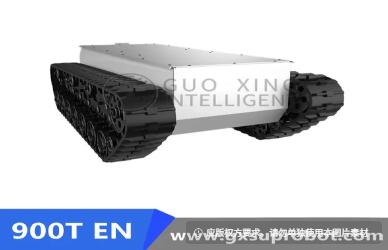
A durable robot chassis must be able to work in environments with dust, water, or mud. In outdoor and industrial applications, dust can enter moving parts and cause wear, while water may damage bearings, motors, or electronic components. A chassis with good sealing design and protective covers can prevent these problems and keep the robot working reliably for a long time.
Some robots operate in high-temperature environments such as firefighting scenes, factories, or oil and gas sites. In these conditions, the industrial robot chassis must use heat-resistant materials and proper structural design to avoid deformation or damage. Good heat resistance helps maintain stability and prevents performance loss during long working hours.
In mining, marine, or chemical environments, the chassis may be exposed to moisture, salt, or corrosive substances. Protective coatings, stainless materials, or special surface treatments can improve corrosion resistance and extend the service life of the chassis. Without proper protection, metal parts may rust or weaken over time.
In hazardous environments such as oil, gas, or chemical plants, safety is very important. A high-quality robot chassis may require explosion-proof design, reinforced structure, and secure electrical protection. These features help the robot operate safely while maintaining durability under dangerous working conditions.
The durability of a robot chassis depends greatly on whether it is used within its rated load capacity and working conditions. Overloading the robot, running at excessive speed, or using the chassis on terrain it was not designed for can cause stress, deformation, and faster wear. Choosing the correct chassis for the application and following the recommended limits helps maintain long-term reliability.
Routine inspection is important to keep the chassis in good condition. Key parts such as bolts, bearings, wheels, tracks, and drive components should be checked regularly to ensure they are not loose or worn. Early detection of small problems can prevent serious damage and reduce downtime in industrial use.
Proper lubrication reduces friction between moving parts and helps prevent overheating or mechanical damage. Cleaning dust, mud, and debris from the chassis also improves performance and prevents corrosion. In harsh environments, regular cleaning and lubrication are necessary to keep the robot running smoothly.
When a durable robot chassis is used correctly and maintained on schedule, it can operate reliably for many years. Good operating habits and proper maintenance not only extend service life but also reduce repair costs and ensure stable performance in demanding industrial applications.
A high-quality robot chassis can operate for many years if properly designed, used within load limits, and maintained regularly.
Yes, thicker and reinforced structures usually provide better strength, higher load capacity, and improved resistance to deformation.
Yes, dust, water, heat, and corrosion can damage mechanical parts, so protective design is important for long-term durability.
Not always. Durability depends on material quality, structure, and design, not only weight. A well-designed lightweight chassis can also be very strong.
The durability of a robot chassis is influenced by many factors, including material strength, structural design, manufacturing precision, drive system matching, environmental protection, and proper maintenance. Since the chassis supports all key components of a robot, its quality directly determines the stability, safety, and service life of the entire system. In industrial applications where robots must work under heavy load and harsh conditions, a durable chassis is essential for maintaining reliable performance over time. Choosing a well-designed chassis from a professional manufacturer, using it within the correct limits, and performing regular maintenance can greatly extend its lifespan. A strong and durable robot chassis not only improves efficiency but also reduces downtime and long-term operating costs.