
Views: 0 Author: Site Editor Publish Time: 2025-12-08 Origin: Site


Firefighting robots are revolutionizing emergency response, particularly in environments where traditional firefighting techniques are insufficient or too dangerous. These robots are specially designed to operate in hazardous settings like chemical spills, industrial fires, and high-rise building blazes, where extreme heat, toxic gases, and structural instability pose significant threats to human safety. With cutting-edge technologies, firefighting robots can enhance fire suppression, provide real-time situational awareness, and support search and rescue operations. This article will examine the key components of firefighting robots, detailing how their mobility systems, fire suppression tools, and sensor technologies come together to improve firefighting capabilities, protect human lives, and increase the effectiveness of emergency response in dangerous conditions.
The chassis and frame of a firefighting robot play a critical role in ensuring the robot’s structural integrity during firefighting operations in hazardous environments. These components provide the necessary strength to withstand high-impact situations, such as navigating through debris, or in extreme conditions like intense heat or fire exposure. The chassis protects the robot’s internal electronics, motors, and sensitive components, ensuring that the robot remains operational even when working in environments that could cause damage or failure in less durable systems. Additionally, a robust design is essential for maintaining the robot's stability and maneuverability, allowing it to perform tasks like suppressing fires or rescuing individuals without losing balance or sustaining damage.
To ensure durability and protection, the chassis of firefighting robots is made from advanced materials such as fire-resistant alloys and heatproof composites. These materials are specifically chosen for their ability to withstand extreme temperatures, direct exposure to flames, and mechanical stress. Fire-resistant alloys, like stainless steel or aluminum, are often used for their strength and heat resistance, while heatproof composites provide lightweight durability without sacrificing heat protection. These materials help prevent the robot from overheating, cracking, or warping during firefighting operations, allowing it to function effectively in high-risk fire scenarios. The combination of these materials ensures that the robot can operate safely and efficiently in the most demanding environments, from industrial fires to urban emergencies.
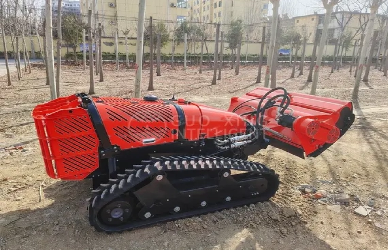
The mobility systems of firefighting robots are crucial for navigating through various challenging environments. Tracked designs provide stability and traction, allowing robots to easily maneuver over rough, uneven surfaces such as collapsed buildings, debris, or rugged outdoor terrains. The tracks distribute the robot’s weight evenly, preventing it from getting stuck and enabling it to move across unstable ground, which is often encountered in fire zones. On the other hand, wheeled designs offer faster movement and are well-suited for more smooth, open areas, allowing robots to quickly reach fire zones. In some cases, hybrid designs combine the best features of both tracked and wheeled systems, giving robots the ability to adapt to a wider variety of terrains. These mobility systems ensure that firefighting robots can access hard-to-reach areas, whether they are navigating through a collapsed building after an explosion or over rough, rocky outdoor terrain during a wildfire.
Alongside the overall mobility, the maneuverability of firefighting robots is critical for operating in confined spaces and tight, complex environments. During firefighting operations, robots often need to navigate through narrow hallways, stairwells, or small openings in collapsed structures where human responders cannot go. Agile movement allows robots to avoid obstacles and reach critical areas, such as the epicenter of a fire or spots where traditional firefighting equipment cannot be deployed. The ability to move smoothly and quickly in tight spaces ensures that robots can provide effective fire suppression, monitor dangerous environments, and assist in search and rescue operations without delay. This agility not only enhances firefighting efficiency but also improves the safety of human responders by keeping them out of hazardous zones.
Firefighting robots are equipped with advanced fire suppression systems designed to tackle fires effectively across a variety of environments. These systems often include water nozzles, foam dispensers, and chemical retardants. Water nozzles allow robots to deliver high-pressure water streams to suppress flames, particularly in structural fires or wildfires. Foam dispensers are essential for handling chemical fires, oil fires, and flammable liquid spills. Foam works by smothering the fire, cutting off oxygen and preventing the fire from reigniting. For fires in industrial settings or chemical spills, robots may also deploy chemical retardants, which are specially designed to inhibit chemical reactions and prevent the fire from spreading or re-igniting. These suppression systems enable robots to provide efficient and immediate fire control, particularly in high-risk areas where human intervention may be too dangerous.
Firefighting robots are designed to be versatile in handling a range of fire types, adapting their suppression methods to the specific challenges presented by different fires. For example, in chemical fires, robots use foam or chemical retardants to safely control the fire, as water may worsen the situation by causing dangerous reactions with certain chemicals. For oil fires, foam is particularly effective in extinguishing the flames while preventing further fuel sources from spreading the fire. In structural fires, where access is often limited and traditional firefighting tools might be difficult to deploy, robots can deliver water or foam through hoses or nozzles directly to the fire source, efficiently controlling the flames in confined spaces. By being equipped with multiple suppression methods, firefighting robots can tackle a wide range of fire types, offering both flexibility and precision in diverse environments, from industrial plants to urban firefighting scenarios.
Thermal sensors and smoke detectors are crucial components in firefighting robots, helping them assess the fire intensity and locate hotspots in real time. Thermal sensors detect variations in temperature, allowing robots to identify areas with the highest heat and focus their suppression efforts where the fire is most intense. Smoke sensors help the robot navigate through smoke-filled environments by detecting smoke density, which provides valuable data about fire spread and air quality. By using these sensors, robots can make real-time decisions on the most effective course of action, ensuring that firefighting efforts are directed precisely at the areas that need the most attention.
Firefighting robots are equipped with gas detectors to monitor the presence of harmful or toxic gases in the environment, such as carbon monoxide, ammonia, or hydrogen sulfide. These gases often accompany fires and pose significant risks to both the robots and human responders. The ability to detect these gases early allows the robot to assess safety conditions, avoid dangerous areas, and communicate crucial information to human teams. By providing real-time data on the concentration of gases, robots help ensure that firefighting efforts are conducted safely and that response teams are not exposed to harmful substances.
Cameras—both visual and thermal—play a vital role in providing situational awareness to firefighting robots. Visual cameras offer real-time imagery, allowing the robot to visually assess the fire scene and identify hazards like obstacles or structural damage. This is particularly useful when navigating complex or confined spaces. Thermal cameras, on the other hand, enhance the robot’s ability to see in low-visibility conditions, such as thick smoke or darkness, by detecting temperature variations. These cameras help the robot locate hotspots, monitor fire behavior, and ensure accurate navigation through fire-affected areas. Together, these sensors and cameras provide firefighting robots with the necessary data to operate effectively in challenging and hazardous environments.
Answer: Firefighting robots are typically constructed using fire-resistant alloys and heatproof composites to withstand extreme temperatures and protect internal components from damage during firefighting operations.
Answer: Firefighting robots are equipped with gas detectors that can identify harmful or toxic gases like carbon monoxide or ammonia, providing real-time data to human responders and enhancing safety during fire operations.
Answer: Firefighting robots use tracked or wheeled mobility systems that allow them to move across rough terrain, debris, and confined spaces, enabling them to access areas that are dangerous or inaccessible to human firefighters.
Answer: Firefighting robots can operate both autonomously, using AI for decision-making, and via remote control, allowing human firefighters to intervene in complex or unpredictable situations.
To conclude, the advanced sensors and detection systems integrated into firefighting robots play a pivotal role in enhancing their ability to manage complex fire scenarios. Heat and smoke sensors allow robots to detect fire intensity and navigate through hazardous conditions, while gas detectors ensure the safety of both the robot and human responders by identifying toxic gases. Additionally, visual and thermal cameras provide real-time imagery, offering valuable situational awareness and enabling precise navigation in difficult environments. These combined technologies empower firefighting robots to operate autonomously and efficiently, improving fire suppression efforts and ensuring a safer, more effective response to fires in high-risk areas. The continuous advancements in these sensor systems will further enhance the capabilities of firefighting robots, making them indispensable tools in modern fire safety operations.