
Views: 0 Author: Site Editor Publish Time: 2025-11-27 Origin: Site


The growing complexity and intensity of fires in hazardous environments, such as chemical plants, oil refineries, and urban fire zones, have made firefighting robots an increasingly essential tool for modern emergency response. These environments often present unique challenges, including toxic chemicals, extreme heat, and difficult-to-reach areas, where human firefighters are at significant risk. To address these challenges, firefighting robots are being designed with specialized features tailored to operate effectively in such high-risk conditions. These robots need advanced sensors, heat resistance, and mobility to navigate dangerous terrains and handle hazardous materials, all while providing real-time data to human teams. The objective of this article is to highlight the key features that make firefighting robots effective in managing and suppressing fires in these challenging environments, ultimately improving response times, firefighter safety, and operational efficiency.
Firefighting robots must be able to withstand extremely high temperatures and flames, especially in industrial or chemical fires where the heat can reach dangerous levels. These environments pose a significant risk to human firefighters, which is why robots are equipped to enter these hazardous zones. The ability to endure intense heat ensures that robots can operate continuously without being damaged, allowing them to perform critical tasks such as fire suppression and data collection without the need for human intervention.
To achieve high heat resistance, firefighting robots are constructed using fire-resistant alloys or high-performance composites. These materials are specifically chosen for their ability to maintain strength and integrity at extreme temperatures. The robot's exterior is typically designed with a combination of heat-resistant metals, ceramics, and specialized coatings that protect it from both the direct flames and the radiant heat in hazardous environments. These durable materials ensure that the robot can perform its functions efficiently, even in environments where the temperature can be over 1000°C (1832°F).
While the robot’s outer body is built to endure extreme conditions, it is equally important to protect the internal electronics and motors from heat, smoke, and other hazardous elements. Many firefighting robots are equipped with thermal insulation and heat shields to safeguard sensitive components. This protection ensures that the robot's sensors, communication systems, and motors remain functional during critical operations. Additionally, smoke-proof enclosures are used to protect these components from the buildup of toxic smoke or corrosive gases, maintaining the robot's performance in even the most dangerous conditions.
Advanced sensors, such as temperature, smoke, and gas detectors, are essential for providing real-time data to human responders. These sensors monitor fire intensity, gas levels, and environmental conditions, helping firefighters make informed decisions and adjust strategies quickly, improving response times.
To navigate hazardous environments, firefighting robots use sensors like thermal detectors to locate hotspots, LiDAR for 3D mapping and obstacle avoidance, and visual cameras for real-time imagery. These sensors enable robots to move efficiently through smoke-filled or dangerous areas where visibility is low.
Firefighting robots are equipped with sensors that monitor fire behavior, detect toxic gases, and assess structural instability. This environmental data ensures that robots can safely operate in high-risk areas, while providing critical information for the safety of both the robot and human teams.
Firefighting robots must be designed to navigate a variety of challenging environments, from rocky terrains to debris-filled industrial settings. The wheeled and tracked designs are essential for ensuring that robots can move across uneven, rugged surfaces. Wheeled robots offer speed and efficiency on smoother surfaces, while tracked robots provide enhanced stability and traction on rough, unstable ground, ensuring they can reach fire zones quickly and safely, even in the most difficult conditions.
In urban and industrial fire emergencies, the ability to move through confined spaces is critical. Firefighting robots need to be able to navigate through narrow hallways, under collapsed structures, or between tight obstacles to access areas that are otherwise inaccessible. Their ability to squeeze through small openings and maneuver around obstacles enables them to provide critical fire suppression and data collection in spaces where human firefighters cannot safely enter.
To adapt to varying firefighting scenarios, robots often come with adjustable tracks or modular designs. These features allow the robot to change its configuration based on the terrain or situation at hand. For example, a robot might adjust its tracks for better stability on rocky ground or switch configurations for ease of movement in tight urban areas. This flexibility makes firefighting robots versatile and capable of handling a wide range of fire emergencies, regardless of location.
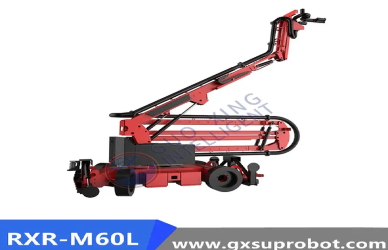
Firefighting robots equipped with autonomous capabilities can operate independently in challenging environments, such as burning buildings or hazardous industrial areas. These robots use AI and machine learning to analyze their surroundings, make decisions, and navigate through complex terrains without constant human input. Autonomous systems allow the robot to identify fire hotspots, avoid obstacles, and adapt to dynamic conditions in real-time, all while ensuring efficient and effective firefighting efforts.
While autonomous robots are highly capable, there are situations where remote control is necessary, especially for complex tasks. In these cases, human operators can take control to make real-time decisions, providing oversight and directing the robot’s actions as needed. This is especially important in high-risk situations where immediate human judgment is required, such as navigating particularly dangerous fire zones or coordinating with other firefighting efforts. The ability to remotely control the robot ensures a balanced response, with human expertise guiding the technology.
Both autonomous and remotely controlled firefighting robots rely heavily on situational awareness to operate effectively in hazardous environments. Equipped with advanced sensors, cameras, and communication systems, these robots can gather and relay critical data about fire behavior, air quality, and structural integrity. This situational awareness helps both the robots and human teams make informed decisions, improving safety and effectiveness during fire emergencies. Whether operating autonomously or under remote control, the robot’s ability to assess and respond to its environment is essential for successful fire management.
One of the key features of firefighting robots is their built-in fire suppression systems, such as water nozzles and foam dispensers. These systems allow robots to take immediate action when deployed in high-risk fire scenarios, suppressing flames and preventing further spread. In situations where human intervention is too dangerous or not possible, robots with integrated suppression systems can begin firefighting operations right away, providing essential time for human teams to arrive. These systems are designed to be highly efficient and can be activated remotely or automatically, ensuring fast and effective response in critical moments.
Firefighting robots are designed to tackle a variety of fire types using different suppression methods. Robots equipped with water nozzles are ideal for tackling structural fires or wildfires, where large volumes of water are needed to suppress flames. For chemical fires or hazardous materials fires, robots can deploy foam dispensers, which are effective at smothering flames and preventing the re-ignition of flammable substances. Some robots may also be designed to use specialized fire retardants for specific situations, such as oil fires or electrical fires, providing versatility in their firefighting capabilities. By offering a range of suppression methods, firefighting robots can adapt to different fire environments and ensure effective fire control across various scenarios.
Answer: Key features include heat resistance, advanced sensors for real-time data, all-terrain mobility, autonomous capabilities, and built-in fire suppression systems.
Answer: Firefighting robots are built with heat-resistant materials and protective shielding to safeguard their internal components. They are designed to withstand high temperatures and flame exposure, allowing them to operate in dangerous areas.
Answer: Yes, many firefighting robots are equipped with autonomous navigation systems powered by AI, allowing them to make decisions and perform tasks like moving through fire zones and suppressing fires without constant human input.
Answer: Firefighting robots are equipped with real-time data transmission systems, which allow them to send information to human firefighters, including fire intensity, environmental conditions, and situational analysis, helping improve decision-making during operations.
In summary, the integration of water and foam dispensing systems into firefighting robots is a crucial advancement in modern fire suppression efforts. These built-in fire suppression systems allow robots to take immediate action in high-risk fire scenarios, ensuring fast and effective response in situations where human intervention might be too dangerous. The versatility of these systems, capable of tackling a wide range of fire types—whether it's chemical, structural, or wildfire—further enhances the robot's role in firefighting. By combining water nozzles, foam dispensers, and other specialized methods, firefighting robots can adapt to various environments and respond to fires more efficiently, improving safety and reducing response times. As technology continues to evolve, firefighting robots will remain essential tools in providing timely, effective fire suppression, protecting lives and property in the most hazardous conditions.