
Views: 0 Author: Site Editor Publish Time: 2025-11-27 Origin: Site


Quick response times during fire emergencies are crucial to minimizing damage, saving lives, and preventing further destruction. However, traditional firefighting methods often face challenges, such as limited access to hazardous areas, the physical strain on human firefighters, and delayed response times due to complex fire dynamics. As fires become more intense and unpredictable, the need for faster, more effective solutions has never been more critical. This is where firefighting robots come into play. With their ability to access difficult-to-reach locations, operate in dangerous environments, and gather real-time data, firefighting robots are revolutionizing emergency response. These robots are not only reducing the response time but are also enhancing firefighting efficiency by enabling immediate action, providing support to human firefighters, and ensuring safer, more effective fire management in diverse settings, from urban structures to industrial plants.
Firefighting robots can be rapidly deployed into dangerous environments, providing immediate action without risking human lives. They enter hazardous areas, such as burning buildings or toxic zones, quickly, reducing response time and minimizing damage.
Firefighting robots can operate remotely or autonomously, allowing them to access hard-to-reach areas like high-rise buildings, confined spaces, or hazardous environments. This helps firefighters respond to situations that would otherwise be too dangerous for human intervention.
Equipped with advanced sensors, firefighting robots gather real-time data (temperature, smoke levels, fire size) and send it to human responders. This enables better decision-making and faster, more informed firefighting strategies.
Unlike human firefighters, robots can work continuously without fatigue, ensuring persistent fire suppression efforts. This provides uninterrupted coverage in critical areas until human teams can take over.
In densely populated urban environments, especially high-rise buildings, firefighting robots play a crucial role. These robots can be deployed into high-rise structures where human access is limited due to smoke, heat, or structural damage. They are equipped to navigate through narrow hallways and confined spaces, providing immediate fire suppression and crucial data for firefighters, allowing them to act swiftly and safely.
Industrial settings like chemical plants, oil refineries, and factories often involve the risk of hazardous materials, making firefighting particularly dangerous. Firefighting robots are designed to operate in these high-risk environments, where they can suppress fires, monitor temperature changes, and detect toxic gases. Their quick response time and ability to handle dangerous materials significantly reduce the risks to human firefighters and improve overall safety and efficiency.
Firefighting robots are also proving invaluable in managing wildfires. These robots are capable of reaching remote and hard-to-access areas in forests and rural landscapes, where human firefighters may struggle due to difficult terrain and extreme fire conditions. With their rugged design, they can navigate rough terrain and deliver water or suppressive foam, effectively slowing down or containing fires in regions that are otherwise unreachable.
In addition to firefighting, robots are also used in search and rescue operations during fire emergencies. While firefighting efforts continue, robots can be deployed to search through debris or hazardous environments to locate and rescue victims. Equipped with cameras and sensors, these robots provide real-time data to rescuers, helping them locate survivors quickly and efficiently, even in dangerous or unstable conditions.
Firefighting robots can be deployed immediately to fire-prone areas, providing instant fire suppression before human teams can arrive. This rapid response time is crucial in preventing the fire from spreading and minimizing the damage. By acting quickly, robots can contain the fire faster, giving firefighters a head start and allowing them to focus on secondary firefighting efforts and rescues when they arrive. The ability to act right away can significantly reduce the impact of the fire on the surrounding environment and structures.
One of the most significant advantages of firefighting robots is their ability to handle the most dangerous tasks, such as entering burning buildings, dealing with toxic chemicals, or navigating hazardous materials. This capability dramatically reduces the risk of injury or even death for human firefighters. Robots can take on high-risk tasks that would otherwise put responders in extreme danger, allowing human firefighters to remain safe while the robots manage the immediate threats. This increased safety factor enhances overall firefighting efficiency and protects the health and wellbeing of fire crews.
Firefighting robots are designed to access areas that are often too dangerous for humans, such as collapsed buildings, chemical spills, or regions with extreme heat, toxic smoke, or unstable structures. Equipped with advanced sensors and mobility, these robots can navigate hazardous environments that would otherwise be inaccessible to human firefighters. By reaching these perilous locations, robots can gather vital data and provide critical insights, allowing firefighters to understand the situation better and plan their approach. This capability ensures a more effective and informed firefighting effort, improving both safety and fire control.
While firefighting robots handle the initial fire suppression and hazardous operations, human firefighters can focus on strategic firefighting and rescue efforts. Robots can work continuously without fatigue, managing dangerous tasks like suppressing flames or detecting hazards, while human responders concentrate on more complex activities such as rescuing trapped individuals or strategizing for long-term fire containment. This division of labor allows for a more coordinated and efficient response, where robots tackle immediate risks, and human teams provide oversight, leadership, and more nuanced decision-making in response to the emergency.
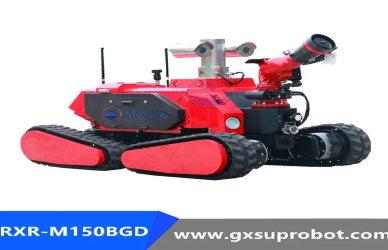
One of the primary challenges with firefighting robots is the initial investment and ongoing maintenance. While these robots provide significant benefits, including enhanced safety and faster response times, they come with a hefty price tag. The cost includes not only the purchase of the robots themselves but also the training, repairs, and regular maintenance required to keep them operational. However, when compared to the long-term benefits—such as reducing firefighter injury, speeding up fire suppression, and preventing property damage—the costs can be justified, especially for industries or fire departments dealing with high-risk environments. Over time, the integration of firefighting robots can result in cost savings by improving efficiency and reducing human resource expenditures in hazardous situations.
Firefighting robots are not meant to replace human firefighters, but rather to complement traditional firefighting methods. The challenge lies in integrating these robots seamlessly into existing emergency response operations. This requires training both robots and human teams to work together efficiently. Robots must be compatible with existing equipment and systems used by human firefighters, ensuring that data from the robots can be easily shared and interpreted. Successful integration will depend on clear communication between human responders and robots, as well as protocols that allow for smooth coordination during emergencies.
Looking ahead, technological advancements in AI, machine learning, and robotics will significantly enhance the capabilities of firefighting robots. As robots become smarter, they will be able to process real-time data more effectively, improve decision-making in dynamic fire environments, and act autonomously with minimal human input. The future may also see robots equipped with advanced sensors capable of detecting fire behavior patterns, predicting fire spread, and autonomously adjusting firefighting strategies in real time. Furthermore, as battery and power technologies advance, we may see robots that can operate for longer periods without needing to recharge, increasing their effectiveness in long-duration firefighting operations.
Answer: Firefighting robots can be quickly deployed into hazardous areas, operate autonomously or remotely, and provide real-time data, all of which allow for faster and more efficient responses compared to traditional methods.
Answer: In urban fires, firefighting robots can access high-rise buildings and areas that are too dangerous for human firefighters, providing rapid fire suppression and data collection without risking lives.
Answer: In industrial fires, such as those in chemical plants or refineries, robots can navigate hazardous environments, suppress flames, and detect dangerous substances, all while minimizing human exposure to toxic chemicals and extreme heat.
Answer: While firefighting robots significantly enhance response times and assist in dangerous situations, they cannot fully replace human firefighters. Robots complement human efforts by taking on the most dangerous tasks, allowing firefighters to focus on strategy and rescue operations.
In summary, firefighting robots play a crucial role in improving response times during fire emergencies. Their ability to be deployed quickly, access dangerous areas, and operate continuously without fatigue makes them indispensable in modern firefighting efforts. By providing real-time data, enhancing firefighter safety, and tackling the most hazardous tasks, these robots allow human responders to focus on strategy and rescue, ultimately leading to more effective and coordinated fire management. Fire departments and emergency services should consider integrating firefighting robots into their operations to enhance safety, speed, and efficiency during fire emergencies. Embracing this advanced technology will not only save lives but also help minimize damage and improve the overall effectiveness of fire response strategies.