
Views: 0 Author: Site Editor Publish Time: 2025-12-01 Origin: Site


Firefighting robots have evolved significantly from their initial conceptual stages to become powerful tools in modern firefighting operations. As fire scenarios become more complex, particularly in hazardous environments such as chemical plants, oil refineries, and urban fire zones, the need for advanced firefighting technology has grown. These robots are designed to perform tasks that are too dangerous for human firefighters, such as entering burning buildings, navigating through toxic smoke, and operating in environments filled with hazardous materials. Their ability to suppress fires quickly, gather real-time data, and operate autonomously has made them an indispensable asset in modern fire response strategies. This article explores the journey of firefighting robots, from their early development to their current capabilities, highlighting the technological advancements that have shaped their effectiveness and their role in fire emergencies today.
The concept of firefighting robots can be traced back to the 1980s and 1990s, when engineers and researchers began exploring the possibility of using machines to assist in firefighting tasks, particularly in high-risk environments where human intervention was dangerous. Early ideas focused on developing robots capable of entering hazardous areas—such as burning buildings, chemical plants, and industrial sites—where traditional firefighting methods posed significant risks to human lives. These initial concepts were driven by the need for safer, more efficient ways to combat fires in environments too dangerous for human firefighters.
Early firefighting robot prototypes were crude, facing significant challenges related to mobility, heat resistance, and fire suppression capabilities. The first models were often bulky and not designed for the agility required to navigate difficult terrains. Many prototypes had limited mobility, often restricted to flat surfaces, making it difficult for them to enter tight spaces or rough environments. Additionally, the materials used in early designs were not sufficiently heat-resistant, limiting the robots' ability to operate in high-temperature conditions. Fire suppression systems were also underdeveloped, and early robots struggled to effectively combat flames, often lacking the necessary power or precision to manage fires.
The early technological landscape posed several challenges for firefighting robots. Autonomy was one of the biggest limitations; robots relied on basic remote control systems and lacked the sophisticated algorithms and AI that would later enable them to operate autonomously in dangerous fire scenarios. Sensors in these early prototypes were rudimentary, often incapable of providing real-time data on fire conditions, smoke, or structural stability. The lack of real-time communication and data transmission also hindered their effectiveness, as they could not relay critical information back to human responders. As a result, early firefighting robots had limited impact and were often seen as experimental rather than practical tools for fire emergencies.
Advanced sensor technology has greatly improved firefighting robots’ performance. Equipped with heat detection, smoke sensors, and gas monitors, robots can assess fire conditions in real time. Heat sensors identify hotspots, smoke sensors help navigate through smoke-filled environments, and gas monitors detect hazardous gases like carbon monoxide. These sensors provide essential data, enabling robots to act quickly and inform human teams about fire behavior and safety risks.
Tracked and wheeled designs have enhanced the mobility of firefighting robots, allowing them to navigate difficult terrains such as collapsed structures or rugged landscapes. Tracked robots offer stability on unstable ground, while wheeled robots provide speed and maneuverability on flat surfaces. These mobility innovations allow robots to access dangerous areas that would be otherwise unreachable, improving firefighting efficiency.
The integration of AI and machine learning has enabled firefighting robots to operate autonomously. With AI, robots can make real-time decisions, adjust to changing fire conditions, and navigate obstacles. Machine learning improves their decision-making by analyzing data like temperature and smoke density, allowing robots to act proactively. This reduces human involvement, making robots more effective in unpredictable and hazardous fire scenarios.
Modern firefighting robots are equipped with a range of advanced capabilities, such as remote control, autonomous navigation, and seamless integration with traditional firefighting teams. Robots can be operated remotely, allowing human operators to control their movements and actions from a safe distance. In addition, many firefighting robots are autonomous, using AI and sensors to make decisions, navigate through challenging environments, and adjust tactics based on real-time conditions. These robots complement traditional firefighting methods by providing real-time data and immediate action, allowing human firefighters to focus on more complex tasks like rescue operations and fire strategy.
Modern firefighting robots are integrated with various fire suppression systems to combat different types of fires effectively. Water nozzles are commonly used for structural fires or wildfires, providing immediate cooling and suppression. Foam dispensers are crucial for controlling chemical or oil fires, where water alone is ineffective. Additionally, some robots are equipped with chemical retardants that are specifically designed to handle industrial or hazardous material fires. These suppression systems enable robots to quickly and efficiently tackle a wide range of fire scenarios, even in environments that are too dangerous for human intervention.
Firefighting robots are already being deployed in various real-world scenarios. In industrial fires, such as those in chemical plants or oil refineries, robots are used to suppress flames and provide data on fire behavior, reducing the risk to human firefighters. In urban emergencies, robots assist in high-rise building fires, navigating narrow spaces and providing critical firefighting support in dangerous environments. Additionally, wildfire management is another area where robots have proven valuable. They are deployed to remote, rugged terrain to fight wildfires, providing real-time fire data and suppression efforts in areas that are often difficult for human teams to access.
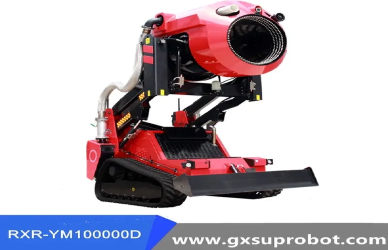
While firefighting robots offer significant benefits, there are ongoing challenges related to their cost and maintenance. The initial investment required for developing, purchasing, and integrating these robots into existing firefighting systems can be high. Additionally, the maintenance costs, including repairs, software updates, and training for personnel, add to the overall expense. Robots must also be regularly maintained to ensure they perform optimally in hazardous environments, which can involve specialized technical support. The integration of these robots with existing firefighting infrastructures can also be complex, requiring adjustments to protocols and new training for human teams. Despite these costs, the long-term benefits, such as enhanced safety, reduced firefighter injury, and faster response times, often justify the investment.
The future of firefighting robots holds exciting possibilities with continued advancements in AI, sensor technology, and materials. AI will likely play a central role in improving autonomy, allowing robots to make more complex decisions and adapt to changing fire conditions in real time. Advanced sensors will further enhance the robot’s ability to detect fire behavior, gas leaks, and structural integrity, providing even more detailed and accurate data for decision-making. As for materials, future robots will likely use even more heat-resistant and lightweight materials, making them faster, more mobile, and better suited for extreme conditions. Innovations in battery technology will also extend operating times, allowing robots to function longer in prolonged emergencies. These improvements will make firefighting robots even more effective, efficient, and adaptable to a wide range of fire scenarios.
Looking forward, the future of firefighting robots will involve greater integration with human teams, focusing on collaboration rather than replacement. While robots can perform dangerous and repetitive tasks, human expertise will remain essential for strategic decision-making and complex rescue operations. The goal is to create a synergistic relationship where robots handle hazardous, time-sensitive tasks like fire suppression and hazard detection, while human teams focus on more nuanced decisions and life-saving operations. By working together, robots and human firefighters can enhance overall response efficiency, improve safety, and ensure a more effective firefighting strategy.
Answer: The first firefighting robots were designed to assist in dangerous environments, such as chemical plants or industrial facilities, where traditional firefighting methods posed a significant risk to human firefighters. They were basic prototypes, focused on providing fire suppression in high-risk areas.
Answer: Over the years, firefighting robots have seen advancements in mobility, sensor technology, and autonomy. Modern robots are equipped with heat-resistant materials, real-time data communication, and advanced AI that allows them to operate independently or alongside human teams in complex fire scenarios.
Answer: Firefighting robots are equipped with integrated fire suppression systems, including water nozzles, foam dispensers, and chemical retardants. These robots are capable of applying fire suppression methods in areas that are too dangerous for human intervention, such as high-rise buildings, hazardous industrial sites, or wildfires.
Answer: The future of firefighting robots will likely involve continued advancements in AI, machine learning, and sensor technology to enhance their capabilities. We can expect to see even more autonomous robots that can make real-time decisions, as well as improved integration with human teams for more efficient fire response and rescue operations.
Firefighting robots are revolutionizing the way we approach fire safety and emergency response. Despite the challenges related to cost, maintenance, and their integration into existing firefighting operations, the advantages they offer in terms of enhanced safety, faster response times, and improved fire suppression are undeniable. Looking ahead, continuous advancements in AI, sensor technology, and material innovations will only expand their capabilities, making them more efficient and adaptable to a wider range of fire scenarios. The future of firefighting robots will involve closer collaboration with human teams, creating a more effective synergy where robots handle the most dangerous tasks while human responders focus on strategic decision-making. As technology continues to progress, firefighting robots will play an increasingly vital role in ensuring faster, safer, and more efficient fire response across the globe.