
Views: 0 Author: Site Editor Publish Time: 2026-08-07 Origin: Site


A generic, off-the-shelf mobile platform works perfectly fine for early proof-of-concept testing. However, commercial deployment quickly demands specialized form factors. You need highly specific structural solutions to handle unique payloads, massive battery volumes, and harsh terrain constraints. Transitioning from an initial CAD prototype to a reliable, mass-producible unit often exposes severe gaps in manufacturing capability. Many robotics companies struggle when their initial design hits the production floor. They face unexpected assembly delays and compounding quality control issues. Selecting the right manufacturing partner requires evaluating far more than just their basic fabrication equipment. You must deeply assess their engineering depth and problem-solving execution. Specifically, you need to verify their ability to execute highly reliable custom robot chassis design. This guide will show you how to ensure they optimize for manufacturability. We will explore how to scale your physical product seamlessly without ever degrading field quality.
Standard commercial off-the-shelf (COTS) platforms help you validate software quickly. Eventually, you will inevitably hit their structural breaking points. They frequently suffer from critical thermal management failures. This happens when enclosing high-performance compute units in unoptimized frames. You might also notice frustrating sensor blind spots. Generic frames rarely accommodate custom lidar or camera mounting angles perfectly. Furthermore, standard chassis usually lack optimal payload distribution for specialized tasks. An unbalanced frame causes premature wear on drive motors and suspension joints.
You must establish clear technical parameters before sourcing a manufacturing partner. Define your exact success criteria early in the process. Determine the strict IP rating needed for challenging outdoor environments. Calculate the expected daily duty cycle for your autonomous mobile robots. You should also establish a realistic targeted unit cost at scale. Knowing these numbers helps you filter out incompatible vendors immediately.
Balancing upfront Non-Recurring Engineering (NRE) costs requires careful financial planning. Custom tooling investments often seem highly intimidating at first glance. However, you must weigh these upfront expenses against long-term operational efficiencies. A purpose-built chassis significantly reduces field maintenance downtime. It improves overall battery efficiency through highly optimized weight distribution. Transitioning to a dedicated Robot Chassis Factory becomes absolutely essential for serious commercial viability.
Choosing the right partnership model dictates your entire production trajectory. You have three primary avenues to explore. Each distinct approach heavily impacts your internal resource allocation. It also completely defines your intellectual property rights.
The Original Equipment Manufacturer (OEM) approach suits established companies well. You need a strong internal mechanical engineering team to utilize it. You maintain absolute 100% ownership of the structural intellectual property. The factory strictly executes a rigid "build-to-print" mandate. They handle sheet metal fabrication, CNC machining, and complex welding. They do not alter your core design architecture without direct permission.
Alternatively, the Original Design Manufacturer (ODM) approach shifts the engineering burden. The factory provides comprehensive custom robot chassis design services. They build frameworks based strictly on your required performance specs. This route guarantees a significantly faster time-to-market. However, it requires aggressive Non-Disclosure Agreement (NDA) enforcement. You must maintain absolute clarity regarding final IP ownership before production begins.
Many teams prefer a collaborative hybrid or joint-development model. You leverage the factory's existing engineering expertise directly. They modify a proven commercial chassis architecture for your specific use case. This saves months of baseline structural testing.
| Partnership Model | Engineering Responsibility | IP Ownership Status | Best Fit Scenario |
|---|---|---|---|
| OEM (Build-to-Print) | Your Internal Team | Fully Client Owned | Mature designs needing exact replication at high volume |
| ODM (Factory Designed) | Factory Engineering Team | Negotiated / Often Shared | Fast time-to-market with limited internal mechanical staff |
| Hybrid Development | Collaborative Effort | Core IP Factory, Custom Client | Adapting existing proven architectures for unique payloads |
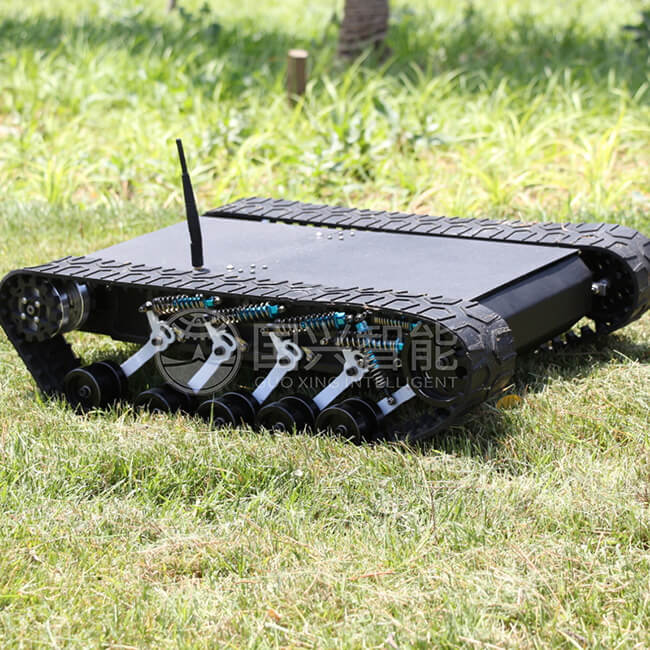
Evaluating potential partners demands a rigorous and objective technical audit. You cannot rely solely on glossy marketing brochures. You must meticulously scrutinize their specific engineering disciplines.
Drivetrain and kinematics integration requires absolute manufacturing precision. Assess the factory's capability to accurately machine heavy drive mounts. They must perfectly align brackets for differential, Ackermann, or omnidirectional drive systems. A tiny millimeter of misalignment here causes catastrophic motor wear. It also creates highly unpredictable navigation behaviors in autonomous modes.
Material competence directly dictates your robot's field reliability. Heavy-duty applications require deep expertise in high-strength carbon steel fabrication. Scrutinize their weld integrity and vibration dampening techniques thoroughly. This is crucial for high-payload autonomous mobile robots operating in warehouses. Conversely, agile service robots demand strict lightweighting strategies. Look for precision sheet metal bending capabilities. They should deeply understand aluminum extrusion and advanced composite materials. Battery-constrained platforms fail commercially if the structural chassis weighs too much.
In-house testing and validation separate amateur shops from professional outfits. You should actively ask for documented evidence of Finite Element Analysis (FEA). They must computationally identify high-stress points before cutting any physical metal. Request detailed video tours of their physical load testing rigs. Review their rigorous approach to tolerance stacking analysis across multiple connected assemblies.
| Application Type | Primary Structural Material | Key Fabrication Focus |
|---|---|---|
| Heavy-Duty AMR | High-Strength Carbon Steel | Deep Weld Penetration, Load Distribution |
| Agile Service Robot | Aluminum Extrusion | Precision Bending, Maximum Weight Reduction |
| Outdoor Patrol Bot | Corrosion-Resistant Alloys | Weather Sealing, Extreme Structural Rigidity |
Moving from a single working prototype to mass production reveals hidden complexities. Many brilliant engineering teams fall victim to common scaling pitfalls. You must actively navigate these implementation realities carefully alongside your factory partner.
Narrowing down your vendor list requires a highly systematic approach. You must look for specific trust signals during initial technical conversations. You must also remain highly vigilant for subtle warning signs.
Always verify their bold marketing claims thoroughly. Request detailed engineering case studies of previous custom chassis deployments. Focus specifically on their track record of transitioning products. Anyone can build five great units in a lab. Scaling smoothly to five thousand units requires immense discipline and process control.
Compliance and quality assurance processes must remain entirely transparent. Ensure the chosen facility adheres strictly to ISO 9001 standards. They should eagerly provide verifiable material certificates for all raw metals. Look for Coordinate Measuring Machines (CMM) actively used on their factory floor. Consistent CMM usage guarantees dimensional accuracy across massive production runs.
Watch out carefully for these critical manufacturing red flags:
Once you shortlist a reliable Robot Chassis Factory, follow a structured engagement process. First, execute a comprehensive NDA to protect your sensitive IP. Next, submit a basic step-file of your preliminary design. Request a fast DFM assessment and a high-level cost-driver review. This initial exercise reveals exactly how they communicate and solve problems.
A successful manufacturing partnership operates as an organic extension of your engineering team. It should never feel like a purely transactional component purchase. Treat this vital vendor selection process as a critical hiring decision. Prioritize production partners who lead with healthy engineering skepticism. The absolute best factories will actively challenge your initial CAD drawings. They push back intentionally to make the product more manufacturable. Their feedback ensures the frame becomes highly durable and cost-effective. Begin your evaluation process immediately by reaching out to shortlisted candidates. Request their standard DFM guidelines or ask for an initial capability audit. Establish very open communication channels early to ensure long-term production success.
A: Standard timelines usually range from four to eight weeks. This duration depends heavily on geometric complexity and raw material availability. Simple sheet metal bends move quickly. However, custom tooling like specialized extrusion profiles or stamping dies requires significantly more time. Always factor in potential iterative revisions when planning your market launch schedule.
A: Pure OEM fabrication shops strictly build to your provided prints and rarely assist with component selection. Conversely, ODM partners offer advanced electro-mechanical integration consulting. They possess the engineering depth to help you match optimal gear ratios, drive motors, and suspension systems to your specific structural design.
A: You must implement strict NNN agreements before sharing any CAD files. For highly sensitive projects, consider separating component manufacturing across different vendors. If you use an ODM model, clearly define intellectual property clauses in your contract to stipulate exactly who owns the final optimized production files.
A: MOQs vary drastically based on the chosen fabrication method. Simple CNC machined or precision sheet metal prototypes can often have a quantity of one. However, processes requiring heavy upfront tooling, like die-casting or custom stamping, necessitate high production volumes. You must commit to hundreds of units to offset initial mold costs effectively.