
Views: 0 Author: Site Editor Publish Time: 2026-02-13 Origin: Site


Robot tank chassis are highly versatile mobile platforms designed to navigate and perform in challenging and often hazardous environments. Unlike traditional vehicles, these robotic platforms are built with robust features that enable them to tackle a variety of tasks in places that would otherwise be inaccessible or dangerous. These chassis are commonly used in sectors such as firefighting, rescue operations, military missions, and environmental inspections. The purpose of the robot tank chassis is to provide a stable and efficient solution for maneuvering through rough terrains, carrying heavy equipment, and performing complex operations autonomously or remotely.
In many industries, workers often face the daunting task of operating in environments that are not only difficult to reach but also hazardous to human life. For example, firefighting in high-risk areas such as wildfires, or conducting military reconnaissance in enemy territory, often requires maneuvering over rocky, uneven ground or through dense forests. The terrain might include steep slopes, mud, debris, or flooded areas, making traditional vehicles unsuitable. Robot tank chassis are specifically designed to overcome these challenges. By providing a high level of mobility and stability, they allow for safe and efficient operations in environments that would otherwise be too dangerous or challenging for humans or conventional vehicles.
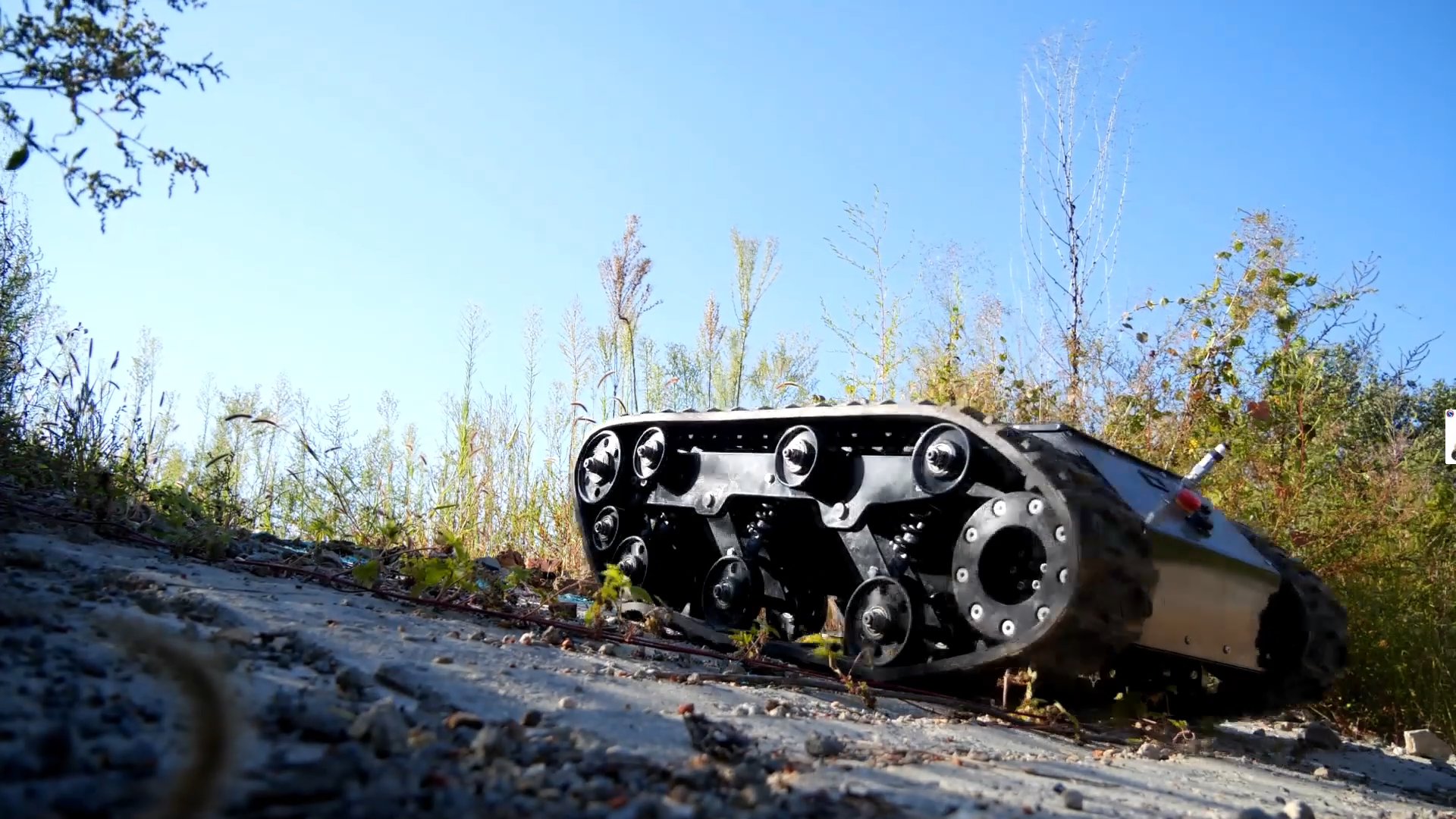
The core strength of any robot tank chassis lies in its ability to maintain stability across various terrains. This is achieved through advanced suspension systems that are designed to absorb shocks and vibrations, ensuring smooth navigation even on rough and uneven surfaces. A notable example of such a system is the Christie+Matilda four-wheel balance suspension technology. This suspension setup enables the chassis to move smoothly over bumpy or rocky ground, making it ideal for tasks in firefighting, rescue missions, and exploration, where rough terrain is a constant challenge. By reducing the impact of uneven surfaces, the suspension system ensures that both the chassis and any equipment it is carrying remain intact and functional throughout its mission.
A robot tank chassis is designed to support a variety of equipment, from cameras and sensors to firefighting tools and heavy payloads. Its robust design allows it to carry substantial loads while maintaining stability and operational efficiency. This capacity for heavy payloads makes the chassis particularly useful in environments that demand both mobility and power. Whether it’s carrying life-saving tools for rescue operations or scientific equipment for exploration missions, the chassis provides a reliable foundation for specialized tasks. Additionally, the large platform space allows for easy customization, enabling quick integration of additional systems as required for specific operations.
Working in high-vibration environments, such as during firefighting or rescue missions, requires a stable platform for sensitive equipment. The integration of vibration reduction technology within the robot tank chassis ensures that operations remain smooth and that the equipment remains undamaged by terrain-induced shocks. The chassis is equipped with multiple vibration absorbers strategically placed to minimize the effects of shocks, particularly when operating in environments like muddy fields, rocky surfaces, or steep inclines. This technology not only improves the longevity of the equipment but also ensures consistent performance, which is crucial for tasks that require precision and reliability.
One of the most demanding applications of the robot tank chassis is in firefighting and rescue operations. These environments are often hazardous, with rapidly changing conditions such as intense heat, smoke, and debris, making it unsafe for human intervention. The robot tank chassis is equipped to withstand extreme conditions, such as high temperatures and unstable ground, while carrying out firefighting tasks or rescuing trapped individuals. With its advanced mobility system, it can navigate through narrow, rubble-filled spaces, steep slopes, and other challenging terrains that would be nearly impossible for humans to access. The chassis can also be fitted with water hoses, sensors, and cameras, enabling it to carry out vital tasks such as fire suppression, surveillance, and damage assessment in real-time.
Robot tank chassis are also employed in inspection and surveillance roles, particularly in hazardous locations that are difficult for human workers to reach. For example, these chassis can be used for environmental monitoring, such as inspecting forests for signs of fire or contamination, or conducting structural assessments of buildings and infrastructure in remote locations. With their ability to handle rough terrain, robot tank chassis provide an ideal solution for inspecting areas like underground tunnels, collapsed buildings, or even submerged environments. By integrating sensors and cameras, these robots can capture valuable data and provide detailed visual feedback without putting human operators at risk.
In the military and defense sectors, robot tank chassis play an essential role in reconnaissance and combat operations. Whether it's gathering intelligence in enemy territory or safely diffusing explosives, these robotic platforms can operate in environments that would pose significant risks to human soldiers. The tank chassis are designed to handle harsh conditions such as rocky landscapes, dense forests, and urban environments filled with obstacles. Their ability to carry a range of military-grade equipment, such as cameras, surveillance systems, and bomb disposal tools, allows them to perform critical tasks autonomously or under remote control. In high-risk scenarios, the robot tank chassis help minimize human casualties while completing dangerous missions with precision.
Exploration in extreme environments such as caves, volcanoes, or underwater sites often requires specialized equipment capable of withstanding the rigors of these settings. The robot tank chassis, with its ability to carry heavy payloads and navigate difficult terrain, is well-suited for such tasks. These robots can be deployed in locations that are otherwise inaccessible to human researchers, providing valuable data and imagery for scientific study. Whether it’s exploring deep-sea environments, volcanic craters, or remote Arctic regions, the robot tank chassis provides a stable and reliable platform to support advanced research operations, ensuring that data collection is both efficient and accurate.
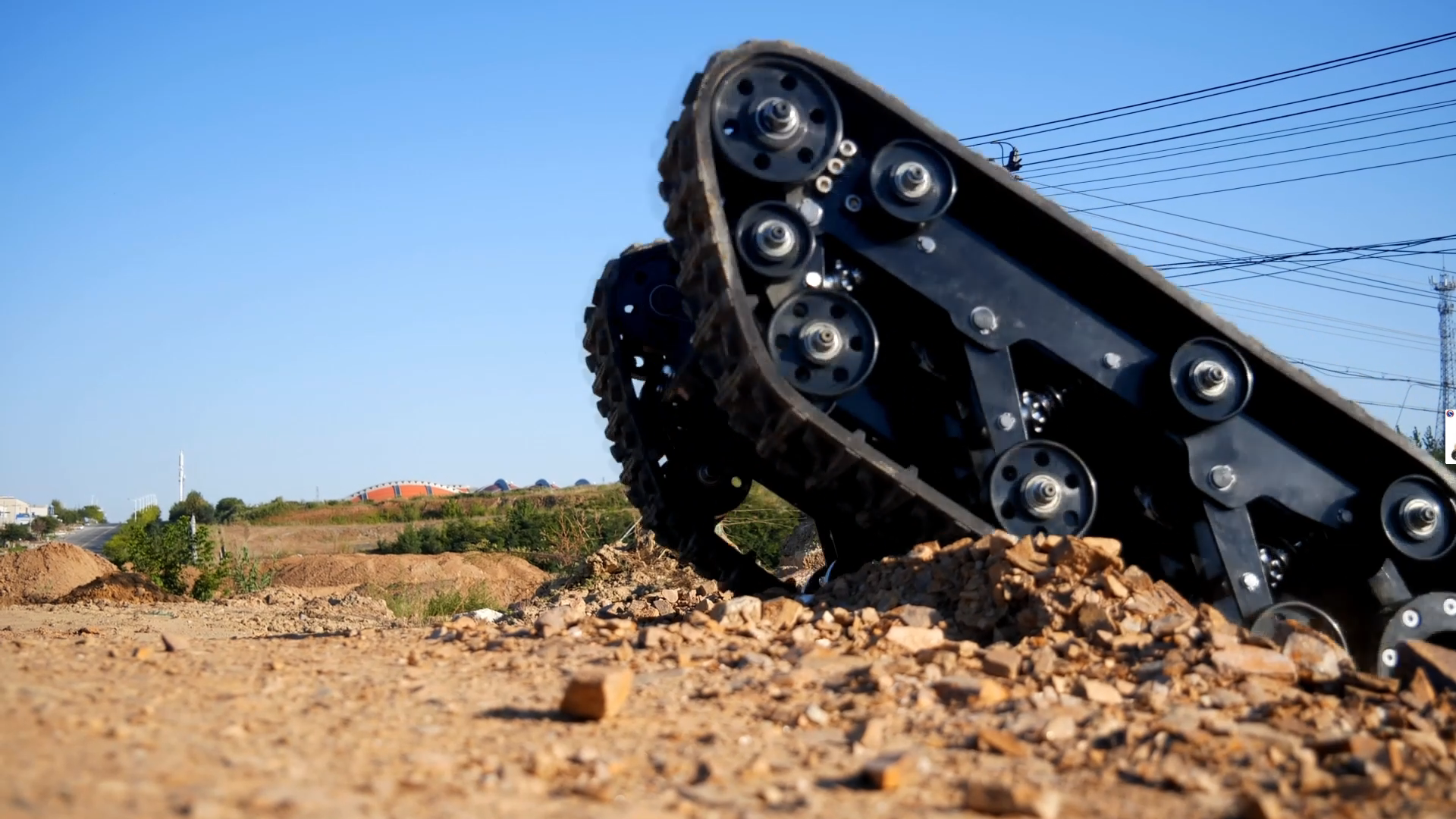
One of the primary advantages of the robot tank chassis is its versatility across a wide range of industries. Whether it's firefighting, military operations, environmental protection, or scientific exploration, the chassis can be customized to fit the specific needs of each application. The ability to integrate different equipment—such as cameras, sensors, payloads, and firefighting tools—ensures that the chassis can handle a variety of tasks without compromising performance. This adaptability allows it to serve as a multi-functional platform for both simple and highly specialized operations, providing a unique solution for industries that require flexibility and reliability in challenging environments.
While the initial cost of acquiring a robot tank chassis may seem high, its long-term benefits far outweigh the expense. By using a robot tank chassis, industries can significantly reduce operational costs associated with human labor, especially in high-risk or hard-to-reach areas. The chassis can perform tasks that would otherwise require specialized teams or hazardous conditions, reducing the risk of accidents and the need for dangerous manual labor. Moreover, these robotic systems are built for durability and longevity, offering reliable performance in extreme environments, thereby reducing downtime and maintenance costs. As a result, companies see a strong return on investment through the enhanced efficiency and safety that the chassis provide.
In industries such as firefighting, military, and hazardous waste management, safety is a top priority. The robot tank chassis is specifically designed to minimize human exposure to dangerous situations. By taking over risky tasks such as firefighting in high-temperature environments or inspecting unstable structures, the chassis significantly reduce the chances of human injury. Additionally, the chassis can operate in environments that would be otherwise too dangerous, such as navigating through debris-filled areas after a disaster or performing reconnaissance in conflict zones. The advanced design ensures that operators can control the chassis remotely, offering a safe distance from the hazardous terrain while still completing essential tasks efficiently.
The development of the robot tank chassis is driven by continuous innovation and research, with collaborations between leading universities and research institutions. Partnerships with academic giants such as Tsinghua University, Beijing Institute of Technology, and Shanghai University provide a steady influx of new ideas and technological advancements that shape the evolution of the chassis. These collaborations ensure that the chassis benefit from the latest in suspension systems, AI-driven navigation, and other advancements in robotics. The chassis are continually improved to keep up with the increasing complexity of tasks and challenges faced by industries around the world.
As new materials and technologies emerge, the design of robot tank chassis is continually refined to enhance their performance and adaptability. Advancements in lightweight materials and stronger, more durable alloys enable the chassis to carry heavier payloads without sacrificing mobility or strength. Feedback from real-world applications, where the chassis are deployed in extreme conditions, plays a crucial role in the refinement of their design. Engineers and developers closely monitor performance data and make adjustments based on real-world usage, ensuring that the chassis remain at the forefront of robotic technology. This cycle of improvement helps the chassis meet the evolving needs of industries such as military, firefighting, and environmental protection.
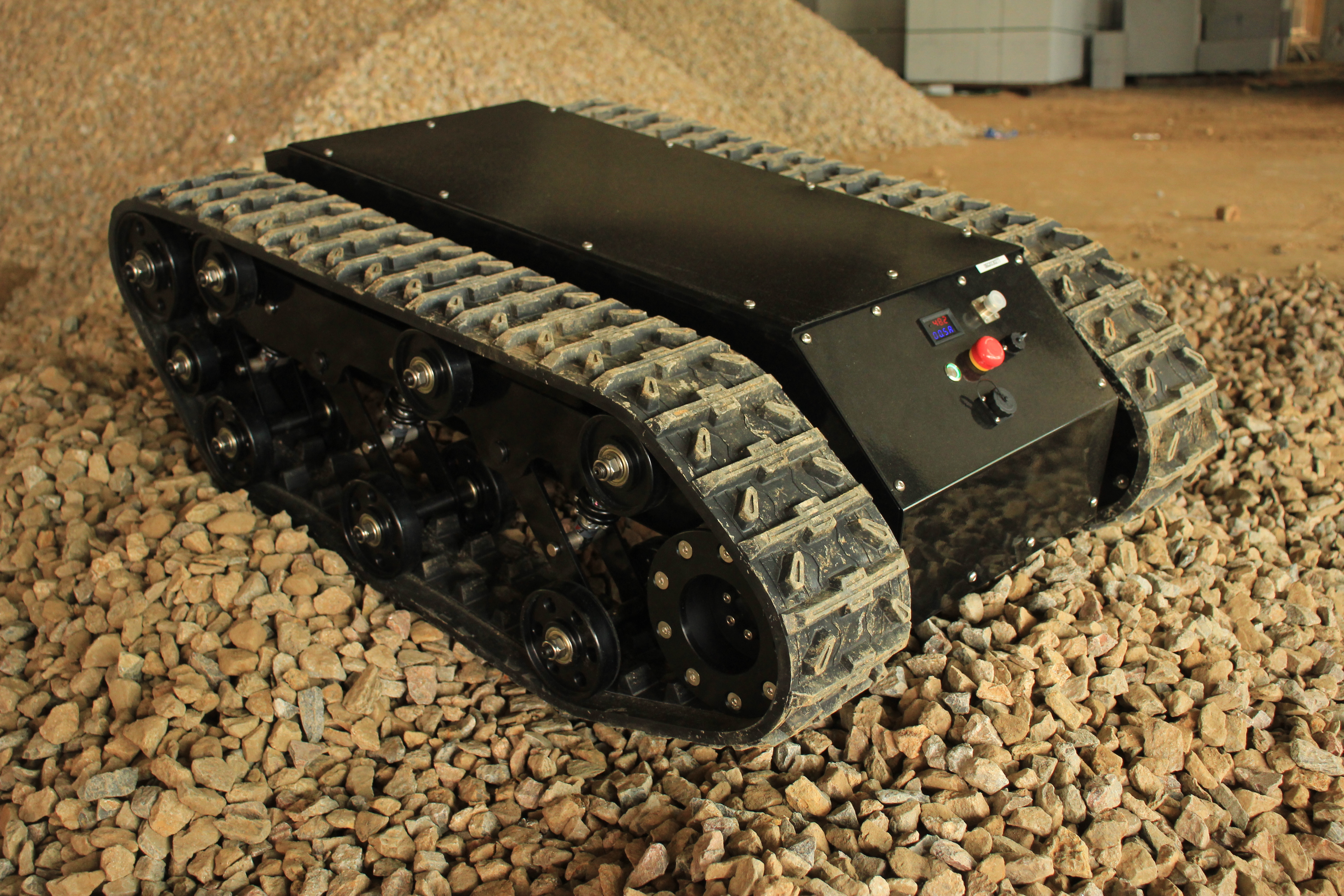
One of the most impactful uses of the robot tank chassis is in the firefighting sector. For example, during a recent wildfire in a mountainous region, a robot tank chassis was deployed to navigate through steep slopes and dense foliage, areas that would have been dangerous for human firefighters. The chassis was equipped with a firefighting system and thermal imaging cameras, allowing it to target hot spots and suppress flames from a safe distance. Its ability to access hard-to-reach areas and deliver water and foam directly onto the fire played a critical role in preventing the spread of the blaze. This case exemplifies how robot tank chassis can significantly improve firefighting efforts by providing a safe and effective means of tackling wildfires in challenging terrains.
In the military sector, the robot tank chassis has proven itself as an invaluable asset during reconnaissance and explosive ordnance disposal operations. For instance, the chassis was used in an urban warfare environment to safely navigate through debris and uncover hidden threats such as landmines or improvised explosive devices (IEDs). Its robust suspension system and ability to carry payloads like bomb disposal tools allowed it to function effectively in confined, dangerous spaces where human soldiers might face extreme risk. The chassis' ability to gather real-time data, transmit it back to command centers, and even neutralize threats autonomously has made it a valuable tool in military operations.
In environmental monitoring, the robot tank chassis is often used in locations that are difficult to access by traditional vehicles. For example, in a mining operation, the chassis was deployed to inspect remote mining sites located in mountainous regions. The robot tank chassis successfully navigated through uneven terrain, transporting essential sensors and cameras to collect valuable data on air quality, environmental degradation, and potential hazards. This data was then transmitted back to the central monitoring system, allowing the mining company to make informed decisions about safety measures and operational adjustments. The ability to conduct inspections in areas where human access is limited reduces both cost and risk, while improving overall site safety.
The future of robot tank chassis lies in the integration of more advanced artificial intelligence (AI) and autonomous navigation capabilities. As AI technology continues to evolve, robot tank chassis will become increasingly autonomous, allowing them to make real-time decisions based on environmental data. This will improve efficiency in operations where human intervention is limited or impractical, such as in hazardous rescue missions or deep-sea exploration. Autonomous navigation will also enhance the chassis’ ability to navigate complex and ever-changing terrains without human input, making them even more effective and reliable.
As industries continue to demand more specialized solutions, the future of robot tank chassis will see even greater customization options. Modular designs will allow users to quickly modify the chassis to suit specific needs, whether it involves attaching additional sensors for environmental monitoring or adding specialized tools for firefighting or explosive disposal. This modular approach will make the chassis even more versatile and adaptable, allowing for rapid deployment in a wide range of scenarios.
In the future, robot tank chassis will likely be part of a broader ecosystem of robotic systems that work together seamlessly. These systems could include flying drones, ground robots, and even underwater robots, all working in unison to achieve complex goals. The integration of various robotic platforms will allow for greater efficiency and the ability to complete tasks that require coordination between multiple systems, such as large-scale disaster response or military operations. This shift toward multi-robot collaboration will be a game-changer in how industries approach difficult tasks.
At Guoxing Intelligent, we pride ourselves on providing advanced robotic solutions, including the high-performance robot tank chassis designed to tackle some of the most difficult and hazardous environments. With over 168 patents and a commitment to innovation, we specialize in creating versatile robotic platforms that meet the demanding needs of industries such as firefighting, military, environmental protection, and exploration. Our robot tank chassis benefit from cutting-edge research and collaboration with leading academic institutions, ensuring that our products remain at the forefront of technology. As a trusted partner to top enterprises and government agencies worldwide, we deliver reliable, high-quality solutions that help our clients overcome complex challenges while ensuring safety and operational efficiency.
In this article, we explored how robot tank chassis are revolutionizing industries by conquering complex terrains. These advanced platforms, equipped with cutting-edge suspension systems, vibration reduction technology, and high payload capacities, enable efficient and reliable operation in challenging environments. From firefighting in rugged terrains to military operations in hostile conditions, robot tank chassis provide versatility and safety, reducing human risk while ensuring critical tasks are carried out effectively. The ability to customize these chassis for various specialized applications further amplifies their value, making them indispensable tools for modern operations.
As technology continues to evolve, robot tank chassis are poised to play an increasingly central role in the future of robotics. Advancements in AI, autonomous navigation, and modular design will further enhance their capabilities, enabling them to handle even more complex tasks across diverse industries. The integration of multiple robotic systems will expand the potential applications, from coordinated disaster response to intricate military missions. As we move forward, the development of robot tank chassis will continue to shape the way industries approach high-risk, all-terrain tasks, driving innovation and improving safety across the globe.