
Views: 0 Author: Site Editor Publish Time: 2026-08-19 Origin: Site


Modern hazardous environments face a severe dual mandate. Facilities must eliminate human exposure to volatile zones while maintaining continuous, uninterrupted production. Chemical plants, offshore oil rigs, and advanced coating lines operate under strict safety margins. Even a single spark can trigger a catastrophic event.
Retrofitting standard automation for these environments introduces massive liability. Adding aftermarket covers or basic sealing to commercial equipment creates a false sense of security. Procuring a native industrial safety explosion-proof robot directly from a specialized manufacturer is the only compliant path forward. You need hardware designed for intrinsic safety from the ground up.
This article provides technical buyers, plant managers, and procurement leads with a verifiable framework. You will learn how to confidently evaluate, shortlist, and partner with a reliable Explosion-Proof Robot Factory. We explore core compliance metrics, hidden engineering realities, and critical integration strategies to ensure your facility remains both productive and uncompromisingly safe.
Evaluating automation for volatile environments requires a clear baseline. You must distinguish between a general robotics integrator and a purpose-built factory. General integrators often buy standard mechanical arms and attempt to shield them. They assemble components from various third parties. A dedicated factory engineers every component for intrinsic safety from day one. They cast specialized enclosures, integrate internal purge systems, and secure global certifications before the product ever leaves the assembly floor.
The financial and operational returns on this specialized investment are substantial. Facilities often experience a notable reduction in insurance premiums. Insurers recognize certified risk mitigation when you remove human operators from blast zones. You also eliminate hazardous duty pay and reduce worker compensation liabilities. Furthermore, native equipment guarantees uptime continuity. Volatile environments restrict human shift durations due to fume exposure. Robots operate continuously, stabilizing production output.
Many procurement teams fall for the "retrofit" fallacy. They assume they can upgrade standard commercial robots cheaply. This approach carries extreme compliance risks. Third-party anti-static covers tear over time. Basic rubber seals degrade quickly when exposed to harsh industrial solvents. When a retrofit fails, pressurized gases enter the motor casing. A single internal short circuit will then cause an ignition. Relying on aftermarket modifications shifts the liability burden entirely onto the facility owner.
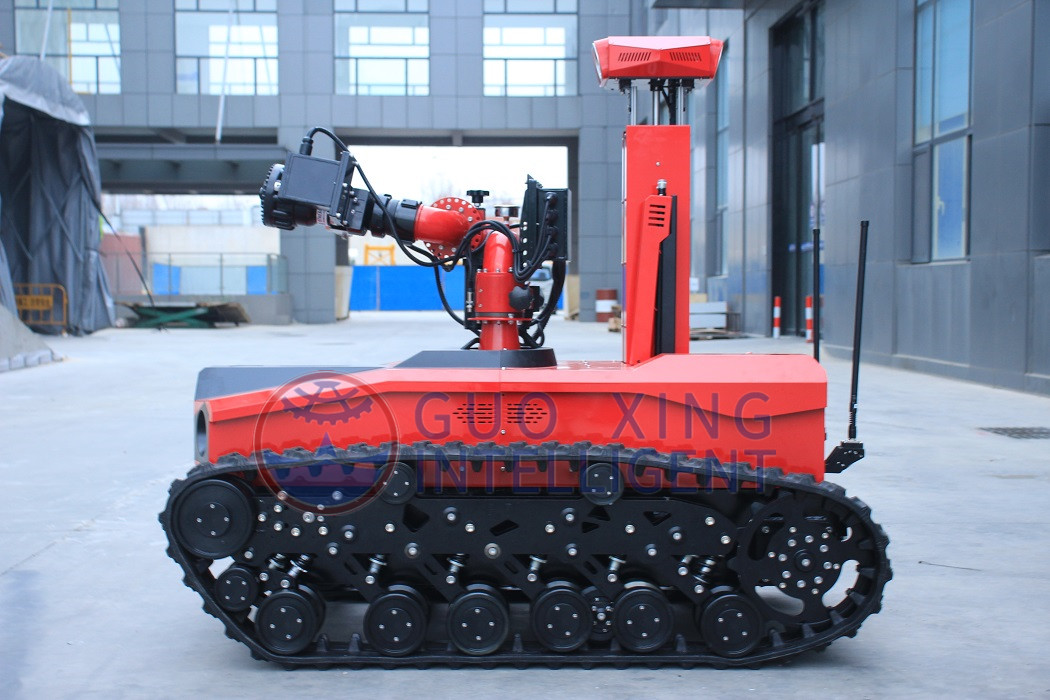
Selecting the correct hardware depends entirely on your specific application. A reputable manufacturer offers distinct robotic categories designed for unique operational hazards.
High-fume environments require extreme multi-axis precision. Spray painting robots operate constantly surrounded by volatile solvent clouds. These units require sophisticated positive-pressure systems. Air constantly pushes outward from the robot joints, preventing combustible fumes from entering the mechanics.
When evaluating these models, focus on specific technical criteria. Trajectory accuracy prevents paint waste and ensures uniform coating thickness. Assess the purge-system reliability. If the purge pressure drops, the robot must instantly halt operations. Fluid delivery integration also matters. The robot must handle explosive paints without generating static electricity in the supply lines.
Chemical plants and offshore rigs increasingly rely on mobile platforms. Autonomous patrol robots navigate unstructured, highly flammable environments to monitor equipment health. They reduce the need for humans to conduct dangerous routine inspections.
Evaluation criteria for mobile units focus heavily on navigational autonomy. They must map complex facility layouts and avoid dynamic obstacles safely. Thermal and gas sensor integration is critical. The robot acts as an early warning system for chemical leaks. Finally, examine the battery safety certification. Mobile units carry massive lithium power cells. These batteries require specialized blast-proof housing to prevent thermal runaway in a Zone 1 area.
Modern mixed-use areas often blend human workstations and automated tasks. Zone 1 and Zone 2 environments increasingly deploy explosion-proof collaborative robots. These cobots allow humans to work safely alongside the machinery without heavy safety fencing.
Evaluating a hazardous-duty cobot requires checking multiple safety layers. Force-limiting sensors remain the primary requirement. If the cobot bumps a human worker, it must stop instantly. However, it also needs spark-free joint designs. The exterior requires anti-static shell materials to prevent electrostatic discharge. Finding a manufacturer who successfully blends collaborative safety and explosion-proof compliance requires rigorous vetting.
You cannot compromise on safety documentation. A trustworthy manufacturer provides extensive, verifiable proof of their engineering standards.
Global standard alignment acts as your primary filter. Deployments in Europe mandate strict ATEX compliance. International projects require IECEx certification. North American facilities operate under UL/CSA standards. Never accept internal factory testing as your sole proof of compliance. Demand visible, verifiable certification marks.
You must also align the robot's engineering with your specific facility zone. Different risk levels require distinct mechanical approaches.
| Classification | Hazard Frequency | Engineering Requirement |
|---|---|---|
| Zone 0 / 20 | Continuous or long-term hazard | Extreme requirements. Demands intrinsically safe, ultra-low-power circuits incapable of generating a spark under any condition. |
| Zone 1 / 21 | Occasional hazard during normal operation | Standard requirement for most automated deployments. Requires heavily pressurized, purged controller cabinets and sealed joints. |
| Zone 2 / 22 | Rare hazard, short duration | Non-sparking designs. Enclosures must restrict dust and gas ingress but may not require constant active pressurization. |
Evaluating factory documentation separates legitimate partners from high-risk vendors. Always ask to review the factory's Declaration of Conformity (DoC). Do not stop there. Request independent third-party testing reports. Organizations like TÜV or UL must validate the manufacturer's claims. If a vendor hesitates to share their testing data, remove them from your shortlist immediately.
Deploying hazardous-duty automation involves navigating unavoidable physical and procedural trade-offs. Plant managers must plan for these realities long before the equipment arrives on site.
Explosion-proof enclosures introduce severe payload and kinematic constraints. To achieve compliance, manufacturers use heavy cast metals and thick pressurized seals. This added mass restricts movement. You will typically see lower functional payloads and slower axis speeds compared to standard industrial robots. A standard robot might lift 50kg, but its explosion-proof equivalent may only handle 40kg safely.
Maintenance bottlenecks represent another hidden reality. You cannot simply open a pressurized controller cabinet to reset a breaker. Doing so requires strict plant-wide safety protocols. Maintenance teams must secure hot work permits. They must initiate complex power-down sequences. They must verify the surrounding atmosphere is free of combustible gas before opening any enclosure. Routine maintenance takes significantly longer.
Facility integration also requires preparation. Most units require clean, dry instrument air lines. This air maintains positive pressure within the robot arm and controller. If your facility compressor pushes wet or oily air, you will destroy the internal pneumatic valves. You must install industrial-grade air dryers and filtration systems at the installation site.
Finally, address software security. The robot's operating system must integrate securely with your existing ICS/SCADA networks. Hazardous environments represent critical national infrastructure. Introducing an unpatched robot controller to your network creates severe cyber vulnerabilities. Ensure the manufacturer provides encrypted communication protocols and regular offline firmware updates.
Selecting the right factory requires a structured auditing process. You are choosing a long-term safety partner, not just buying hardware. We recommend building a robust vendor scorecard to evaluate potential candidates.
| Evaluation Pillar | Key Questions to Ask the Factory | Red Flags to Watch For |
|---|---|---|
| Track Record | Can you provide anonymized case studies from petrochemical or aerospace clients? | Refusal to arrange reference calls with existing customers. |
| Customization | Can you modify end-of-arm tooling (EOAT) without voiding ATEX/IECEx certification? | Relying entirely on third-party integrators for custom tooling compliance. |
| Lifecycle Support | What is the exact Service Level Agreement (SLA) for delivering specialized spare parts? | Standard 30-day lead times for critical pressurized seals or purged motors. |
Evaluating their track record is vital. Request reference calls from facilities operating in similar volatile environments. Aerospace and petrochemical clients offer the best insights into a manufacturer's reliability. Ask these references about unexpected downtime and factory responsiveness.
Assess their stance on customization versus off-the-shelf solutions. Your application will likely require specialized end-of-arm tooling (EOAT). The factory must possess the capability to integrate custom grippers or spray guns while maintaining the overarching explosion-proof certification. If they cannot certify the custom EOAT, the entire robot becomes non-compliant.
Evaluate lifecycle support carefully. Specialized spare parts have significantly longer lead times than standard industrial components. Ask about their Service Level Agreement (SLA). Determine if they dispatch factory-trained maintenance technicians for annual safety audits.
When you are ready to proceed, follow these structured next steps:
Investing in native hazardous-duty automation stands as a fundamental risk-management decision disguised as a capital equipment purchase. Protecting human life and facility infrastructure requires uncompromising standards. Cutting corners on safety compliance invites disastrous consequences.
Your best strategy involves prioritizing manufacturers who lead with transparent compliance data. Choose partners who openly acknowledge kinematic trade-offs rather than overpromising. Always demand equipment designed with intrinsic safety built into the core engineering.
Take immediate action to secure your facility. Download a detailed vendor evaluation checklist. Request a comprehensive certification matrix from your shortlisted suppliers. Schedule a technical consultation with a dedicated factory engineering team today to audit your current hazardous zones.
A: While third-party pressurized jackets exist, they often void the original manufacturer's warranty and complicate maintenance. Native factory-built solutions are vastly superior for compliance and longevity.
A: Yes. The added weight of sealed enclosures, heavy-duty motors, and internal pressurization systems typically results in a 10-20% reduction in maximum payload and operating speed compared to standard models.
A: ATEX is a mandatory legal framework for the European Union, while IECEx is an international certification scheme. Top-tier factories will provide equipment that satisfies both standards to ensure global deployability.