
Views: 0 Author: Site Editor Publish Time: 2026-08-23 Origin: Site


Procuring robotic assets for emergency response carries massive stakes. Failed equipment in an active fireground is a severe liability, rather than a viable solution. Lives, local communities, and critical infrastructure depend on flawless execution during high-stress incidents. Over the past decade, we have observed a definitive industry shift. Departments no longer view these complex machines as experimental novelties. Instead, they recognize them as essential tactical assets. Responders actively deploy them for structural fires, chemical hazards, and extreme operational environments.
However, acquiring the right hardware is rarely simple. Choosing a competent Firefighting Robot Supplier requires looking far beyond glossy marketing spec sheets. You must critically evaluate engineering rigor, seamless operational integration, and long-term deployment support. A capable partner ensures your financial investment translates directly into safer, more predictable outcomes on the frontline.
Procuring a machine does not automatically solve ground-level challenges. A vast gap exists between acquiring technology and genuinely reducing operational risk. If teams cannot deploy the unit effectively, it quickly becomes an expensive burden. Hardware alone guarantees nothing in unpredictable emergencies.
Top-tier vendors act as dedicated integration partners. A reputable fire fighting robot manufacturer guides departments through strict procurement compliance. They help agencies navigate complex grant funding requirements successfully. They also define practical tactical adoption protocols tailored to your specific community risks.
You will generally encounter three primary solution categories in this landscape:
Understanding your operational category helps you vet the right partner effectively. It narrows your focus to suppliers possessing relevant engineering expertise.
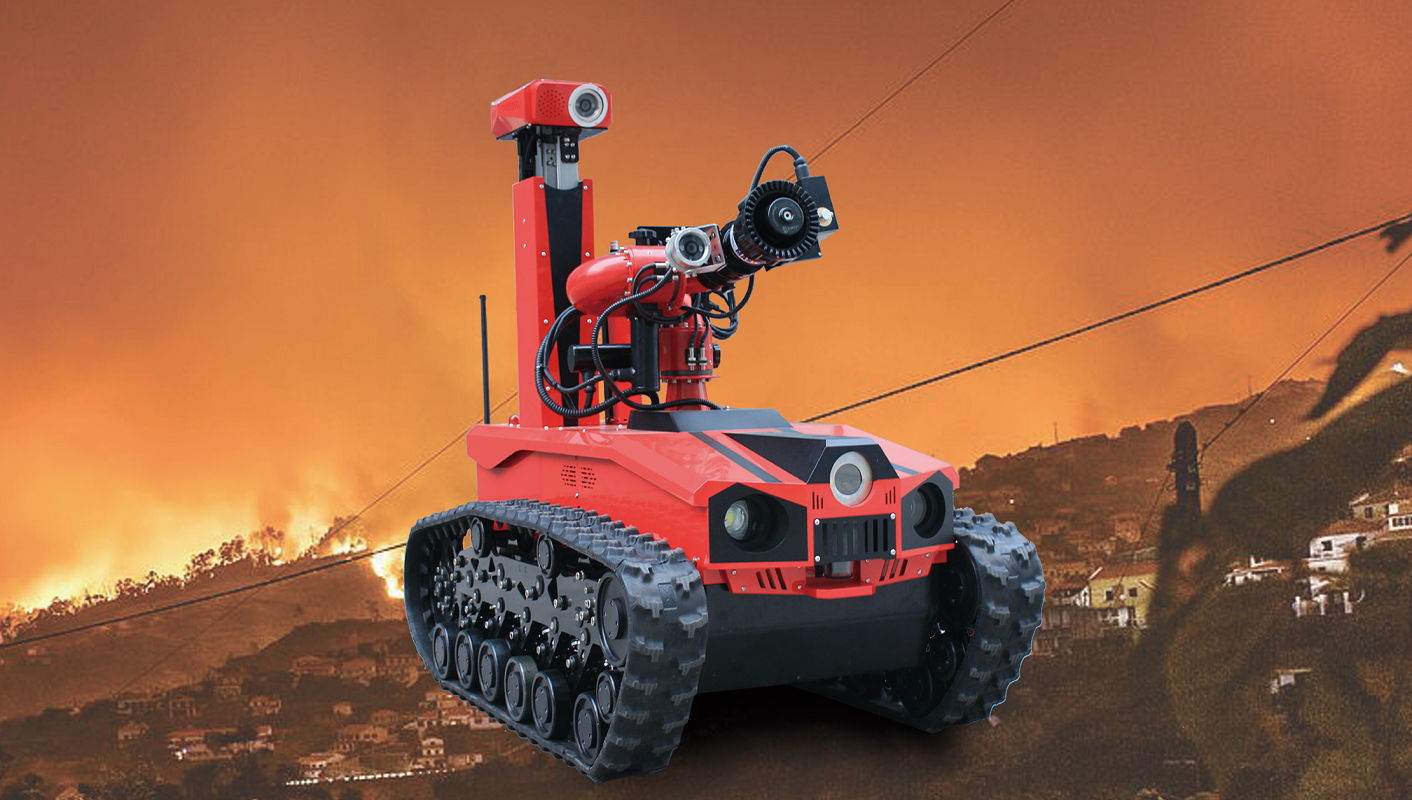
Firegrounds present incredibly hostile conditions for complex electronics. You must verify strict IP ratings for water and dust ingress. Active cooling systems and dedicated heat-shielding protect sensitive onboard electronics from catastrophic meltdowns.
Do not accept ambient temperature tests as final proof. Demand operational data detailing the mean time between failures (MTBF) under extreme heat. A reliable partner provides verifiable data. This data proves exactly how long their units survive inside high-temperature zones before sustaining damage.
A functional robot must deliver substantial knockdown power. Assess how well the unit integrates your standard nozzles. You must verify its high-volume flow rates, often measured in gallons per minute (GPM). Towing capacity matters greatly during structural responses. The machine must independently pull fully charged supply lines through heavy debris.
Modularity provides a significant tactical advantage. Ask if the chassis easily swaps between water, foam, and specialized industrial suppressants. A versatile platform maximizes your tactical options on the ground and prevents hardware limitations during escalating events.
Evaluate autonomous capabilities with a healthy dose of skepticism. Unpredictable fire environments contain dense smoke, falling debris, and unexpected structural collapses. Full AI navigation struggles deeply in these chaotic spaces.
We highly recommend partnering with vendors prioritizing "human-in-the-loop" teleoperation. Operators need robust, redundant communication frequencies. Localized obstacle avoidance proves far more valuable than full autonomy. These integrated fail-safes prevent the robot from becoming stranded or damaged mid-operation.
Adoption often carries hidden friction, especially regarding complex controls. Intuitive user interfaces (UI) and clean user experiences (UX) significantly reduce operator hesitation. A strong partner delivers rigorous simulator modules and realistic live-fire training programs.
Interoperability is equally critical for modern responses. The robot captures valuable thermal imaging and gas detection data. You need this data to flow seamlessly into existing command center software. It must align perfectly with your incident command protocols to enable rapid decision-making.
Frontline personnel often view new automation technology with deep suspicion. They need definitive proof it works reliably under immense pressure. Reputable vendors understand this cultural barrier intimately. They supply comprehensive case studies and Standard Operating Procedure (SOP) templates.
Commanders use these structured templates to build trust across their teams. What to watch out for: Avoid suppliers who simply drop off the hardware and leave immediately. Proper training and cultural integration demand continuous, active support from the manufacturer.
Meeting basic safety thresholds is non-negotiable for emergency equipment. Strict adherence to recognized standards protects your team and your municipality from legal exposure.
Here is a breakdown of critical quality assurance standards to verify:
| Certification / Standard | Application Area | Why It Matters |
|---|---|---|
| NFPA Guidelines | Municipal / General Firefighting | Ensures operational alignment with established North American fire service protocols. |
| ATEX / HazLoc | Petrochemical / Explosive Zones | Guarantees the machine will not act as an ignition source in vapor-rich environments. |
| CE Marks | European Deployments | Confirms strict adherence to European health, safety, and environmental protection standards. |
Beyond basic certifications, closely evaluate supply chain transparency. You must know the explicit origin of critical sensors, batteries, and drive motors. Transparent supply chains prevent sudden repair bottlenecks down the line. They also ensure compliance with strict data security mandates required by government agencies.
Finally, clarify all liability and warranty terms before signing. Review the Service Level Agreement (SLA) closely. You must clearly understand who absorbs the liability if a critical failure occurs during an active, life-saving operation.
Heavy track systems, treads, and heat-exposed sensors suffer severe wear and tear over time. Harsh operational conditions degrade moving parts rapidly. You must account for these maintenance realities upfront to keep the unit functional.
A credible partner guarantees rapid turnaround times for replacement spare parts. They maintain domestic or heavily localized servicing hubs. Waiting several months for a replacement drive motor from overseas paralyzes your emergency response capabilities entirely.
Focus closely on ongoing lifecycle economics. Initial capital expenditure (CapEx) tells only part of the story. You must map out long-term maintenance cycles. Frequent battery replacements and mandatory software updates represent unavoidable operational expenses (OpEx). A transparent partner details these schedules explicitly. This clarity allows departments to budget accurately for future operational years.
Shortlisting candidates requires a highly analytical, evidence-driven approach.
To simplify your evaluation phase, use a basic comparison chart for your shortlisted vendors:
| Evaluation Criteria | Supplier A | Supplier B | Supplier C |
|---|---|---|---|
| Verified MTBF in Extreme Heat | |||
| Local Parts Depot Availability | |||
| Live-Fire Training Programs Offered | |||
| Telemetry Interoperability |
Choosing the right partner mitigates severe tactical risks on the volatile fireground. It also protects your agency from substantial financial missteps during the complex procurement cycle. An unreliable machine ultimately compromises responder safety and wastes critical department budgets.
Decision-makers must look past flashy, unverified technological features. Prioritize robust engineering, transparent support ecosystems, and proven real-world utility. A highly dependable supplier ensures your responders gain a powerful, life-saving asset for years to come.
A: The lifespan heavily depends on deployment frequency and operational intensity. Generally, the core chassis lasts 7 to 10 years. However, you will face regular replacement cycles for specific components. Batteries typically degrade within 2 to 3 years. Treads and heat-exposed sensors require frequent inspection and periodic replacement after heavy deployments.
A: Yes. While municipal departments often use off-the-shelf models, heavy industrial users require specialized builds. Reputable vendors offer highly customized variants for petrochemical plants or nuclear facilities. These custom builds integrate specialized foam proportioners, high-expansion nozzles, or unique dry chemical delivery systems tailored to extreme hazard environments.
A: Signal loss poses a major operational risk in dense concrete or steel structures. Top manufacturers address this by integrating redundant communication frequencies. They often utilize advanced mesh networking solutions to maintain connectivity. For extremely complex or underground environments, vendors supply hardened, fire-resistant tethered options to guarantee uninterrupted control and data transmission.
A: Fully autonomous navigation remains highly limited in active firegrounds. Unpredictable debris, dense smoke, and structural collapses confuse current AI sensors. The technology heavily favors assisted teleoperation. Operators remain in control, while the machine utilizes localized sensors for basic obstacle avoidance. This human-in-the-loop approach minimizes safety risks and operational liability.