
Views: 0 Author: Site Editor Publish Time: 2026-09-17 Origin: Site


Robotics engineering teams consistently face a critical build-versus-buy dilemma when facing tight go-to-market timelines. Building a base from scratch consumes valuable engineering cycles. Buying an off-the-shelf solution often limits future customization. Framing the selection of an OEM Robot Chassis Manufacturer as a foundational business decision is essential. This single choice dictates hardware reliability, software integration speed, and ultimate product scalability.
However, you must establish a skeptical, evidence-based baseline during your evaluation. Marketing specifications often differ wildly from dynamic, real-world performance under heavy operational loads. Spec sheets highlight peak capabilities under perfect conditions. Real environments demand sustained reliability, continuous sensor communication, and flawless mechanical endurance.
In this guide, we explore the definitive criteria needed to vet an OEM partner. You will learn how to evaluate kinematic models, audit developer ecosystems, assess supply chain readiness, and execute a bulletproof proof-of-concept protocol. Your end goal is seamless deployment without costly downstream hardware failures.
In-house chassis development drains resources from your core value propositions. Engineering teams should focus on AI navigation, computer vision, and application-specific manipulation. Designing drive systems from scratch forces software engineers to solve solved mechanical problems. You lose months tuning PID controllers and testing motor mounts instead of refining user-facing features.
You must weigh the hidden costs of custom tooling against the upfront price tag of a mature OEM platform. Custom builds require extensive motor tuning, firmware debugging, and iterative prototyping. These hidden engineering expenses quickly eclipse the premium paid for a reliable, off-the-shelf solution.
| Development Approach | Upfront Cost | Time to Market | Hidden Engineering Expenses | Scaling Predictability |
|---|---|---|---|---|
| In-House Custom Build | Low (Raw materials) | 12–18 Months | Extremely High (Tooling, tuning, firmware bugs) | Low (Supply chain must be built from scratch) |
| Specialized OEM Partner | Medium to High | 3–6 Months | Low (Pre-tuned hardware, documented APIs) | High (Leverages established supply chains) |
Establishing clear success criteria forms the foundation of a profitable OEM partnership. First, demand sub-millimeter odometry accuracy directly out of the box. Wheel slip and poor encoder calibration instantly degrade SLAM algorithms. Second, ensure a seamless handover from the hardware layer to the autonomous navigation stack. The controller must parse command velocities instantly. Finally, project predictable unit economics at scaling volumes. The business model must remain viable whether you deploy tens, hundreds, or thousands of units.
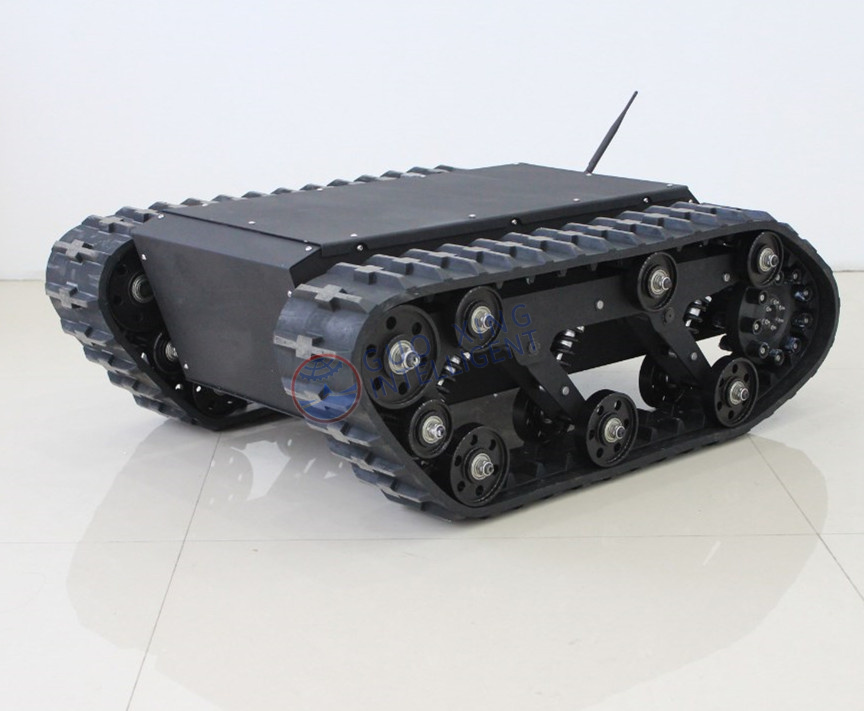
Hardware durability extends beyond visual aesthetics. You must strictly differentiate between static payload claims and dynamic payload realities. A chassis might hold 500kg while stationary. However, accelerating, decelerating, or turning sharply under that same load creates massive shear forces. Dynamic stress reveals the true quality of gearboxes, bearings, and frame welds.
Align the kinematic model with the specific friction, precision, and spatial constraints of your target environment. Choose the right drive configuration based on functional constraints:
Power management systems dictate operational uptime. Assess battery chemistry carefully. Lithium Iron Phosphate (LiFePO4) offers superior cycle life and thermal stability compared to standard Lithium-ion packs. Evaluate battery swap capabilities for continuous 24/7 operations. Furthermore, audit the Battery Management System (BMS). A reliable BMS prevents over-discharge, balances cell voltages, and communicates battery health over the CAN bus. Finally, verify seamless integration with autonomous docking stations. Poor docking alignment or unstable charging currents disrupt fleet autonomy.
Evaluate the physical mobile robot chassis for independent suspension systems. Uneven industrial floors, outdoor thresholds, and transition ramps demand terrain adaptability. Rigid frames cause drive wheels to lose floor contact over minor bumps. This physical disconnect disrupts odometry data and causes navigation failures. Look for rocker-bogie mechanisms, active dampeners, or independent spring suspensions to maintain continuous ground contact.
Hardware durability means nothing if your engineers cannot control it. Control interface openness stands as a non-negotiable requirement. Verify the immediate availability of low-level control protocols like CAN bus or RS232/485. High-level SDKs for C++ and Python speed up application development. Closed, proprietary protocols lock your team into limited feature sets.
Look past superficial "ROS compatible" marketing badges. True compatibility requires native URDF (Unified Robot Description Format) models. These models must include accurate inertia matrices and joint limits. Demand pre-configured odometry nodes and accessible hardware drivers. An active GitHub repository provides strong evidence of developer commitment. If a manufacturer hasn't updated their ROS packages in two years, your team will face endless debugging sessions.
Treat API documentation as a leading indicator of manufacturer reliability. Poor documentation guarantees integration delays. Well-structured docs offer clear connection pinouts, command velocity structures, and error code dictionaries. If an OEM obscures technical data behind sales calls, proceed cautiously. Transparent companies publish robust wikis, developer forums, and integration tutorials publicly.
Ensure the chassis supports extensive sensor modularity. Standardized mounting points (like M4/M6 threaded holes) across the top deck save hours of mechanical design. Regulated power outputs (12V, 24V, and 5V) are crucial. Your LiDAR, depth cameras, and IMUs require clean, isolated power. Spikes in motor current must never cause a voltage drop that reboots your compute module.
A successful prototype means nothing if you cannot mass-produce it. Vet the manufacturer's ability to transition from providing a single developer kit to fulfilling high-volume production runs. Scaling often exposes quality degradation. Ask about their assembly line capacity, quality assurance testing, and final burn-in procedures.
Investigate the sourcing of critical internal components. Identify where the manufacturer sources their drive motors, magnetic encoders, and motor drivers. Reliance on obscure, single-source suppliers creates downstream supply chain bottlenecks. Reputable OEMs use standardized, globally available industrial components. This transparency protects your production timeline during global chip shortages or shipping crises.
Require verifiable proof of safety and emission compliance. Look for CE, FCC, and RoHS certifications on the base platform. If the underlying chassis lacks these certifications, your own end-product certification process will hit a brick wall. Industrial safety standards like ISO 3691-4 outline strict requirements for driverless industrial trucks. Ensure the OEM understands and adheres to these frameworks.
Define Service Level Agreement (SLA) terms clearly before signing contracts. Hardware replacements, firmware updates, and legacy component availability require formal commitments. Industrial robots have lifespans exceeding five years. If a motor controller fails in year three, the OEM must still stock the replacement part. Avoid manufacturers who frequently sunset product lines without offering backward-compatible upgrades.
Navigating the vendor selection process requires strict risk mitigation. Engineering teams often overlook long-term implementation hazards while focusing solely on initial purchase prices.
Watch out for several critical warning signs during the evaluation phase. Avoid manufacturers displaying these traits:
Always mandate a rigorous prototype validation phase before committing to Minimum Order Quantities (MOQs). Follow this structured PoC protocol to expose hardware limitations:
Weigh base unit cost against long-term integration friction. The cheapest chassis is almost always the most expensive to deploy. Software engineering overhead, endless debugging, and frequent mechanical breakdowns erase any upfront savings. Pay a premium for mature developer ecosystems, robust APIs, and transparent kinematic data. Your software team will thank you, and your go-to-market timeline will shrink drastically.
Selecting the right OEM acts as an extension of your own engineering team. You are not merely purchasing a hardware shell; you are acquiring a foundational mobility layer. This layer dictates the operational success of your proprietary software and custom payloads.
Engineering leads must prioritize transparent data, open software architecture, and proven scalability. Superficial design aesthetics matter very little if the ROS drivers drift or the motor controllers overheat. Rigorously test dynamic payloads, audit developer documentation, and demand transparent supply chain practices.
Take proactive steps to validate your next mobility partner today. Request a technical data sheet, demand full API documentation, or schedule a developer kit consultation to begin the validation process immediately.
A: Standard off-the-shelf platforms usually ship in 1 to 3 weeks. Customized OEM variations typically require 6 to 12 weeks. This extended timeframe depends heavily on the complexity of specific sensor integration, custom tooling requirements, and unique battery configurations.
A: Yes, many OEMs permit this. However, it requires verifying precise voltage tolerances and communication protocols (like CAN bus) with the internal motor drivers. Always ensure custom battery integration does not void the manufacturer's foundational warranty.
A: A chassis refers exclusively to the bare mechanical frame, motors, and drive components. A platform provides a more complete solution. It typically includes the integrated control system, base firmware, regulated power distribution, and sometimes entry-level navigation computing modules.
A: Reputable OEMs operate under strict Non-Disclosure Agreements (NDAs). They routinely offer white-labeling agreements. These legal frameworks ensure your proprietary top-modules, custom payloads, and software intelligence layers remain exclusively your intellectual property.