
Views: 0 Author: Site Editor Publish Time: 2026-09-01 Origin: Site


Industrial fires in heavy manufacturing and petrochemical plants escalate rapidly into catastrophic events. Human responders face extreme thermal radiation, unpredictable explosions, and toxic smoke inhalation. Sending emergency personnel into zones holding hazardous materials presents an unacceptable risk to human life. We must rethink how we tackle extreme industrial emergencies.
Procuring advanced robotic equipment solves only part of this complex problem. Selecting a dependable Industrial Firefighting Robot Supplier guarantees your long-term operational readiness. Vetting these vendors for compliance, maintenance capabilities, and integration support matters just as much as checking technical specifications.
This guide delivers a rigorous, decision-stage framework for evaluating high-risk deployment partners. We move beyond basic brochures to explore realistic adoption challenges and maintenance overheads. You will learn how to define success criteria, demand rigorous testing, and choose a partner dedicated to continuous risk mitigation.
Every industrial facility faces a highly specific set of environmental hazards. You cannot buy emergency equipment blindly and expect a perfect fit. First, identify your operational thresholds. Assess the exact risks present across your site. Chemical plants often deal heavily in toxic gas releases. Heavy manufacturing zones feature extreme thermal radiation and unpredictable blast radiuses. Confined spaces and uneven industrial terrain challenge mobility. Your robotic solution must handle these exact realities daily.
Next, determine your required response times. Measure how quickly operators can deploy the unit from its storage bay. Moving the machine into the active hazard zone must happen instantly. Seconds dictate the difference between minor damage and total facility loss. Dedicate storage locations near high-risk sectors to minimize transit delays.
You must also set strict integration benchmarks. The robotic unit does not operate in a vacuum. It must interface flawlessly alongside existing systems. On-site fire suppression networks, municipal water supplies, and incident command centers require seamless connection. Hose couplings must match perfectly. Data streams must flow directly to human commanders.
Finally, establish clear risk-reduction metrics. Frame your success carefully. Daily usage does not define the value of emergency equipment. Catastrophic loss prevention defines its true worth. Keeping human personnel safely outside the blast radius justifies the procurement. Reducing human injury liability remains your ultimate goal.
| Success Criterion | Facility Requirement | Measurement Benchmark |
|---|---|---|
| Hazard Resilience | Tolerate extreme thermal radiation and toxic gases | Continuous operation verified at peak temperatures |
| Response Speed | Rapid transit from storage bay | Deployment to hazard zone in under 5 minutes |
| System Integration | Connect to existing hydrants and command centers | Seamless hose coupling within 60 seconds |
| Risk Mitigation | Keep human personnel out of blast zones | Zero human entry into designated red zones |
Safety mandates leave zero room for error in extreme industrial settings. When selecting a high-risk environment firefighting robot, specific technical capabilities require intense scrutiny. You must prioritize explosion-proof certifications above all else. Environments filled by combustible gas or explosive dust demand strict compliance. Verify ATEX, IECEx, or regional equivalent certifications immediately. Uncertified electrical motors generate sparks. A single rogue spark turns a small leak into a massive secondary explosion.
Thermal and ingress protection form the next critical layer of defense. Industrial blazes produce staggering heat levels. Active self-cooling systems keep the machine functional. Integrated water curtains spray the chassis continuously to lower surface temperatures. High-grade heat-resistant materials prevent structural collapse. Furthermore, you need strong IP67 or IP68 ratings. These standards protect internal electronics against heavy water flow and corrosive chemical ingress.
Teleoperation systems rely entirely on signal integrity. Evaluate anti-jamming communication frequencies closely. Industrial plants feature dense steel structures. These massive obstacles block radio signals easily. Non-line-of-sight (NLOS) operational range proves critical here. You also require low-latency video and thermal feedback. Operators sit far away from the danger zone. They depend entirely on real-time screen data to make precise tactical decisions.
Physical locomotion and payload capacity dictate field performance. Scrutinize the track design thoroughly. The unit must climb steep industrial stairs effortlessly. It must navigate over fallen debris without tipping. Pay attention to the center of gravity. Payload capacity involves the integrated water and foam monitors. High flow rates extinguish intense blazes much faster. Expect system capabilities delivering 80 or more liters per second.
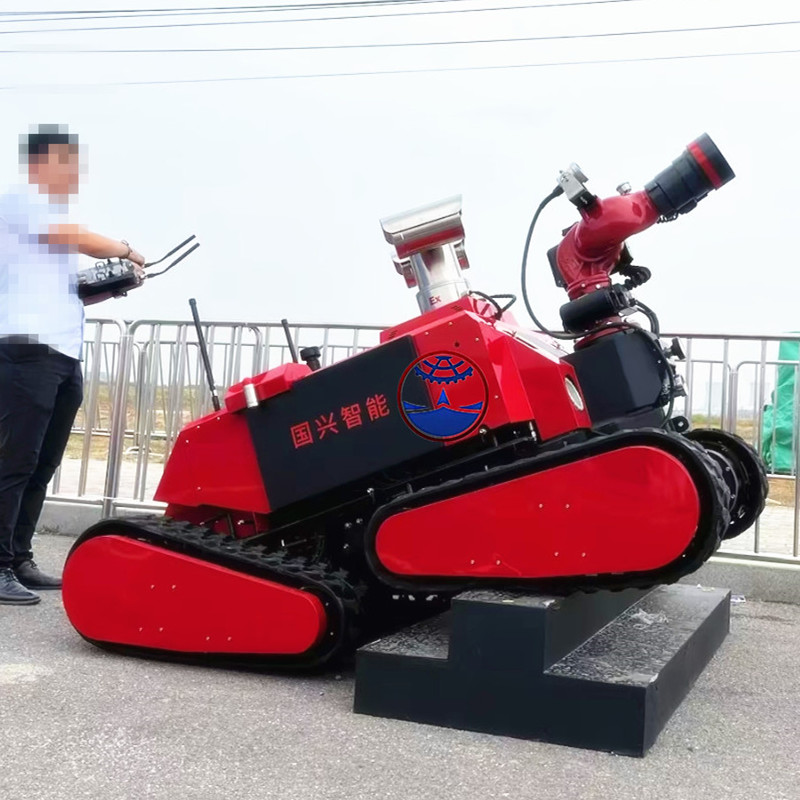
Glossy spec sheets only reveal a fraction of the truth. You must evaluate the engineering team standing behind the machine. Customization separates standard vendors from exceptional partners. Can they adapt the chassis layout? Will they modify the monitor flow rate? Your plant features a highly specific chemical footprint. A dependable supplier integrates specialized gas detectors matching your exact environmental hazards. Off-the-shelf sensors provide inadequate protection.
Supply chain strength directly influences your operational uptime. Assess domestic or regional parts inventories carefully. Waiting weeks for an overseas shipment causes unacceptable delays. If a track mechanism breaks during a drill, you need immediate replacements. Robust supply chains prevent critical downtime and keep your response readiness high.
Review the after-sales support service level agreement (SLA) in detail. Look for guaranteed response times regarding technical support. On-site repair capabilities add immense value to your procurement. Routine diagnostic check-ups catch minor faults before they escalate. A proactive service contract extends the lifespan of your robotic fleet significantly.
Trustworthy partners always maintain transparent limitations. They tell you exactly what the equipment cannot achieve. Continuous operation times have strict limits. Batteries degrade faster during extreme cold or intense heat. Honest communication about these boundaries prevents dangerous tactical mistakes. A vendor pushing exaggerated marketing claims puts your facility at severe risk.
Acquiring advanced hardware guarantees nothing on its own. Successful deployment requires intense preparation. You must address the operator skill gap immediately. Driving a heavy robotic unit through narrow corridors involves a steep learning curve. The vendor must deliver rigorous, hands-on training programs. Realistic simulation tools help on-site personnel build essential muscle memory. Operators must react instinctively under immense psychological pressure.
Maintenance overheads demand dedicated attention. Sophisticated equipment suffers rapidly in harsh environments. Plant technicians must perform track tensioning regularly. Gas sensors require frequent calibration to ensure accurate readings. Strict battery management protocols prevent unexpected power failures during active deployments. Neglecting these maintenance realities leads to catastrophic equipment failure when you need it most.
Standard emergency protocols rarely account for robotic assets. You must rewrite site emergency response plans entirely. Establish crystal-clear tactical roles. Human fire brigades and robotic units must coordinate their movements perfectly. Incident commanders must know precisely when to deploy the robot versus when to send human teams.
Frequent testing keeps everyone sharp. Run quarterly live-fire drills involving the robotic unit. Simulated scenarios verify system readiness and human competence. Machines sitting idle degrade slowly over time. Continuous drills prove your deployment capabilities remain intact.
Procurement follows a strict logical progression. Never rely on promotional videos. Demand a physical proof of concept. Request live demonstrations at your facility. An on-site factory acceptance test mimics your exact environmental constraints. Watching the unit climb your specific staircases builds absolute confidence. It reveals hidden mobility flaws early in the process.
Always conduct thorough reference checks. Request detailed case studies from similar industrial sectors. Ask for direct contacts at refineries or nuclear plants using the same equipment. Call these facility managers directly. Ask them how the vendor handles emergency repairs. Verify the supplier's long-term track record through unbiased third parties.
Construct a final decision matrix to guide your choice. Weigh technical capabilities heavily. Factor in overall supplier reliability and responsiveness. Ensure compliance guarantees meet your internal safety regulations strictly. Choose the vendor who balances engineering excellence seamlessly alongside long-term operational support.
Avoid rushing the final signature. Let the data from your live demonstrations guide the outcome. When your team feels confident operating the machine, you know you have found the right solution. A methodical shortlisting process eliminates unreliable vendors quickly.
Investing in advanced automated response systems signifies an investment in life safety. Protecting human personnel from explosive hazards and toxic environments remains the highest priority. These machines preserve facility continuity during worst-case scenarios.
The right supplier acts as a dedicated risk mitigation partner. They deliver robust engineering. They back their hardware through continuous operational support and transparent communication. Your success relies entirely on this ongoing partnership.
Take proactive steps today. Contact vetted suppliers and request a comprehensive site hazard assessment. Schedule a technical demonstration to see the equipment navigate your facility firsthand.
A: Standard timelines vary significantly based on customization. Off-the-shelf units generally ship within a few weeks. However, highly customized, ATEX-certified units tailored to specific chemical environments require longer production windows. You should typically expect a lead time ranging from three to six months for specialized equipment.
A: Operational ranges usually span between two to four hours under normal conditions. Active self-cooling systems and high-flow monitors draw substantial power, reducing this duration during extreme heat deployments. To ensure continuous operation, facilities should keep fully charged, quick-swap battery packs readily available near the deployment zone.
A: Yes, properly designed units navigate complex terrain easily. Robust track capabilities allow them to climb standard industrial stairs with maximum incline angles often reaching 30 to 40 degrees. However, grated walkways pose unique traction challenges. We highly recommend conducting on-site testing to verify performance on your specific infrastructure.
A: Expect comprehensive service level agreements outlining specific responsibilities. Standard contracts usually include bi-annual preventive maintenance visits. They also cover critical software updates for teleoperation systems and routine sensor recalibrations. Guaranteed response times for emergency repairs ensure your equipment remains fully operational year-round.