
Views: 0 Author: Site Editor Publish Time: 2026-09-06 Origin: Site


Extreme stakes define petrochemical plants and high-density warehouses. Toxic exposure, blinding thermal radiation, and sudden structural collapse make manual firefighting highly perilous. You cannot risk human lives in these unpredictable, catastrophic conditions. Industry leaders are steadily shifting away from traditional suppression tactics. Instead, they deploy mobile, automated containment units using specialized robotics. This proactive approach keeps human responders out of blast zones while aggressively suppressing the blaze.
This guide provides HSE (Health, Safety, and Environment) directors and procurement teams with a rigorous, spec-driven evaluation framework. We will help you select a trusted Firefighting Robot Supplier. You will learn how to cut through flashy marketing claims to focus on operational reliability and deployment readiness. Our analysis explores infrastructure compatibility, essential certifications, and critical logistics to ensure your facility remains protected.
Facility managers face significant business problems during severe industrial fires. Fixed suppression systems often suffer from blind spots, especially inside sprawling, high-density warehouses. Blocked aisles or damaged sprinkler heads render stationary networks useless. Manual response teams hit absolute human limits near Boiling Liquid Expanding Vapor Explosion (BLEVE) risk zones. Radiant heat alone can severely injure personnel long before flames reach them. You need mobile, durable alternatives.
Procuring an advanced petrochemical firefighting robot aims to buy critical time. The goal is not replacing human firefighters. Instead, these machines provide a durable, high-capacity remote suppression tool. They approach burning storage tanks closely, delivering massive volumes of cooling water. This intervention limits collateral asset loss and prevents catastrophic domino effects across the facility.
However, we must address operational realities openly. Skeptics rightly point out inherent limitations. Robots are only as effective as their trailing water or foam supply lines. Furthermore, operators rely entirely on onboard cameras. Zero-visibility environments filled with thick, toxic smoke complicate remote navigation. Acknowledging these constraints early ensures realistic deployment strategies.
Industrial hazard zones demand rigorous safety compliance. You must demand absolute transparency regarding specific certifications. ATEX Zone 1 or Zone 2 explosion-proof ratings are mandatory for petrochemical environments. Electrical sparks from uncertified motors will ignite airborne volatile organic compounds. Furthermore, examine the IP68 waterproof ratings. These units operate submerged in extinguishing foam and runoff water.
Assess the integrated thermal protection systems carefully. Heavy-duty machines utilize self-cooling water curtain mechanisms. A dedicated nozzle sprays a protective mist over the chassis. This thermal shield allows sustained operation near intense radiant heat without melting sensitive wiring or internal batteries.
Water output defines operational success. High-pressure back-recoil tests the physical limits of any track system. A monitor discharging 80+ liters per second generates massive backward force. Evaluate the chassis stability under maximum load. Lightweight frames will flip or slide backward on wet concrete.
You must also verify dual-agent compatibility. Chemical fires frequently require both water cooling and foam blanketing. Ensure the manifold accepts standard facility connections for water, foam, or dry powder. True versatility prevents delays during initial incident response.
| Flow Rate (L/s) | Recoil Force Generated | Required Chassis Weight | Recommended Track Material |
|---|---|---|---|
| 40 - 60 | Moderate (~300 kgf) | 500+ kg | Flame-retardant rubber |
| 80 - 100 | High (~500 kgf) | 800+ kg | Steel-reinforced rubber |
| 120+ | Extreme (>700 kgf) | 1200+ kg | Full steel tracks |
Remote command signals face severe disruption inside refineries. Thick metal structures and storage tanks bounce radio waves, causing multipath interference. Examine the control system thoroughly. Look for dual-frequency transmitters (e.g., 900 MHz and 2.4 GHz) offering resistance to signal jamming.
Autonomous navigation features serve a specific purpose. You should view LiDAR and obstacle avoidance strictly as fail-safes. If the remote connection drops entirely, the unit must safely navigate backward. Automatic return-to-base functions prevent expensive hardware from becoming stranded inside burning sectors.
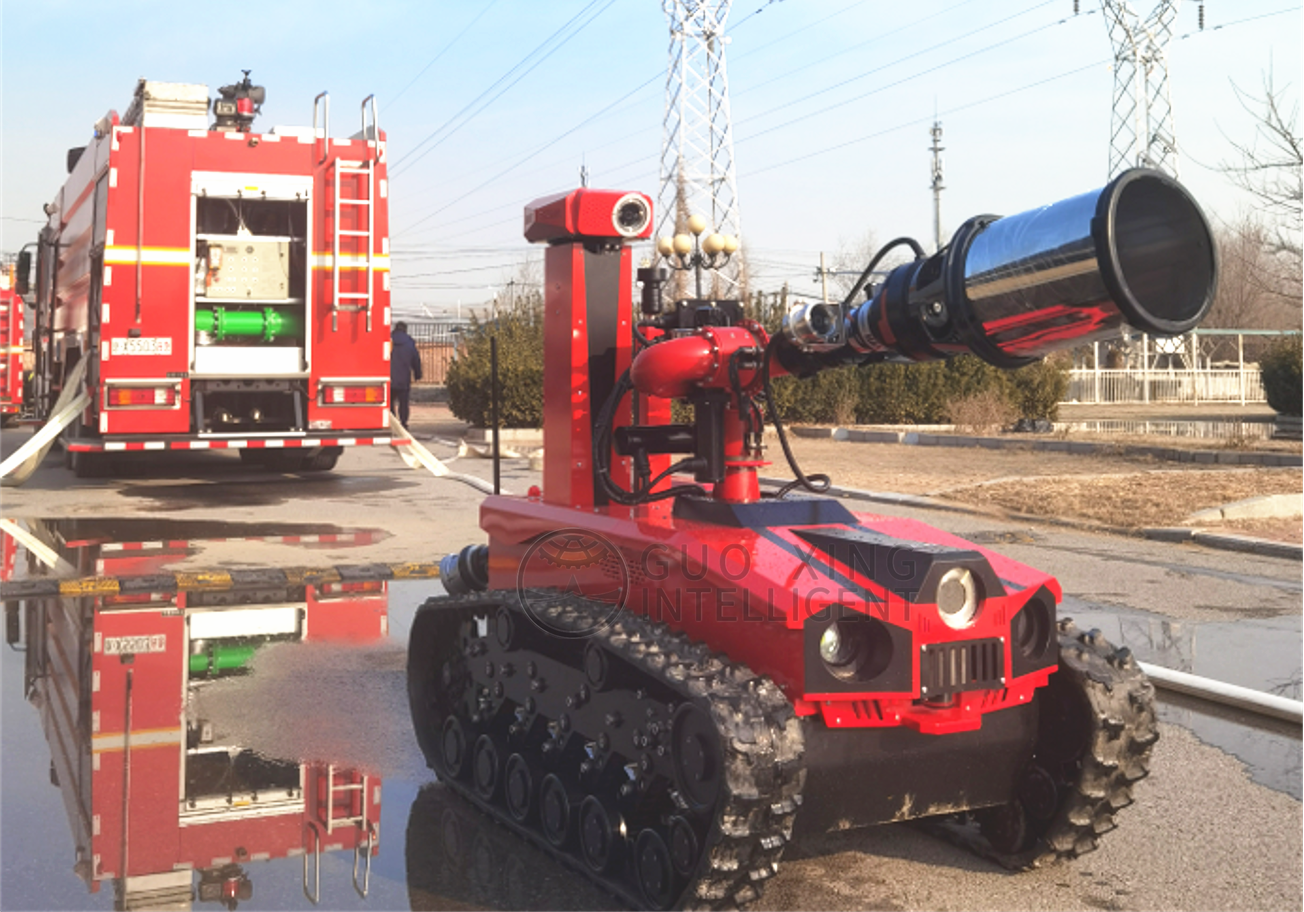
Purchasing robust hardware solves only half the problem. Water and foam supply logistics present immense physical challenges. We must discuss the reality of hose dragging. A charged 100-meter supply hose weighs hundreds of kilograms. A credible vendor must account for specific traction limits. Pulling heavy, pressurized lines across complex plant terrain requires massive low-end torque. Smooth warehouse floors require different tread designs compared to gravel tank farm berms.
Integration processes dictate overall response efficiency. Ask how the unit interfaces seamlessly into your site SCADA systems. Can centralized alarm networks trigger automated mobilization sequences? You must also verify thread compatibility linking the robot manifold to standard warehouse standpipe connections. Mismatched couplings waste precious minutes during an active blaze.
Deployment bottlenecks ruin even the best emergency plans. Consider physical storage requirements first. Corrosive plant atmospheres degrade exposed sensors over time. Specialized protective enclosures extend hardware lifespan significantly. Charging station placement also requires strategic thought. You must map out exactly how much time mobilization requires. Moving a unit from standby mode to active suppression should take less than five minutes.
| Action Phase | Operator Task | Target Time |
|---|---|---|
| Phase 1 | Alarm confirmation & startup sequence | < 60 Seconds |
| Phase 2 | Hose connection at staging area | 90 - 120 Seconds |
| Phase 3 | Remote navigation to hot zone | 2 - 3 Minutes |
| Phase 4 | Water curtain activation & primary suppression | Immediate |
Navigating the industrial robotics market requires a skeptic-friendly evaluation approach. A trustworthy partner will never overpromise autonomous capabilities. Chaotic fire environments change too rapidly for current AI decision-making. Instead, reliable vendors emphasize robust remote-control reliability. They prioritize unshakeable radio links over experimental self-driving features.
Maintenance defines the operational lifecycle. Evaluate the local availability of specialized spare parts. Tracks, thermal sensors, and brass nozzles wear out quickly in harsh conditions. Understand the frequency of required preventative maintenance. Extended downtime leaves your facility entirely unprotected. Demand comprehensive Service Level Agreements (SLAs). Strong SLAs guarantee fast repair turnarounds and offer loaner units during major overhauls.
Hardware delivery remains incomplete without extensive human preparation. Operator training separates successful deployments from expensive failures. Demand rigorous, site-specific scenario training for plant personnel. Include your local municipal fire departments in these sessions. Seamless coordination between remote operators and manual teams saves lives.
Finally, insist on evidence-oriented proof. Do not accept sterile laboratory data. Require documented case studies detailing actual deployments. Ask for live field-test data conducted under simulated industrial conditions. Contact references from similar high-hazard facilities to verify vendor claims independently.
Structured procurement ensures you acquire the exact capabilities your facility demands. Begin by strictly defining your use cases. Different environments dictate entirely different chassis designs. A nimble, battery-electric unit easily navigates narrow warehouse aisles. Conversely, heavy-duty tank farm suppression requires massive, diesel-driven tracks capable of crossing concrete containment bunds.
Follow a structured progression once you narrow down potential partners. Rushing the final selection phase often leads to incompatible system deliveries.
Choosing the right automated suppression hardware represents a critical life-safety and asset-protection partnership. You must conduct strict technical and operational vetting to ensure success. Prioritize explosion-proof certifications, evaluate recoil stability, and demand proof of signal redundancy. Real-world logistics, like hose traction and integration protocols, matter far more than flashy promotional videos.
Take immediate action to secure your facility. Engage qualified engineers to perform a site-specific risk assessment. Request a structural mobility audit to identify deployment bottlenecks. Contact a reputable manufacturer today to demand a detailed technical specification sheet tailored to your unique hazard profile.
A: A well-integrated unit mobilizes within three to five minutes. This timeline depends on standby locations and power readiness. Units stored near hydrants reduce hose connection times significantly. Pre-connected hoses on quick-release manifolds offer the fastest emergency response.
A: No. Current technological limits restrict full autonomy. Navigation systems use LiDAR to avoid obstacles, but suppression decisions require human-in-the-loop oversight. Fire dynamics change too rapidly for AI to safely dictate water stream angles and target priorities.
A: High-end models feature built-in fail-safes. If interference breaks the radio link, the machine triggers auto-braking instantly. It then activates self-cooling water curtains to protect itself. Finally, it uses GPS and LiDAR to execute an automatic return-to-path function until the signal restores.
A: Harsh environments demand rigorous upkeep. Maintenance includes weekly anti-corrosion checks on exposed metal joints. Technicians must perform monthly battery cycling to ensure peak capacity. Furthermore, strict seal inspections protect internal electronics from acidic atmospheric moisture.