
Views: 0 Author: Site Editor Publish Time: 2026-08-24 Origin: Site


Procuring life-safety and emergency response equipment remains a high-stakes decision. Human lives literally depend on these machines during critical operations. The global robotics market currently floods buyers with unqualified vendors. Many facilities operate simply as secondary assemblers. They white-label commercial parts routinely. These generic components frequently fail under extreme thermal stress. They also break down under harsh environmental conditions. You need a reliable, tested manufacturing source.
We provide a rigorous, compliance-aware framework here. You can use this guide to evaluate a Firefighting Robot Factory thoroughly. Learn exactly what factors matter most before you commit to pilot programs. Understand the technical requirements before signing bulk procurement contracts. You must separate genuine innovators from opportunistic assemblers. This diligence ensures your frontline responders receive dependable tactical support.
Evaluating technical specifications alone leaves hazardous gaps in your procurement strategy. Sourcing the right manufacturing partner protects your operational integrity. It also shields your organization from catastrophic liabilities.
Equipment failure in hazardous environments brings severe operational consequences. Imagine a remote-controlled monitor losing signal near a volatile chemical fire. The resulting explosion causes massive facility damage. It also carries immense legal liabilities. You cannot afford unexpected breakdowns when navigating blast zones. Real-world stakes demand flawless mechanical execution. Shoddy wiring or poorly insulated batteries create secondary hazards. A compromised machine instantly turns into a lethal obstacle for human crews.
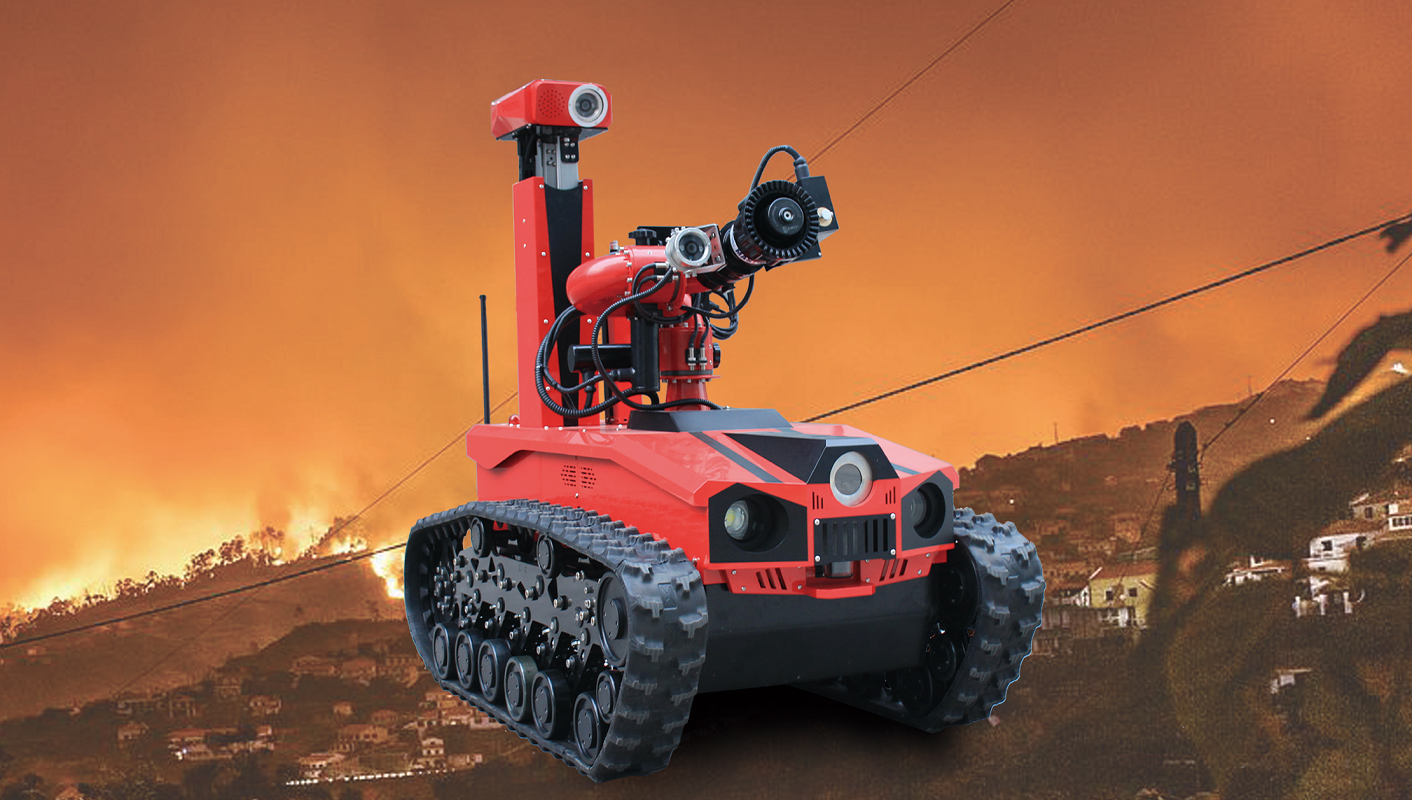
Industry professionals constantly debate automating risk versus upgrading human gear. Many buyers wonder if investing in robotics makes financial sense. A legitimate Firefighting Robot Factory,fire fighting robot factory builds machines to supplement human crews. They never intend to replace seasoned firefighters. These robots handle extreme environments safely. They enter areas where human survival drops to zero. Sending a machine into a collapsing tunnel protects your most valuable asset: your personnel. The return on investment becomes obvious once you factor in reduced casualty rates. You also gain faster suppression times in high-heat scenarios.
You must define the gap between genuine manufacturers and mere assemblers. OEMs engineer proprietary chassis designs. They develop specialized software architectures internally. Assemblers simply piece together off-the-shelf components.
We can break down the critical differences between these two facility types:
Glossy brochures mean nothing without verifiable quality control. Your evaluation must focus heavily on standardized compliance. Life-safety equipment demands rigorous, documentable testing parameters.
Outline the baseline certifications you must request immediately. ISO 9001 certification verifies consistent quality management processes. CE marking remains legally mandatory for European markets. It also serves as a strong global benchmark for electrical safety. You should demand relevant NFPA compliance guidelines as well. These standards dictate acceptable performance metrics for emergency responders. Do not accept self-certified declarations. Always demand independent verification certificates.
A factory floor audit reveals the true capabilities of a manufacturer. You must look for dedicated testing zones during your facility tour.
Assess the supply chain handling flame-retardant materials. You need complete transparency regarding chassis metallurgy. The facility should utilize aviation-grade aluminum for weight reduction. They must pair this aluminum with high-tensile steel structural supports. Heat-resistant tracks represent another vital inspection point. Standard rubber tracks melt quickly on burning asphalt. The manufacturer must document their specific polymer blends. They should also detail internal wire-mesh reinforcements for their track systems.
Here is a standardized table to guide your certification audit:
| Certification Standard | Primary Purpose | Factory Audit Requirement |
|---|---|---|
| ISO 9001 | Quality Management consistency | Verify annual renewal dates and exact scope of certification. |
| CE Marking | European health and safety compliance | Examine electromagnetic interference (EMI) testing documentation. |
| IP67 / IP68 | Water and dust ingress protection | Inspect the dedicated submersion testing pools on-site. |
| ATEX / EX | Explosion-proof operational safety | Review material spark-resistance data and sealed joint integrity. |
Modern firefighting requires intelligent mechanical solutions. Evaluate how effectively the factory integrates modern technology. Mechanical brawn needs advanced sensory intelligence to succeed.
You must evaluate the specific sensory arrays utilized. Are they integrating industrial-grade IR cameras or cheap commercial sensors? Cheap sensors fail when exposed to dense, superheated smoke. Industrial-grade thermal imaging penetrates thick smoke easily. It locates the core heat source rapidly.
Assess the navigation systems carefully. Focus primarily on the stability of remote communication protocols. The factory should utilize advanced mesh networks. They must incorporate robust anti-interference technology. Signal-degraded environments ruin standard radio links. Concrete walls and metal structures block weak signals instantly. The robot must maintain a constant connection to the operator panel. Ask the engineering team how they prevent signal loss in subterranean environments.
A top-tier facility modifies payloads based on your specific requirements. Petrochemical plants face vastly different hazards than municipal departments. Forest fire applications require entirely unique suppression tactics. The engineering team must demonstrate flexible payload integration.
Consider these typical customization options:
Use the chart below to match typical industrial hazards with required payload customizations:
| Deployment Industry | Primary Hazard Profile | Recommended Custom Payload |
|---|---|---|
| Petrochemical Refineries | Explosive gases, chemical pools | EX-rated chassis, foam cannons, VOC gas sensors |
| Municipal Subways | Confined spaces, thick toxic smoke | High-volume exhaust fans, thermal imaging arrays |
| Forestry & Wildland | Rough terrain, unpredictable spread | All-terrain tracks, winch systems, wide-angle monitors |
Procurement teams often fall for impressive marketing tricks. You must maintain a disciplined approach during your evaluation phase. Avoiding common mistakes saves time and organizational resources.
Buyers frequently over-index on unproven AI features. They become fascinated by autonomous pathfinding algorithms. However, they sacrifice core mechanical reliability in the process. Advanced AI means nothing if the chassis breaks an axle on a curb. Prioritize fundamental mechanical durability first. Scrutinize the maximum payload capacity. Verify battery stability under extreme radiant heat. Lithium-ion cells become dangerously unstable at high temperatures. The factory must demonstrate sophisticated battery cooling architecture. Do not let flashy software distract you from basic mechanical resilience.
Sizing and weight constraints dictate practical usability. Purchasing units too large for existing deployment vehicles is a massive mistake. You cannot use a robot if you cannot transport it to the scene. Measure your current trailer ramps and compartment dimensions carefully. Discuss facility access points thoroughly. Industrial robots must fit through standard service doors. They need to navigate tight catwalks or subterranean utility tunnels. A massive, powerful unit becomes useless if it gets wedged inside a narrow corridor. Factor in the turning radius and the ground clearance. Match the physical dimensions to your most restrictive operational environments.
Your relationship with the manufacturer begins after the purchase. Post-deployment support dictates long-term operational success. Evaluate the business infrastructure supporting the factory.
You need to ask key questions before placing a bulk order. Assess their actual production capacity accurately. Can they manufacture fifty units in three months? Understand their typical lead times. Investigate their supply chain resilience. The global market frequently suffers from critical microchip shortages. Battery supply chains remain highly volatile. The factory must hold adequate raw material reserves. They should source critical components from multiple reliable vendors. Single-point supply failures halt entire production lines indefinitely.
Establish clear Service Level Agreement (SLA) expectations upfront. Machines break down when operating in extreme environments. You need replacement parts quickly. How quickly can the factory ship proprietary replacement tracks? Do they keep backup nozzles and specialized batteries in stock? Demand a guaranteed parts availability window. Unplanned downtime leaves your facility vulnerable. Consider the physical accessibility of internal components as well. You must remove damaged panels quickly on the fireground. Engineers design accessible maintenance bays intentionally. Assemblers bury critical reset switches behind heavy plating.
A robot is only as effective as the firefighter operating it. The factory must provide comprehensive training programs. They should map out a clear handover process. Evaluate their operator training curriculum closely. Do they offer simulated driving sessions? Maintenance crews require entirely different technical instruction. They need detailed teardown manuals and troubleshooting flowcharts. Reputable factories prioritize hands-on mechanical training. They ensure your local team can perform routine servicing confidently.
Summarize your shortlisting logic clearly. You must prioritize verified manufacturing capabilities over glossy spec sheets. Verifiable testing data guarantees real-world performance. Robust after-sales support ensures long-term operational readiness. You need a transparent partner willing to prove their engineering claims.
Take immediate action to validate your top choices. Recommend requesting a localized pilot demonstration. Watch the machine perform in your specific operational environment. Always conduct an independent factory audit before entering B2B procurement negotiations. Send your lead engineers to inspect their thermal chambers and submersion pools personally. Diligence at this stage prevents catastrophic failures on the fireground.
A: Request virtual or physical site audits immediately. Ask for recent third-party inspection reports from recognized bodies like SGS or TÜV. You should also demand reference cases from existing municipal or industrial clients. Contact these clients directly to confirm production timelines and overall product satisfaction.
A: Typical industry timelines range from 60 to 120 days for standard units. However, custom payloads significantly extend these schedules. International shipping logistics, customs clearance, and global microchip availability also heavily influence final delivery dates. Always build buffer time into your procurement schedule.
A: Yes. Reputable manufacturers offer comprehensive "train-the-trainer" programs. They deploy specialists to instruct your lead operators. Factories also provide detailed operation manuals, maintenance schedules, and secure remote technical troubleshooting protocols to ensure long-term operational success.
A: Absolutely. Tier-one facilities routinely customize chassis sizes to navigate narrow industrial catwalks. They modify explosion-proof ratings (EX certifications) for volatile chemical zones. They also adapt extinguishing agents and sensor payloads specifically for environments like petrochemical plants, aviation hangars, or subway systems.