
Views: 0 Author: Site Editor Publish Time: 2026-09-12 Origin: Site


The chassis serves as the foundational structural anchor for any automated system. A single point of failure here cascades into catastrophic operational downtime. Commercial off-the-shelf solutions frequently compromise payload capacity, sensor integration, or critical footprint constraints. They force engineers to design around limitations rather than optimizing for performance. Partnering with the wrong fabrication partner introduces severe tolerance stack-up issues. It delays go-to-market timelines and causes frustrating compliance failures in harsh operating environments. Relying on inadequate suppliers puts your entire robotics project at risk. This guide provides an evidence-based framework for evaluating and selecting the right fabrication partners. You will learn how to shortlist a reliable Custom Robot Chassis Manufacturer capable of scaling seamlessly from initial prototype to full-scale production.
Standardized frames might seem appealing during early feasibility studies. However, they rapidly reveal their limitations as product requirements mature. Constraint-driven design demands precise structural characteristics. Standard platforms fail when engineers encounter irregular center of gravity requirements. They struggle to accommodate proprietary sensor arrays or extreme payload-to-weight ratios.
Consider a logistics robot navigating narrow warehouse aisles. A standard frame dictates the wheelbase and track width. This limits turning radiuses. Custom fabrication allows you to dictate exact geometries. You optimize every millimeter of the footprint. It prevents structural binding during complex maneuvers. You gain total control over the physical layout. We see engineering teams waste months modifying commercial chassis. They drill new mounting holes or weld crude extension brackets. These makeshift modifications ruin structural integrity. They also introduce unpredictable resonant frequencies into the frame.
Environment-specific compliance dictates another crucial need for bespoke manufacturing. Specialized operational zones strictly prohibit generic materials. You must address harsh external variables head-on.
Custom manufacturing resolves these constraints efficiently. You avoid the physical limitations of mass-produced frames. The final product performs exactly as intended in its designated environment.
Evaluating a fabrication partner requires looking beyond their equipment list. You must scrutinize their technical execution. Precision and tolerance capabilities represent the most critical evaluation metrics. Industrial robots rely on exact spatial positioning. Baseline expectations for machining tolerances should comfortably hold ±0.01mm for critical mounting surfaces. Drive components, planetary gears, and LiDAR mounts demand flawless alignment. Any deviation causes accelerated wear on joints.
You cannot trust unverified tolerance claims. Discuss the necessity of in-house Coordinate Measuring Machine (CMM) inspection. True manufacturing partners provide documented quality reports for every batch. They measure critical dimensions automatically. You receive statistical process control data, not just vague promises.
Material expertise forms the next evaluation pillar. Different applications demand specific high-strength-to-weight alloys. A competent partner works seamlessly across multiple metal families.
| Material Family | Common Alloys | Primary Use Cases | Fabrication Challenges |
|---|---|---|---|
| Aluminum | 6061, 7075 | Agile logistics robots, drones | Heat distortion during welding |
| Stainless Steel | 304, 316L | Medical, food-grade automation | Tool wear during CNC milling |
| Titanium | Grade 5 | Aerospace, deep-sea robotics | Requires specialized cutting fluids |
Multi-process fabrication capability prevents logistics nightmares. Assess their proficiency in CNC milling, laser cutting, and precision sheet metal bending. Robotic welding represents a massive advantage for high-volume orders. Consolidating these processes under one roof ensures tighter quality control.
Scalability separates rapid prototyping shops from true production partners. Prototyping shops excel at one-off units. They fail miserably when orders jump to hundreds of units. Assess their ability to transition an industrial robot chassis from low-volume NPI (New Product Introduction) to high-volume manufacturing. They must manage this leap without re-tooling bottlenecks. Ask about their fixture design process. Good fixtures allow rapid changeovers between product runs.
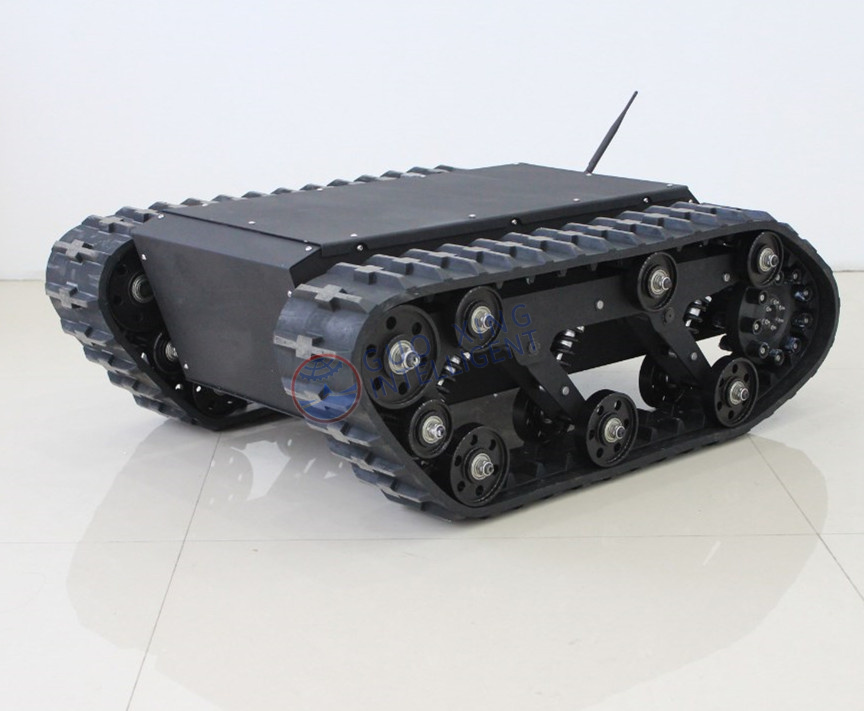
Theoretical CAD models rarely translate perfectly to the factory floor. Implementation realities expose the true competence of your manufacturing partner. Design for Manufacturability (DFM) support prevents costly production delays. Look for manufacturers who actively audit your CAD files. They should suggest cost-saving geometry modifications early. A skilled engineer might notice a complex internal pocket. They will recommend a multi-part bolted assembly instead. This simple change drastically reduces CNC machining time. It maintains structural integrity while slashing production costs.
Supply chain bottlenecks plague hardware startups and established OEMs alike. Lead time reliability dictates your go-to-market schedule. Evaluate their raw material sourcing network meticulously. Do they rely on single-source suppliers for specialty alloys? A robust partner maintains relationships with multiple metal service centers.
Secondary operation logistics also require scrutiny. Chassis production rarely ends at the milling machine. You must account for anodizing, powder coating, or heat treating. If your partner outsources these steps, they lose schedule control. Ask how they manage subcontractors to prevent unexpected delays.
Intellectual Property (IP) protection remains a critical but overlooked risk. You invest millions developing proprietary drive-trains and sensor layouts. The physical chassis geometry often reveals these trade secrets. Detail the necessity of strict Non-Disclosure Agreements (NDAs). Furthermore, demand segmented manufacturing processes.
Protecting your IP secures your competitive market advantage. You cannot afford to skip these crucial conversations during supplier vetting.
Stringent quality assurance protocols distinguish amateur workshops from world-class facilities. You must demand verifiable proof of compliance. Certifications serve as powerful trust signals in industrial manufacturing. A baseline ISO 9001:2015 certification demonstrates a mature quality management system. Specialized robotics require stricter frameworks. Medical robotics demand ISO 13485 compliance to ensure patient safety. Aerospace-grade payloads necessitate AS9100 certifications for extreme tolerance control.
Heavy-duty applications introduce intense dynamic forces. Weld integrity and structural testing become paramount. You cannot rely on visual weld inspections alone. Define the importance of Non-Destructive Testing (NDT) to validate weld penetration. Techniques like ultrasonic testing or X-ray inspection reveal internal voids. These microscopic flaws cause catastrophic failures under dynamic kinematic loads. We always recommend finding a reputable Custom Robot Chassis Manufacturer,industrial robot chassis supplier who integrates NDT into their standard workflow.
Material traceability guarantees long-term reliability. Extreme-temperature or high-vibration use cases push metals to their physical limits. Outline the rigid requirement for material certificates. Mill test reports explicitly detail the chemical composition of your raw stock. They prove you received aerospace-grade aluminum instead of a cheap commercial substitute. Without traceability, root-cause failure analysis becomes impossible. You must track every piece of metal back to its original casting batch.
Transitioning from evaluation to selection requires a structured approach. A pragmatic vendor scoring framework removes emotional bias from your decision. You must grade potential partners on objective criteria. Evaluate their responsive communication first. Do they ask intelligent technical questions about your designs? Examine their verifiable case studies. They must demonstrate past success with similar robotic platforms. Transparent pricing models prevent hidden post-order surcharges.
Preparing the RFQ (Request for Quote) package correctly accelerates the entire process. Incomplete data causes inaccurate quoting and endless engineering revisions. Detail exactly what you must provide to the manufacturer:
After selecting a primary candidate, initiate an actionable next step. Never commit to full-scale production immediately. Commission a pilot run to conduct a First Article Inspection (FAI). This single-unit order validates the manufacturer's capability in real time. It confirms their DFM feedback works. You verify their finishing quality and dimensional accuracy before writing a massive purchase order.
Selecting a fabrication partner represents a strategic engineering partnership, not a transactional commodity purchase. The structural foundation of your robotic platform depends entirely on their execution capabilities. Prioritizing DFM expertise, stringent QA protocols, and transparent communication mitigates painful launch delays. It ensures the enduring reliability of the final industrial robot.
Actionable next steps drive this process forward. Audit your current vendors immediately against this evaluation framework. Look for gaps in their traceability or CMM reporting. Consolidate your internal manufacturing documentation to match the RFQ standards outlined above. Finally, prepare your native STEP files and request an initial DFM consultation from your shortlisted candidates. Their preliminary design feedback will instantly reveal their true technical competence.
A: Timelines vary significantly based on geometric complexity and required secondary finishes. Standard machined or precision sheet metal iterations typically range from 2 to 6 weeks. Complex welded assemblies requiring specialized heat treatments or custom anodizing may extend the prototype schedule to 8 weeks.
A: Most manufacturers differentiate themselves from industrial design firms. They focus strictly on Design for Manufacturability (DFM). They optimize your existing CAD models for higher production yields and reduced machining times, rather than creating raw conceptual designs from scratch.
A: Your internal engineering team must conduct the initial Finite Element Analysis (FEA). The manufacturer subsequently ensures structural integrity through strict material traceability. They validate robust welding and mechanical fastening processes using Non-Destructive Testing (NDT) to prevent structural failure under load.
A: Reputable build-to-print partners typically offer scalable MOQs. They often start at a single First Article unit for validation. After passing inspection, they generally require minimum batch commitments ranging from 10 to 50 units, depending on custom fixturing and setup costs.