
Views: 0 Author: Site Editor Publish Time: 2026-03-23 Origin: Site


In modern robotics, the robot chassis plays a fundamental role in determining how efficiently and reliably a robot can perform its tasks. As robots are increasingly used in industrial automation, inspection, firefighting, security, mining, and military operations, the need for stable and mobile robotic platforms has become more important than ever. A robot chassis provides the structural base that supports all major components, including motors, batteries, sensors, controllers, and working equipment. Without a well-designed chassis, even the most advanced control system cannot achieve stable performance.
Compared with fixed robotic systems, a mobile robot built on a professional chassis can move freely in different environments, carry various tools, and adapt to complex working conditions. This flexibility makes the robot chassis an essential part of modern unmanned systems. A high-quality mobile robot chassis not only improves movement capability but also increases safety, durability, and efficiency.
This article explains the key advantages of using a robot chassis, and why it has become the core platform for many industrial and professional robotic applications.
One of the biggest advantages of using a robot chassis is improved mobility. Robots built on a chassis platform can move across different types of terrain, including flat floors, rough ground, slopes, sand, or debris. This makes them suitable for both indoor and outdoor applications.
Different drive structures allow the chassis to adapt to different environments. For example, wheeled chassis are ideal for smooth surfaces, while tracked chassis provide better traction on uneven terrain. Because of this flexibility, robot chassis are widely used in inspection robots, rescue robots, and industrial mobile platforms.
A professional chassis can support different driving types depending on the application. Each design has its own advantages, and choosing the correct one improves overall performance.
Drive Type | Advantages | Typical Applications |
Wheeled robot chassis | Fast, efficient, flexible | Indoor robots, AGV |
Tracked robot chassis | Strong traction, stable | Mining, firefighting |
Heavy-duty chassis | High load capacity | Industrial robots |
Custom chassis | Designed for special tasks | Research, OEM |
Because of these options, a UGV chassis can be used in many industries without redesigning the whole robot.
Mobility also improves navigation performance. A stable chassis allows the robot to turn smoothly, climb slopes, and move without losing balance. When the base platform is reliable, sensors and control systems can work more accurately. This is especially important for autonomous robots that depend on precise movement to complete tasks.
The robot chassis acts as the structural foundation of the entire robotic system. All important components such as motors, batteries, cameras, robotic arms, and control units are mounted on the chassis. If the chassis is not strong enough, the robot may become unstable or damaged during operation.
Industrial robots often carry heavy equipment, so the chassis must be able to support high loads without bending or breaking. A professional industrial robot chassis uses reinforced frames and high-strength materials to ensure stability.
Many robotic applications require the robot to carry tools, sensors, or working devices. For example, inspection robots may carry cameras and detectors, while firefighting robots may carry water cannons and pumps.
Equipment Type | Load Requirement | Chassis Requirement |
Cameras / sensors | Low load | Light chassis |
Robotic arm | Medium load | Reinforced frame |
Firefighting equipment | Heavy load | Heavy-duty chassis |
Industrial tools | High load | Strong structure |
A strong heavy duty robot chassis ensures that all equipment can operate safely without affecting balance.
When a robot performs tasks such as inspection, measurement, or manipulation, stability is very important. A rigid chassis reduces vibration and keeps the platform steady, which improves accuracy. This is why professional robot platforms are designed with thick frames, strong connections, and low center of gravity.
Another important advantage of using a robot chassis is improved stability. Professional chassis designs keep the center of gravity low and evenly distributed, which helps prevent tipping when the robot moves on slopes or carries heavy equipment.
Wide tracks, strong suspension, and reinforced structures all help maintain balance. This is especially important for outdoor robots working on uneven ground.
Industrial environments often include vibration, impact, and sudden movement. A high-quality chassis can absorb shock and protect internal components. Without proper design, vibration may damage sensors, motors, or control systems.
Feature | Benefit |
Reinforced frame | Prevents deformation |
Suspension system | Reduces vibration |
Thick structure | Handles heavy load |
Strong joints | Improves durability |
A stable all terrain robot chassis allows the robot to work safely in difficult conditions.
Robots used in firefighting, mining, or military operations must work in environments where humans cannot go. In these cases, stability is critical for safety. A professional chassis ensures the robot can move smoothly even in smoke, mud, or debris.
One major advantage of a robot chassis platform is modularity. A modular chassis allows engineers to install different equipment without redesigning the entire robot. This makes development faster and more efficient.
Standard mounting holes, power interfaces, and control connections make it easy to add sensors, cameras, or robotic arms.
Professional chassis are designed to work with different controllers, communication systems, and power supplies. This flexibility allows the same chassis to be used in many projects.
Feature | Professional Chassis | Basic Platform |
Mounting interface | Standardized | Limited |
Sensor support | Flexible | Fixed |
Control compatibility | High | Low |
Customization | Available | Rare |
Upgrade ability | Easy | Difficult |
A flexible custom robot chassis helps engineers build different robots on the same platform.
Some applications require special size, load capacity, or drive type. Professional manufacturers can customize the chassis to meet these needs. This is useful for research robots, military robots, or industrial machines with special requirements.
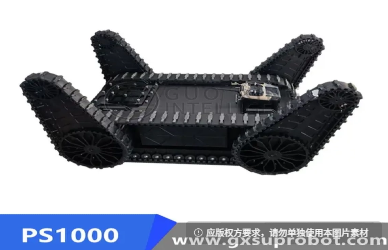
A major advantage of using a robot chassis is that one platform can be used for different types of robots. Instead of designing a new base every time, engineers can use the same chassis for multiple projects.
This reduces development time and improves reliability.
Application | Why Chassis Is Needed |
Inspection robot | Stable movement |
Firefighting robot | High load capacity |
Mining robot | Strong traction |
Security robot | Flexible mobility |
Rescue robot | All-terrain ability |
DIY-friendly robot | High durability |
Because of this versatility, the industrial robot platform has become a standard solution in many industries.
Robot chassis can be designed for indoor use, outdoor use, or extreme environments. Waterproof, dustproof, and explosion-proof features allow the robot to work safely in different conditions.
Designing a robot from the beginning requires a lot of time and engineering work. Using a professional robot chassis allows developers to focus on software and equipment instead of building the base structure.
This reduces development time and makes testing easier.
A chassis that has already been tested is more reliable than a new design. Using a proven platform reduces the risk of mechanical failure and improves safety.
Factor | With Chassis Platform | Without Platform |
Development time | Short | Long |
Cost | Lower | Higher |
Risk | Low | High |
Reliability | Proven | Uncertain |
Maintenance | Easy | Difficult |
Because of these advantages, many companies prefer using a ready robot chassis platform instead of designing from zero.
When the chassis is standardized, parts can be replaced easily. This reduces downtime and keeps the robot working longer. For industrial applications, this is very important.
The main purpose of a robot chassis is to provide a stable and mobile base that supports all components of the robot. It allows the robot to move safely, carry equipment, and operate in different environments while maintaining balance and durability.
Yes, many professional chassis platforms are modular and can be used for inspection robots, firefighting robots, security robots, and research robots. By changing the installed equipment, the same chassis can perform different tasks.
Industrial robots often carry heavy tools and work in harsh environments. A heavy-duty chassis provides stronger structure, higher load capacity, and better stability, which helps the robot operate safely for long periods.
It depends on the application. Tracked chassis are better for rough terrain and outdoor work, while wheeled chassis are faster and more efficient on flat surfaces. Choosing the right type ensures the best performance.
Using a professional robot chassis provides many advantages, including improved mobility, strong structural support, high stability, easy integration, and lower development cost. As the foundation of a mobile robot, the chassis determines how well the robot can move, carry equipment, and operate in complex environments.
A high-quality chassis built with strong materials, precise manufacturing, and reliable drive design ensures long-term performance and safety. In addition, modular design and customization make it possible to use the same platform for many different robotic applications.
For industrial, military, and professional robots, choosing the right industrial robot chassis is one of the most important decisions. A good chassis not only improves efficiency but also reduces maintenance cost and ensures stable operation in demanding conditions.