
Views: 0 Author: Site Editor Publish Time: 2026-02-11 Origin: Site


The debate between tank treads and wheels has been ongoing for decades. Are tank treads inherently slower than wheels? While tank treads excel in off-road conditions, they come with trade-offs in speed and efficiency. In this article, we’ll explore how these two systems perform on different surfaces and help you decide which is best for your needs.
The comparison between tracked and wheeled vehicles on paved roads highlights key differences in speed performance. While tracked vehicles excel in rough terrain, wheeled vehicles are optimized for smooth surfaces, providing faster travel and higher efficiency.
| Feature | Tracked Vehicles | Wheeled Vehicles |
|---|---|---|
| Top Speed | Typically capped at 30-45 mph (e.g., M1 Abrams) | Can exceed 60-70 mph (e.g., Stryker) |
| Efficiency on Roads | Lower efficiency due to high rolling resistance and power loss | Highly efficient, lower rolling resistance allows high speeds |
| Rolling Resistance | High, due to large contact area and friction | Low, due to smaller contact area and smoother movement |
| Fuel Consumption | Higher due to mechanical complexity and friction | Lower, thanks to efficient energy use on paved roads |
| Maintenance at Speed | High wear and tear at high speeds, causing more frequent repairs | Lower wear and tear, built for long-distance travel |
Tip: For road-based applications, wheeled vehicles are optimal due to their higher speed and fuel efficiency. For military or heavy-duty off-road use, however, tracked vehicles are indispensable.
While tank treads are more durable in rough terrain, they suffer more wear and tear on paved roads. The complex design of treads, which includes multiple links, rollers, and pins, causes greater friction during movement, leading to faster degradation on hard surfaces. On the other hand, wheels are built for road travel and can withstand the repetitive motion of driving on smooth, hard surfaces for long periods. This makes wheels more suited for environments like highways, where durability is essential for maintaining long-term performance.
Fuel efficiency is another area where wheels outperform tank treads, particularly on paved roads. Vehicles with wheels require less energy to maintain speed, as they experience much lower rolling resistance compared to tracked vehicles. Tank treads, due to their larger surface area and mechanical complexity, require more engine power to maintain speed, resulting in greater fuel consumption. On smooth surfaces, wheeled vehicles are much more fuel-efficient, allowing for extended travel on less fuel.
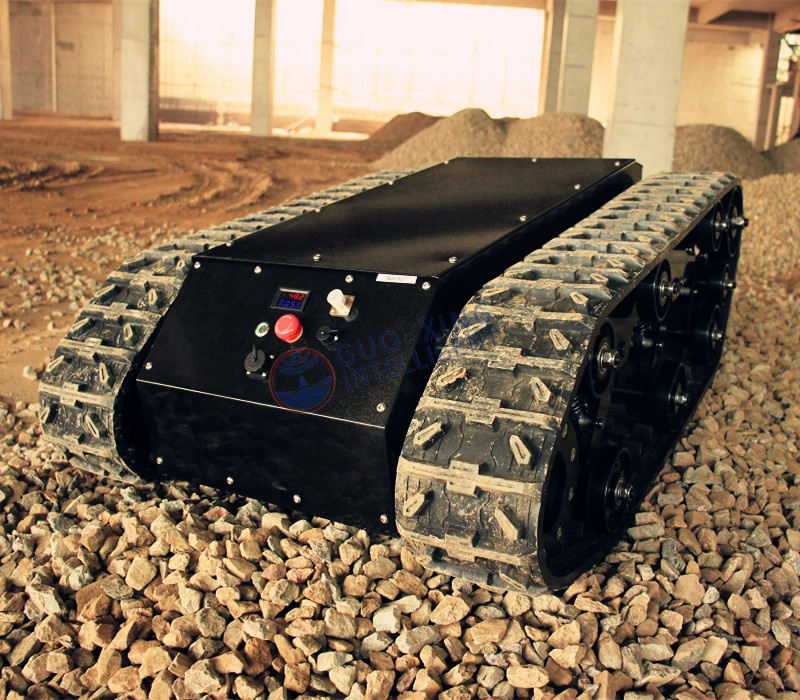
Tank treads experience significant friction due to their mechanical design. Each individual link, pin, and roller creates resistance as the treads rotate, which converts engine power into heat rather than forward motion. This internal friction drastically reduces the efficiency of tank treads, causing them to move slower than wheeled vehicles on paved surfaces. While the treads' design offers traction benefits in off-road conditions, they come at the expense of speed on smooth roads, where minimal friction is optimal for high-speed travel.
When tank treads operate at high speeds, the centrifugal forces generated by the moving links can cause stress on the track system. This stress can result in the stretching of the links, or in extreme cases, the treads can even “throw” off the vehicle’s wheels. Such damage not only impacts the speed of the vehicle but also compromises its mechanical integrity, especially if the vehicle encounters uneven surfaces while moving at high velocity. These factors contribute to the reduced speed capabilities of tracked vehicles on roads compared to wheeled counterparts.
Another major factor that slows down tank treads is their weight. Tracked vehicles, like tanks, are much heavier than their wheeled counterparts due to their large armor and track systems. This increased mass demands more torque to get the vehicle moving and to maintain its speed. Wheeled vehicles, on the other hand, are lighter and require less power to accelerate, allowing them to reach higher speeds more easily. The combination of higher weight and the complex track system makes tank treads slower than wheels on paved roads.
Tank treads excel in challenging off-road environments such as mud, snow, and sand, where wheels would struggle to gain traction. The large surface area of the treads distributes the vehicle's weight more evenly across the ground, preventing the vehicle from sinking into soft surfaces. This distribution of weight significantly reduces ground pressure, allowing the vehicle to maintain forward movement even in extremely soft and unstable terrains. In contrast, wheeled vehicles are more prone to sinking, as the smaller contact patch can’t effectively spread the vehicle's weight.
One of the primary advantages of tank treads is their ability to reduce ground pressure. By spreading the vehicle’s weight over a larger area, treads prevent the vehicle from getting stuck in mud or sinking into soft surfaces like sand. This is especially crucial in environments such as marshes, snow-covered fields, or military battlefields, where mobility is vital, and the risk of getting bogged down is high. Wheeled vehicles, due to their smaller contact area, exert much higher ground pressure, which makes them more likely to get stuck in such terrains.
Tank treads provide superior mobility in rocky, uneven, or sloped terrains, where wheels would struggle to maintain stability. The flexible nature of the tracks allows for better distribution of weight, helping the vehicle maintain traction even on uneven ground. This makes tracked vehicles ideal for navigating through rugged landscapes, rocky trails, or steep slopes, areas where wheeled vehicles would require extra effort or might become immobile.
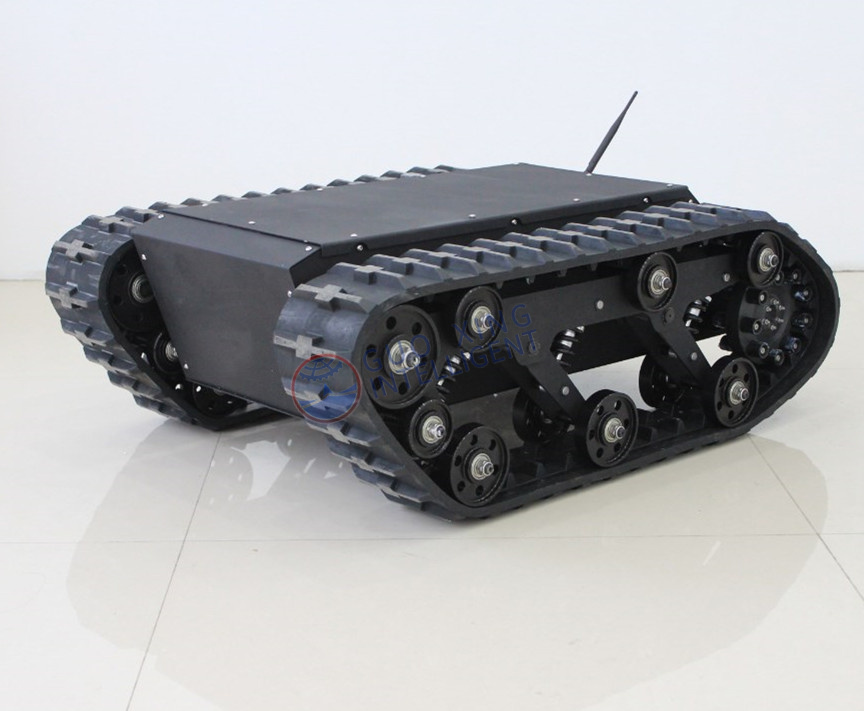
Wheeled vehicles are far more efficient on smooth, paved surfaces due to their low rolling resistance. This allows them to travel faster and conserve fuel on roads. In contrast, tank treads are less efficient because they generate more friction and require more engine power to maintain speed. However, on roads, wheels are clearly superior in terms of speed and fuel efficiency, making them the go-to option for vehicles primarily used on highways and city streets. This table compares the performance of tracked versus wheeled vehicles on smooth, hard surfaces.
| Feature | Tracked Vehicles | Wheeled Vehicles |
|---|---|---|
| Speed on Roads | Limited speed, typically lower than wheeled vehicles | Higher speeds, ideal for road travel |
| Fuel Efficiency | Lower, due to high rolling resistance | Higher, with minimal resistance and efficient movement |
| Wear and Tear | Higher, tracks cause more damage to road surfaces | Lower, tires cause less road damage |
| Comfort and Ride | Less comfortable due to rough movement, vibrations | Smoother ride, optimized for paved surfaces |
| Maintenance | Higher maintenance costs, especially for track system | Lower maintenance costs, tires are easier to replace and maintain |
Tank treads outperform wheels in soft terrain, such as mud, snow, or loose sand. The large contact patch of the treads spreads the weight of the vehicle, reducing the likelihood of sinking or becoming stuck. In conditions where wheeled vehicles might get bogged down, tank treads can maintain movement, thanks to their lower ground pressure. This makes them particularly suited for military operations in areas where off-road capabilities are essential.
In terrains with uneven surfaces or obstacles like rocks and slopes, tank treads provide better mobility. The design of the treads allows for better grip on rough surfaces, enabling tracked vehicles to climb over obstacles and traverse uneven ground more efficiently than wheeled vehicles. The flexibility and larger surface area of the treads also help prevent getting stuck, which can be a problem for wheels on rocky or sloped terrains.
Wheeled vehicles are built for speed, especially on paved surfaces. The reduced friction of wheels allows for faster travel, making them the preferred choice for road-based transportation. DIY-friendly vehicles with wheels can achieve speeds of over 60 mph on highways, offering quick mobility across long distances. This speed advantage is crucial for vehicles operating in environments where time is of the essence and roads are the primary means of transportation.
While tank treads are slower on roads, they offer unparalleled off-road capabilities. Treads are designed to handle rough and uneven terrain, providing the necessary traction and stability to navigate through challenging environments. DIY-friendly vehicles like tanks rely on treads to perform in diverse combat situations, where off-road mobility is more critical than speed. For construction machinery operating in muddy or rocky conditions, treads also offer superior performance.
The key trade-off between tank treads and wheels lies in the balance between speed and off-road capability. Wheels excel on paved roads, where high speeds and fuel efficiency are important. On the other hand, treads are slower but are unbeatable when it comes to navigating through challenging terrains. Deciding between the two depends on the specific needs of the task at hand—whether it's fast travel on roads or the ability to conquer tough off-road conditions.
In certain extreme conditions, tank treads can be considered "faster" because they allow movement where wheels would be ineffective. In mud, snow, or marshy terrain, where wheels would spin uselessly or get stuck, tank treads maintain constant forward motion due to their larger surface area and lower ground pressure. This makes tracked vehicles more efficient in environments where wheeled vehicles simply cannot perform.
One of the reasons why tank treads are effective in soft terrain is the concept of low ground pressure. By distributing the vehicle's weight over a larger surface area, the treads reduce the pressure on the ground beneath. This is why tracked vehicles can keep moving through surfaces like sand or mud without getting stuck, as they exert less downward force than wheeled vehicles, which have a smaller contact patch and higher pressure on the ground.
Wheeled vehicles are often unable to move forward in soft terrain due to their inability to maintain traction. When wheels get stuck in mud or snow, they can simply spin without making progress, whereas tank treads continue to move forward thanks to their superior traction. In these scenarios, tank treads provide a distinct advantage, enabling vehicles to maintain movement even in conditions where wheels would be immobilized.
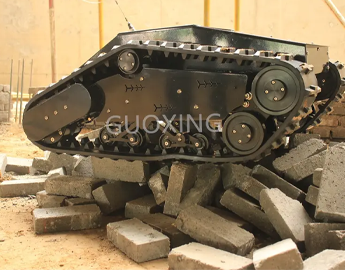
In military applications, the ability to navigate off-road and over rough terrain is often more important than speed. Tank treads provide unmatched survivability and mobility in combat situations, especially when vehicles need to move through challenging environments like forests, deserts, or urban warfare zones. While wheeled vehicles excel on roads, tracked vehicles are essential for military operations in remote or rugged areas.
In the construction industry, treads are used for heavy-duty tasks like earth-moving, excavation, and demolition. Machinery such as bulldozers and excavators rely on the superior off-road capabilities of tank treads to operate in soft or uneven ground. The traction and weight distribution provided by tracks ensure that the equipment can maintain stability and perform effectively in various job site conditions.
When comparing tracked and wheeled vehicles, it’s crucial to balance efficiency with cost. While tracked vehicles come with higher maintenance and operational costs, their superior off-road capabilities justify the extra cost in many scenarios. Wheeled vehicles, on the other hand, are more cost-effective on roads but may struggle in tougher environments. The following table breaks down the efficiency and cost comparison of both.
| Feature | Tracked Vehicles | Wheeled Vehicles |
|---|---|---|
| Maintenance Costs | Higher, requiring regular checks for track, rollers, and links wear | Lower, with longer tire replacement intervals and less maintenance |
| Fuel Efficiency | Lower, tracked systems consume more power, leading to higher fuel consumption | Higher, lower rolling resistance and simpler mechanical design result in better fuel efficiency |
| Initial Purchase Cost | Higher, due to the complex design and manufacturing costs | Lower, as simpler designs reduce production costs |
| Speed and Mobility | Poorer performance at high speeds, especially on roads | Superior speed and mobility, ideal for highway driving |
| Off-Road Capability | Excellent, handles mud, snow, sand, and rugged terrain easily | Limited, may get stuck in soft terrain |
| Operational Environment Adaptability | Best suited for rough and off-road environments | Best suited for flat, hard surfaces like roads and highways |
| Transport Costs | Higher transport costs, especially for long-distance moves requiring specialized equipment | Lower transport costs, suitable for rapid movement and transport |
Tip: When selecting between tracked and wheeled vehicles, always consider the specific job requirements. For high-speed tasks or long-distance transport, wheeled vehicles are ideal; for rough terrains or military use, tracked vehicles offer unparalleled performance.
Tank treads offer superior off-road capabilities but are slower on paved roads due to higher friction, mechanical stress, and weight. Wheeled vehicles, in contrast, are faster and more fuel-efficient on roads but struggle in rough or soft terrain. The decision between tank treads and wheels depends on the task—whether speed or off-road mobility is more important. Shandong Guoxing Intelligent Technology Co., Ltd. provides innovative tracked solutions for industries requiring high off-road performance, offering reliable and durable products designed for tough environments.
A: Yes, tank treads are slower than wheels on paved roads due to higher friction and mechanical complexity, which results in more resistance and power loss.
A: Tank treads provide better traction and distribute weight over a larger surface area, reducing ground pressure and preventing sinking in soft terrain like mud, snow, and sand.
A: Tank treads consume more fuel than wheels on paved roads due to their higher rolling resistance, while wheels are more fuel-efficient on hard surfaces.
A: Tank treads offer superior off-road mobility, essential for navigating rugged terrains and providing better protection against ground pressure and obstacles in military operations.
A: Yes, tank treads are ideal for construction equipment like bulldozers and excavators, providing excellent traction and stability in soft or uneven terrain.
A: Tank treads perform better in snow as they spread weight over a larger area, reducing the likelihood of getting stuck, while wheels tend to sink or get bogged down.