


Tank treads are a fundamental component of modern military vehicles, especially tanks. But have you ever wondered, do tank treads actually "run"? In this article, we’ll explore how tank treads work, how they propel tanks, and their role in navigating tough terrains. You'll learn the mechanics behind tank movement, their advantages over wheels, and how they impact performance. By the end, you'll have a deeper understanding of how tank treads contribute to these powerful machines’ capabilities.
Tank treads are made up of interconnected metal links, usually lined with rubber pads. This construction allows the treads to provide a large surface area to distribute the tank’s weight, preventing it from sinking into soft ground. The various components work together to ensure smooth movement over complex terrains.
| Component | Function | Technical Specifications | Applications & Maintenance Notes |
|---|---|---|---|
| Track Links | Connects the individual metal links, providing continuous motion. | Material: Steel alloy; Size: Varies based on tank weight and purpose | Regularly check for cracks or wear to prevent fatigue damage. |
| Rubber Pads | Provide additional traction and are suitable for different terrains. | Thickness: Typically 3-5mm; Temperature Range: -40°C to +80°C | Check for wear regularly, especially during high-speed travel. |
| Drive Sprocket | Engages with the track links to drive the treads forward. | Speed: Matches engine RPM; Material: Steel or aluminum alloy | Ensure no debris or stones accumulate to maintain smooth operation. |
| Idler Wheel | Maintains tension in the tracks, preventing them from loosening. | Tension: Adjustable; Material: Steel or durable metal alloys | Regularly inspect the idler wheel to ensure proper tension and avoid slack. |
Tip: Regularly check the track links and rubber pads to ensure they provide optimal traction on various terrains.
Tank treads move through a continuous loop, with each link interconnected to the next, forming a system that works in cycles. The movement is powered by the tank’s engine, which turns the drive sprocket. As the sprocket pulls the tracks, the tank moves forward. Road wheels, which are positioned on top of the track, help distribute the weight of the tank across the track's surface, allowing for smoother movement. Return rollers guide the track along its path, maintaining tension and ensuring the track doesn't slip or detach from the drive sprockets.
The physics behind tank treads are centered around the principles of weight distribution and traction. Tank treads spread the vehicle's weight across a much larger surface area compared to wheels, which helps reduce ground pressure. This means that tanks are less likely to sink into soft ground like mud, snow, or sand. Additionally, the continuous loop of tank treads provides greater traction, ensuring that the tank can maintain movement even over rough terrain. The interaction between the sprocket and track links creates mechanical force, enabling the tank to move and climb obstacles with ease.
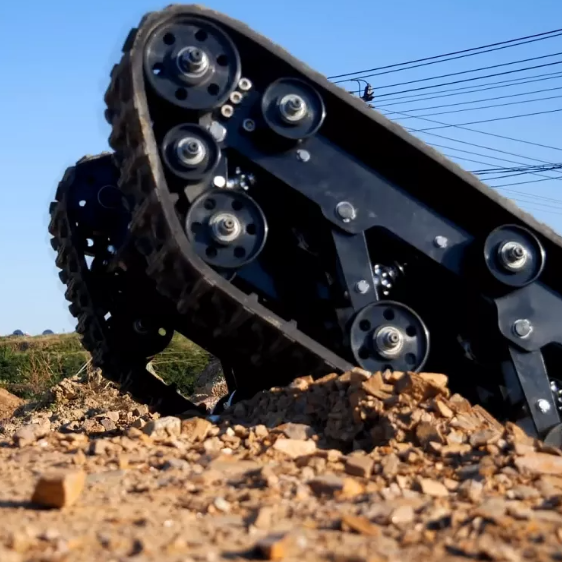
Tank treads propel the vehicle forward by continuously moving in a loop. When the drive sprocket turns, it pulls the tank's tracks around the tank’s running gear. The top section of the track moves forward, while the bottom section makes contact with the ground. As the sprocket rotates, the bottom section of the track is laid down, and the cycle repeats. This movement allows tanks to travel over a variety of surfaces without losing traction. The tracks are also designed to handle the weight of the tank, which can often be several tons, without compromising mobility.
While tank treads are not designed for high-speed travel, modern tanks can reach impressive speeds. The treads, though not as fuel-efficient as wheels, provide superior traction and stability on various terrains, allowing tanks to move quickly when needed.
| Tank Model | Maximum Speed | Terrain Type | Track Type |
|---|---|---|---|
| M1 Abrams | 42-45 mph (67-72 km/h) | Various terrains, including sand and mud | Metal treads + Rubber pads |
| FV101 Scorpion | 50 mph (80 km/h) | Primarily roads and harder surfaces | Lightweight treads for high-speed travel |
| T-90 | 40 mph (64 km/h) | Suitable for a range of combat environments | Standard metal treads |
Tank treads do not "run" like human legs, but instead, they roll in a continuous cycle. While the portion of the track in contact with the ground appears stationary relative to the surface, the top section of the track moves forward at twice the speed of the vehicle. This movement is often misunderstood as "running," but it is more accurate to think of it as a rolling motion, where the track is continually fed around the vehicle's running gear. This design allows tanks to maintain traction and move smoothly over difficult terrain.
Tank treads offer several key advantages over traditional wheels. The most notable benefit is their ability to distribute a tank's weight across a much larger surface area, which reduces ground pressure. This feature prevents the tank from sinking into soft terrain, such as mud, sand, or snow. Additionally, treads provide superior traction compared to wheels, enabling tanks to climb over obstacles and move across uneven ground with stability. In contrast, wheels have a smaller contact area and are more prone to getting stuck or losing traction in challenging environments.
Tank treads are designed to enhance the performance of military vehicles in difficult environments. By distributing the vehicle’s weight over a larger area, they prevent the tank from getting bogged down in soft soil, mud, or snow. The large surface area also improves flotation, allowing tanks to "float" over certain terrains. This is why treads are often favored in military vehicles, as they provide exceptional all-terrain mobility. The ability to move over obstacles such as fallen trees, rocks, and uneven ground is another reason tank treads are preferred in military operations.
Tank treads are built for durability and strength, but they can have an environmental impact, particularly on soft and sensitive surfaces. The weight distribution provided by the tracks helps prevent sinking, but the movement of tank treads can cause significant disruption to the ground surface. In military operations, this is often less of a concern, as tanks need to maintain mobility regardless of environmental impact. However, on more delicate terrains or in areas requiring preservation, the large surface area of the tank tracks can lead to long-term damage.
Tank treads provide superior steering capabilities by varying the speed of tracks on either side of the vehicle, enabling precise movement in tight spaces. Older tanks used a combination of clutches and brakes to control track speed, which could be jerky and less efficient. Modern differential steering systems offer smoother, more responsive turns by independently adjusting track speeds. This system is particularly effective in environments where traditional steering wheels would be ineffective, such as rugged, narrow, or heavily obstructed terrains, allowing tanks to navigate complex areas with high precision.
Neutral turns are vital for modern tank operations, enabling tanks to perform a 360-degree rotation on their own axis. By moving one track forward and the other backward, tanks can pivot in place, giving them unparalleled maneuverability in combat zones. This capability is essential when space is limited or when quick repositioning is necessary during combat engagements. The ability to make tight turns without moving forward or backward provides a tactical advantage, allowing tanks to avoid obstacles, adjust positioning, and respond to threats quickly in dynamic battlefield environments.
Tank treads enhance the maneuverability of military vehicles by maintaining consistent traction on uneven and soft ground. Unlike wheeled vehicles that may become stuck in mud, snow, or sand, tank treads distribute weight across a larger surface area, reducing ground pressure and preventing sinking. This makes tanks more capable of crossing obstacles and maintaining stability in difficult terrains. The continuous movement of the treads ensures the tank’s grip is maintained, even when navigating steep inclines or shifting surfaces, making them highly effective for maneuvering in various combat situations and rough environments.
The lifespan of tank treads depends on factors such as the type of terrain they are used on, the weight of the vehicle, and the materials used in the tracks. Rubber pads, which are used for road travel, typically last about 3,000 km, while the metal links can last up to 9,000 km before requiring replacement. Regular maintenance is essential to ensure the longevity of the tracks, as they are subject to wear and tear from continuous use in harsh environments.
Maintaining proper track tension is crucial for ensuring the smooth operation of tank treads. The idler wheel plays a key role in keeping the track taut and preventing it from slipping off the wheels. Over time, the track tension may decrease, leading to the need for adjustments or replacements. Regular inspections and maintenance are necessary to ensure that the treads are functioning properly and are not in danger of detaching or causing damage to the vehicle.
| Issue | Solution | Technical Specifications | Applications & Maintenance Tips |
|---|---|---|---|
| Loose Tracks | Adjust the tension by modifying the idler wheel. | Tension: Optimal when balanced; too tight increases friction, too loose reduces track movement. | Regularly check track tension to prevent the tracks from slipping off. |
| Track Replacement Timing | Replace tracks when metal links or rubber pads show severe wear or cracks. | Track Link Thickness: Ensure it meets the minimum standard; Rubber Pads: Replace if cracked or worn over 50%. | Replace tracks after their expected lifespan to avoid performance issues. |
| Idler Wheel Damage | Regularly inspect and replace damaged idler wheels. | Diameter: Typically 50% of the tank wheel diameter; Material: Steel or aluminum alloys | Ensure the idler wheel remains in good condition to maintain track tension. |
Specialized tank tracks are engineered to enhance performance in specific environments, addressing the unique challenges each terrain presents. For instance, in snow or swampy areas, wider tracks or additional cleats are used to increase flotation and prevent sinking. Tanks operating in icy regions often have tracks with built-in studded surfaces for extra grip. In desert conditions, tracks can be fitted with dust-resistant materials to avoid clogging and maintain mobility. These adaptations are designed based on scientific principles of traction, weight distribution, and surface interaction, ensuring optimal efficiency in diverse and extreme conditions.
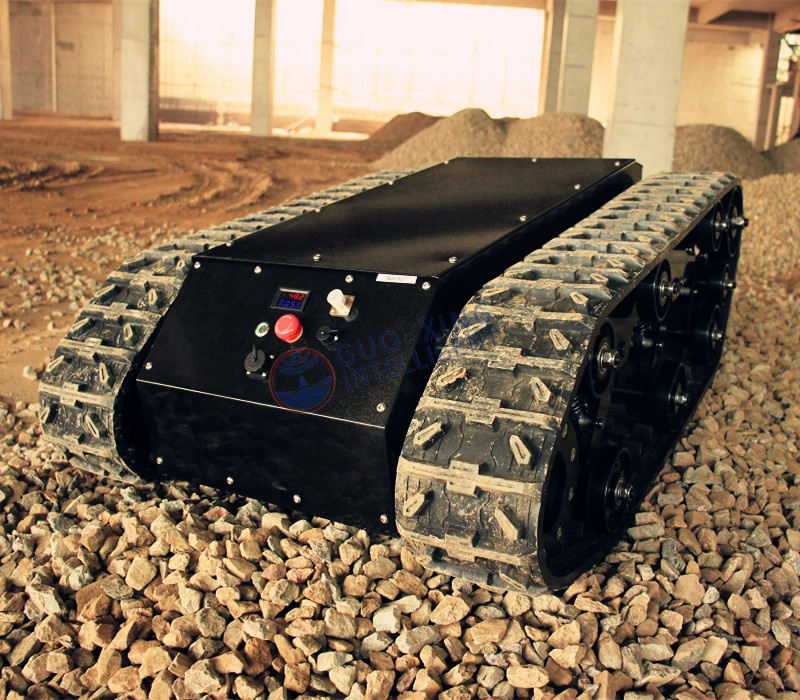
Tank treads excel at distributing the weight of the vehicle across a larger surface area, significantly lowering the ground pressure. This feature is particularly crucial in military applications, where tanks need to traverse soft or unstable surfaces such as marshes, sandy deserts, and snow-covered landscapes. The principle behind this is similar to the concept of snowshoes—by spreading out the weight, the pressure on the ground is lessened, preventing sinking. This allows the tank to maintain mobility across terrains that would otherwise trap vehicles with wheels. Additionally, reducing ground pressure minimizes the impact on the environment, making tanks less damaging to delicate ecosystems.
Beyond military use, tank treads are essential in various industries, where their ability to navigate uneven and soft terrain is paramount. Construction vehicles like bulldozers, excavators, and cranes use treads for stability and mobility across rough or loose ground. In agriculture, treads are used on tractors and harvesters, providing better traction on wet, muddy fields. Interestingly, treads have also been employed in exploratory vehicles designed for environments such as the moon or Mars. For example, NASA’s lunar rovers used tread-like designs to navigate the rocky, uneven surface of the moon. Their ability to keep the vehicle stable while providing continuous movement over varied surfaces makes them invaluable across multiple sectors.
Tank treads shine on soft and uneven terrain due to their ability to maintain constant contact with the ground, distributing weight evenly to avoid sinking. Unlike wheels, which often get stuck when encountering obstacles like mud or deep snow, treads continuously grip and pull the vehicle forward. The tracks' design allows for better flotation, preventing the vehicle from bogging down in loose surfaces. When navigating obstacles, such as rocks or ditches, the flexibility of the treads enables the vehicle to climb and push through without losing stability. This versatility makes tank treads ideal for military operations in hostile environments, ensuring the vehicle remains functional even in the harshest conditions.
Tank treads play a vital role in modern military vehicles by ensuring superior movement, traction, and stability. By distributing weight evenly across a large surface area, they reduce ground pressure and enhance mobility on soft and uneven terrains. Shandong Guoxing Intelligent Technology Co., Ltd. offers specialized tank treads designed to optimize vehicle performance in challenging environments. Their products enhance operational efficiency, making them an invaluable asset to military and exploration vehicles. As technology advances, their commitment to providing durable and high-performance treads remains a key factor in military vehicle functionality.
A: No, tank treads do not "run" like human legs. Instead, they roll in a continuous loop, powered by the tank’s engine, providing traction and movement over rough terrain.
A: Tank treads are continuous tracks that move through a loop, powered by the engine. The drive sprocket pulls the treads, allowing the tank to move forward and handle difficult terrains.
A: Tank treads provide superior traction and weight distribution, allowing tanks to move over soft or uneven ground without sinking, unlike wheels which are less effective in such conditions.
A: The lifespan of tank treads varies. Rubber pads typically last around 3,000 km, while metal links can last up to 9,000 km, depending on terrain and usage conditions.
A: Tank treads offer better traction, weight distribution, and stability on soft or uneven surfaces, allowing tanks to traverse challenging terrains more efficiently than wheeled vehicles.
A: Yes, tank treads can be specialized with rubber pads, cleats, or wider tracks for use in snow, mud, or icy conditions, enhancing performance in diverse environments.
A: Tank treads enhance maneuverability by allowing tanks to pivot, perform neutral turns, and navigate rough terrain, providing more control compared to wheeled vehicles.
A: Tank treads are preferred for military vehicles due to their ability to provide stability and mobility over varied and difficult terrains, ensuring better operational efficiency in combat zones.