
Views: 0 Author: Site Editor Publish Time: 2026-02-02 Origin: Site


Tanks are powerful machines built for tough terrains, but do their treads damage paved roads? While tank treads can affect road surfaces, the extent of damage depends on factors such as track type, road material, and tank movement. In this article, we will explore how tank treads interact with various road surfaces and the solutions that minimize potential damage.
Tank treads, unlike traditional wheels, are designed to distribute a tank’s massive weight across a larger surface area. This distribution helps reduce the ground pressure exerted on the surface below, which can prevent tanks from getting stuck in soft terrain like mud or sand. The individual metal or rubber links in a tank's tread create a continuous loop that provides traction and stability over uneven surfaces. This design also allows tanks to traverse challenging environments, including rocky hills or snow-covered ground. However, when it comes to paved roads, this same distribution can influence how tank treads impact the surface, especially if the roads aren't built to handle such heavy loads.
While tanks are heavy vehicles, their design actually reduces the pressure they exert on the ground compared to vehicles with wheels. A typical tank weighs between 60 to 70 tons, but its tracks help spread this weight over a larger surface area, significantly lowering the ground pressure. For comparison, the pressure a tank’s track exerts on a road can be less than that of a truck or even a car. This is because the treads create a wider contact patch, distributing the vehicle's weight more evenly and avoiding the intense concentration of pressure caused by wheels. As a result, modern tanks can often drive over paved roads without causing substantial damage, unless they are turning sharply or using older, metal-only tracks.
The table below details the performance, application scenarios, and technical specifications of rubber track pads.
| Parameter | Description | Value | Application | Notes |
|---|---|---|---|---|
| Material | Rubber | Natural rubber/Synthetic rubber | Most modern tanks | Rubber pads may wear in high temperatures |
| Weight Distribution | Contact area per pad | 50-60 cm² | For each track pad | Slight variations based on tank design |
| Load Capacity | Max weight per pad | 15-20 tons | For each track | Dependent on tank design and weight |
| Lifespan | Average lifespan | 500-800 km | Urban roads, military activities | Requires periodic inspection |
| Wear Resistance | Compared to metal tracks | High | Suitable for paved roads | Needs replacement after prolonged use |
| Temperature Range | Usable temperature range | -40°C to 60°C | High or extreme cold climates | Can degrade faster in high temperatures |
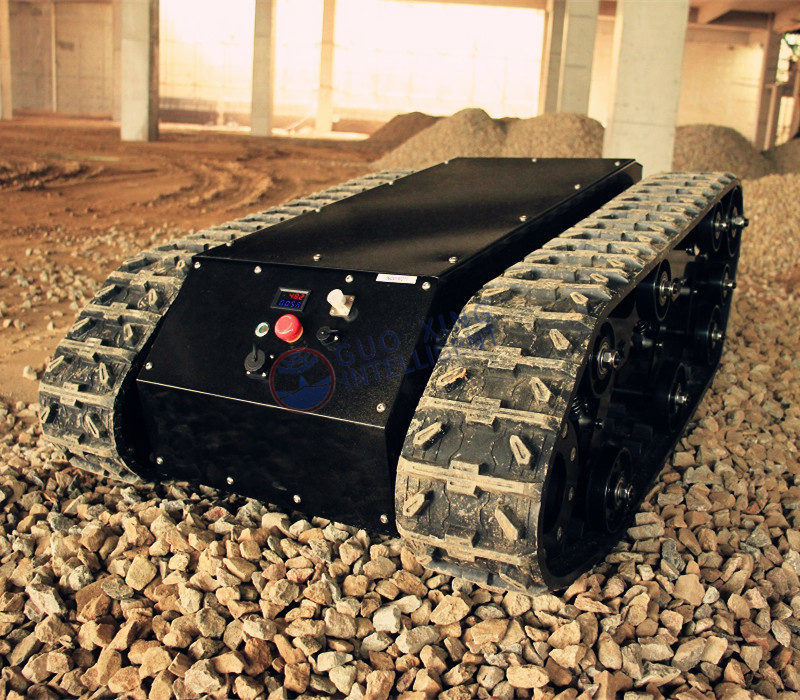
The type of road surface plays a crucial role in determining whether tank treads will cause significant damage. Asphalt, being a relatively soft material, is more vulnerable to damage from heavy and sharp objects. When a tank’s treads come into contact with asphalt, particularly during tight turns or pivots, they can cause the surface to crack or tear, especially in warmer temperatures when the asphalt becomes more pliable. Concrete, on the other hand, is much more durable and resistant to damage, although it can still crack under the weight of a tank, particularly in areas where the concrete is already weakened or old. Additionally, roads designed for heavy trucks or military vehicles tend to be more resistant to damage, as they are built with stronger materials and structural integrity in mind.
Another important factor influencing road damage is the weight and size of the tank. While tanks are designed to distribute their weight evenly through their treads, their sheer mass can still cause issues on roads not built to handle such heavy loads. The weight of a tank can lead to localized stress on the road surface, causing cracks, rutting, and even structural failure if the surface is not reinforced. For example, roads in urban environments, which are not constructed to withstand the weight of military vehicles, can suffer damage when tanks pass through them, even with rubber pads in place. This is why certain precautions, such as steel plates, are often used during parades or military operations in cities.
The speed at which a tank moves and how it maneuvers can also significantly affect the road surface. Sharp turns, especially pivot turns, where one tread moves in the opposite direction of the other, put intense stress on the road surface. These movements drag the treads laterally, causing them to scrape against the road and potentially tear up the asphalt, particularly in hot weather. In contrast, slow and straight movements exert less pressure on the road and are less likely to cause significant damage. This is one of the reasons why tanks in public events or military parades are often limited to low speeds and restricted routes, ensuring minimal impact on the roads.
Metal tracks, once a common feature on military tanks, are highly effective for off-road mobility but can be damaging to paved surfaces. The steel links of metal tracks, especially when equipped with aggressive "grousers" (teeth for traction), can tear up asphalt and concrete surfaces. This is particularly problematic during tight turns or sudden maneuvers, where the metal links grip the road with significant force. While metal tracks provide superior traction in rugged terrains, they are not ideal for paved roads, where they can cause gouging and significant wear, especially on softer asphalt.
Modern military tanks often use rubber track pads that are placed over the metal tracks to reduce road damage. These rubber pads act as a buffer between the metal tracks and the road surface, absorbing much of the impact and preventing the metal from directly contacting the asphalt or concrete. Rubber pads are particularly effective on well-maintained roads and are commonly used in tanks like the M1 Abrams. While they don't completely eliminate the risk of road damage, they significantly reduce it, making it possible for tanks to operate on urban streets or military parade routes without causing excessive wear. The table below summarizes the performance, advantages, and disadvantages of rubber track pads used in tanks.
| Feature | Description | Parameter | Advantage | Disadvantage |
|---|---|---|---|---|
| Shock Absorption | Reduces ground pressure | 15 PSI | Effectively distributes weight, reducing ground pressure | Best suited for smooth, hard roads |
| Durability | Wear resistance of the rubber pads | 1000-2000 km | Provides long-term protection | Frequent inspection required under heavy use |
| Speed Compatibility | Optimal operating speed | 5-20 km/h | Reduces damage caused by high-speed movements | May wear out faster at higher speeds |
| Environmental Adaptability | Usable temperature range | -40°C to 60°C | Effective in hot or cold climates | Limited lifespan in high-temperature environments |
| Replacement Cycle | Maintenance recommendation | Every 500 km or after each mission | Easy to maintain and replace | Can lose elasticity over time |
The latest innovation in tank tread design is the hybrid track system, which combines the durability of metal tracks with the road-friendly properties of rubber pads. This hybrid system aims to optimize performance, offering the off-road capabilities of metal treads while minimizing the impact on paved surfaces. These systems are designed to reduce noise and vibration while improving traction and reducing the risk of damage to roads, making them ideal for urban environments or public events where tank movements are necessary. Hybrid systems are still in the early stages of development, but they represent an exciting evolution in tank tread design.
One of the most visible instances of tanks interacting with public roads is during military parades. These events often see large numbers of tanks and armored vehicles moving through urban streets, raising concerns about road damage. In events like the annual Army Birthday Parade in Washington, D.C., special precautions are taken to minimize the impact on the streets. Tanks are equipped with rubber track pads, and temporary steel plates are placed at key points, such as intersections, to protect the road surface. Despite these measures, significant wear can still occur, and extensive repairs are sometimes required afterward, especially in areas where the tanks make tight turns or pivot.
Urban roads, which are typically designed for cars and trucks, are not always built to withstand the weight and pressure exerted by military vehicles. When tanks pass through cities, particularly on older or poorly maintained roads, the result can be visible damage such as cracks, potholes, and surface gouging. For instance, roads in Moscow have been seen to suffer significant damage after tanks participated in military parades. This damage is primarily caused by the weight of the tanks, compounded by tight turns and high stress on specific areas of the road. In some cases, temporary road closures and significant repair costs follow these events.
Tank-related road damage is not limited to military parades; it can also occur during regular military operations. In countries with extensive military training exercises, such as the United States and Russia, tanks regularly traverse both rural and urban roads. While some roads are specifically built to accommodate military vehicles, others are not, and in these cases, damage is almost inevitable. For example, the use of tanks in training exercises in the United Kingdom has led to cracked and broken pavements, especially in smaller towns where the infrastructure isn't built to handle such heavy vehicles.
Rubber track pads, used in modern military tanks, play a critical role in reducing road damage. These pads provide a cushioning layer between the metal tracks and the road surface, minimizing friction and preventing direct contact between the steel and asphalt. This technology allows tanks to move over paved roads with significantly less impact, ensuring the longevity of road surfaces while maintaining the tank's off-road capabilities. Regular maintenance of these rubber pads is essential to ensuring their effectiveness, especially in high-stress environments like military parades or urban operations.
During public events such as military parades, temporary steel plates are widely used to protect road surfaces from tank tread damage. The table below outlines the specifications, application scenarios, and effectiveness of steel plates in these situations.
| Parameter | Description | Value | Application | Notes |
|---|---|---|---|---|
| Steel Plate Type | Material used | Steel | Temporary protection | Must consider road surface load capacity |
| Steel Plate Size | Standard dimensions | 4x8 ft or 8x20 ft | Key intersections and turns | More plates needed for larger areas |
| Plate Thickness | Thickness specifications | 2.5-4 cm | Prevents surface damage | Too thick may cause traffic congestion |
| Compression Strength | Max load per plate | 25-30 tons | For tanks or armored vehicles | Plate seams must be reinforced |
| Installation Method | Fixing method | Temporary fix | Used for large events or parades | Ensure plates are securely fastened |
| Usage Duration | Recommended usage time | 1-2 days | For special events | Must be removed after event ends |
Tip: Ensure that steel plates are securely fixed during installation and adjust their positioning based on the tank's weight and turning radius to reduce potential road pressure.
Experienced tank operators play an essential role in minimizing road damage. By carefully controlling the speed and maneuvering of their vehicles, they can avoid putting undue stress on the road surface. For instance, avoiding tight pivot turns and driving at reduced speeds can help reduce the risk of damaging the asphalt. In military training, tank drivers are specifically trained to understand the effects of their maneuvers on road surfaces, ensuring that they take the necessary precautions to protect public infrastructure.
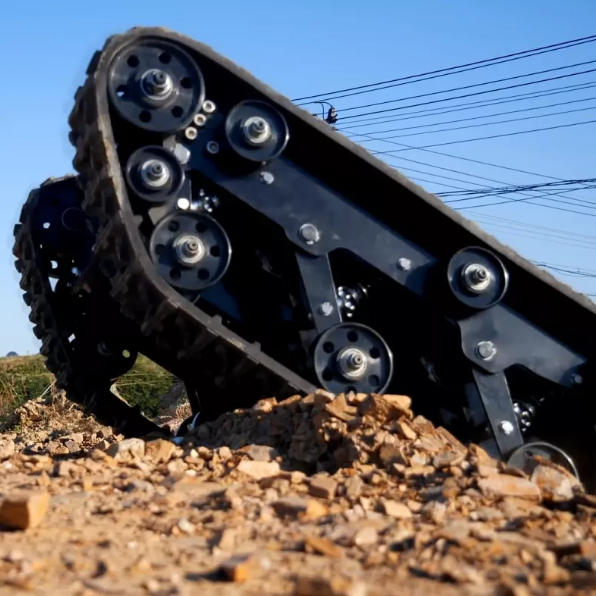
Tank track design is evolving, with manufacturers developing new technologies aimed at reducing the impact on paved roads. Hybrid systems that combine metal and rubber tracks are one example of this innovation. These systems are designed to improve off-road performance while minimizing road damage. As military technology advances, further innovations in track design may make tanks even more road-friendly, allowing them to operate in urban environments without causing long-term damage to infrastructure.
Research into road-friendly tank designs is ongoing, with a focus on improving both the vehicle's performance and its impact on road surfaces. New materials, such as advanced composites and modified rubber compounds, are being tested for use in tank treads. These materials aim to reduce the wear and tear on roads while maintaining the durability and strength needed for military operations. Additionally, advancements in hybrid track-wheel systems hold promise for reducing the need for extensive repairs to road surfaces after tank movements.
As military vehicles continue to play a vital role in modern operations, urban planning must adapt to accommodate their presence without causing long-term damage to infrastructure. City planners are beginning to consider military vehicles in their designs, ensuring that roads are built with enough strength to withstand the weight of tanks and armored vehicles. Additionally, dedicated routes for military vehicles can be planned to avoid sensitive areas like historic districts or older streets that may not be able to handle the stress of heavy armor.
Tank treads have the potential to damage roads, particularly with older metal tracks or tight maneuvers. However, modern solutions like rubber track pads, steel plates, and careful driver training have minimized this risk significantly. As tank designs evolve, road-friendly technologies will reduce the impact further, ensuring that urban infrastructure remains intact. Shandong Guoxing Intelligent Technology Co., Ltd. offers innovative solutions in track technology, providing durable, road-friendly tank treads that contribute to smoother interactions with road surfaces while enhancing military vehicle efficiency.
A: While tank treads can damage roads, the extent depends on factors like track material, road surface, and tank movement. Rubber track pads on modern tanks help minimize damage.
A: Unlike wheels, tank treads distribute weight over a larger area, reducing ground pressure. However, metal tracks can still cause damage, especially during sharp turns.
A: Rubber track pads are used to reduce friction and road wear. They absorb impact, minimizing the risk of road surface damage while providing necessary traction.
A: Concrete is more durable than asphalt, but tank treads, especially metal ones, can still cause cracks or surface damage under heavy weight or intense pressure.
A: The speed of a tank affects road damage, as sharp turns or high speeds put more stress on the road surface, increasing the likelihood of wear or cracking.
A: Modern solutions include rubber track pads, temporary steel plates for events, and careful driver training to reduce road wear during tank movements.